Timiryazev Academy Develops Next-Generation Fertilizers with Sustained Release Technology
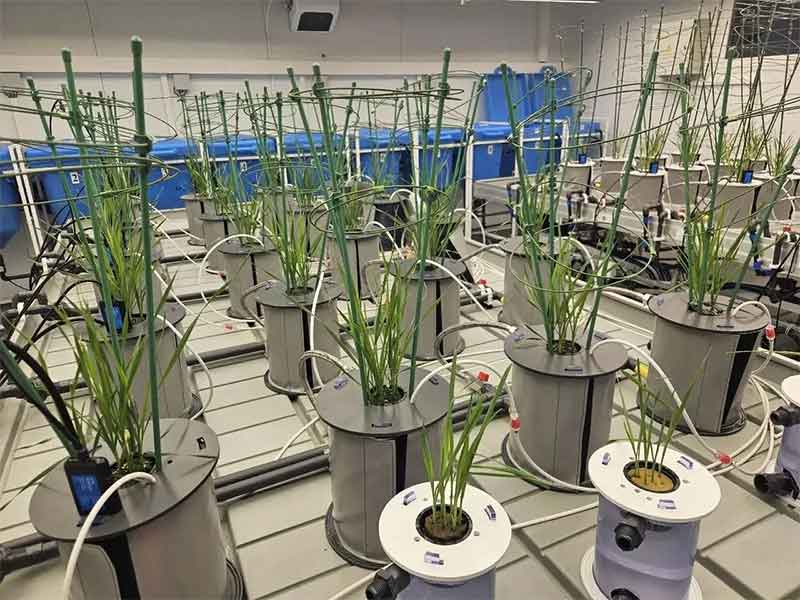
At the Department of Agronomic, Biological Chemistry and Radiology of the Russian State Agrarian University – Moscow Timiryazev Agricultural Academy, researchers are actively working on a project titled “Development of Eco-Efficient Fertilizer Systems” as part of the Priority 2030 program. Scientists are creating a unique platform technology for producing fertilizers with prolonged release of nutrients. A specialized plant mineral nutrition laboratory has been launched to implement the project, equipped with state-of-the-art technology: an ultrafiltration system that produces deionized water free of impurities, smart lighting that automatically simulates natural conditions by regulating light spectrum and intensity, and an automated solution unit capable of preparing 15 different nutrient solutions to model both deficiency and excess of nutrients.
Currently, experiments are being conducted on spring wheat. Researchers are studying how micronutrients (zinc, copper, selenium, molybdenum, and others) influence the molecular-genetic mechanisms of nitrogen assimilation. The goal is to identify specific genes that are activated at certain micronutrient doses. This development will enable high-throughput laboratory screening, selecting only the most effective formulations for field trials — significantly reducing research costs and accelerating the time to market for new products. By 2027–2028, the team plans to create a complete technology for managing plant production processes. The outcome will be a line of eco-efficient fertilizers that not only increase crop yields but also substantially reduce environmental impact.
Global Potato Brief
Top five stories, prices, disease alerts and events. Weekday mornings, no advertising.
Linked in this material
- Sections
- Fertilizers and pesticidesNews
Related stories
Russia: Cold, Cloudy Weather Slows Diquat Desiccation as EU Growers Manage Without It

Global: Potatoes Need Boron Only Below 0.5 ppm Soil Test, and It Should Go on the Soil, Not the Leaves