Russia: Pythium Leak Hits Properly Harvested Potatoes as Growers Question Variety Tolerance
Russian growers report watery rot even in crops lifted after full skin set in dry weather, and point to variety tolerance as the missing factor.
“The skin was like oak, there was almost no mechanical damage — and the leak was still there.” That is how one Russian grower described lifting his crop on 20 September, in a discussion among practitioners this week. Two other farms reported the same pattern: potatoes dug three weeks after desiccation, from dry soil, still showing watery rot; and one farm that harvested for 39 rain-free days found leak only on Red Scarlet, while Wendy, Rodriga and Koroleva came out clean.
The cases break a familiar template. Watery wound rot, or leak, caused by Pythium ultimum, is usually linked to wet lifting conditions and damaged tubers. This autumn, farms that followed the textbook — desiccated, waited for skin set, harvested in dry weather — are still finding rot in the pile.
Why the rulebook is not enough this season
The pathogen lives in the soil and enters tubers through wounds, including microscopic ones made at harvest and grading. Rot develops fastest when pulp is warm and moisture is present. A dry field at lifting does not protect the crop if infection is already in the soil and condensation forms later in storage, when warm tubers meet cold air.
Weekdays. Unsubscribe in one click.
Growers in the discussion point to variety as the missing factor. Red Scarlet appears to be the first candidate for infection in their fields, while other varieties on the same farms stayed healthy. This is an observation from practice, not a trial result, but it matches what plant pathologists report: varieties differ in skin strength and wound healing, and both traits matter for leak.
What storage managers are checking now
The farms affected are reviewing three points. First, grading: every additional touch adds wounds, and leak enters through wounds. Second, cooling speed: pulling pulp temperature down quickly and evenly limits condensation, which is where a few infected tubers can wet a whole section of the pile. Third, seed handling for next season: practitioners in the same discussion say elite seed should not sit in bags for more than a day, should be lifted gently at around +15 °C, and needs a full protection programme during the season.
There is no rescue treatment for tubers already rotting in storage. The decisions that matter were made at lifting — or will be made at the next one.
Prevention & control · Editorial note
Pythium leak (Pythium ultimum): what growers can do
- Prevention: lift only after full skin set; minimise drops and grading touches; dry tubers before loading the store.
- Monitoring: watch pulp temperature and condensation in the first weeks of storage; sample bins where lifting was rushed.
- Chemical protection in Russia: no fungicide is registered specifically against leak on potato; control rests on harvest and storage practice. Check the national register.
- Resistance management: not applicable — the disease is managed agronomically.
This note is provided by the potatoes.news editorial team for information only. It is not a recommendation of any company and is not mandatory. Use only plant protection products authorised in your country and follow the label. Product names and registrations differ between countries; consult a local agronomist.
The topic was raised by practitioners in the MAX messenger chat “КАРТОФЕЛЬ И Т.Д. (Potato etc.)”, which has more than 1,100 participants. Participants are not named.
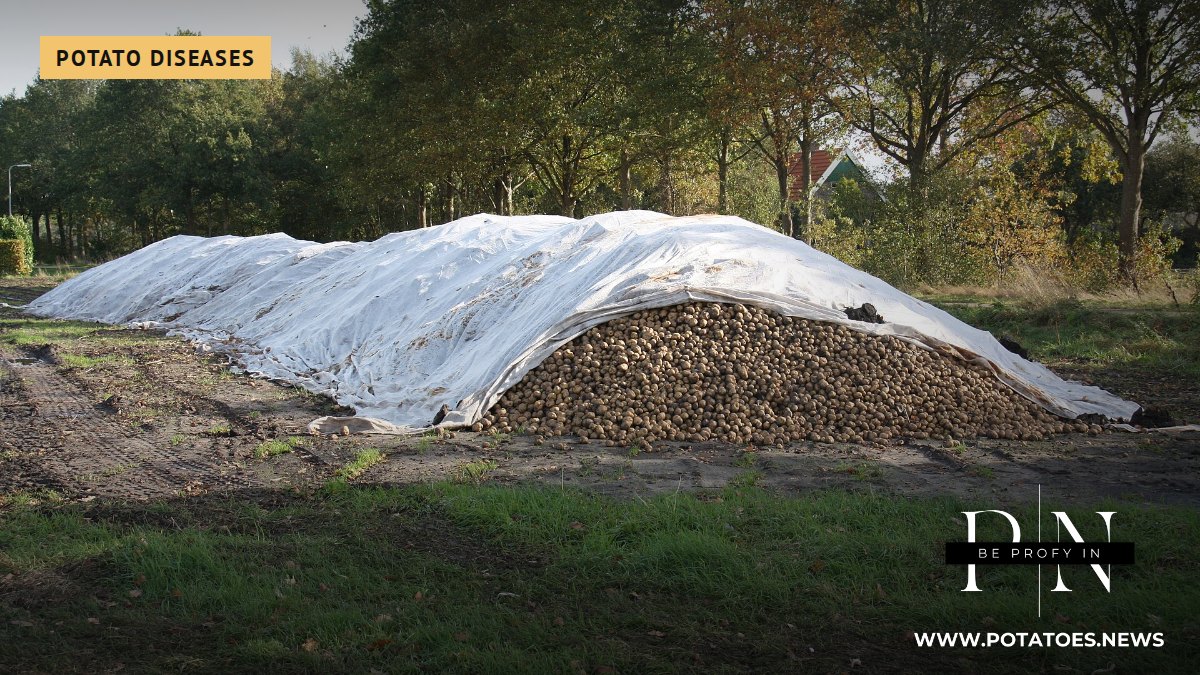
Photo: Freshly dug potatoes on the field (illustrative). Silver Spoon / Wikimedia Commons, public domain