
The Seed Bottleneck: Why Potato Innovation Stalls After Variety Release
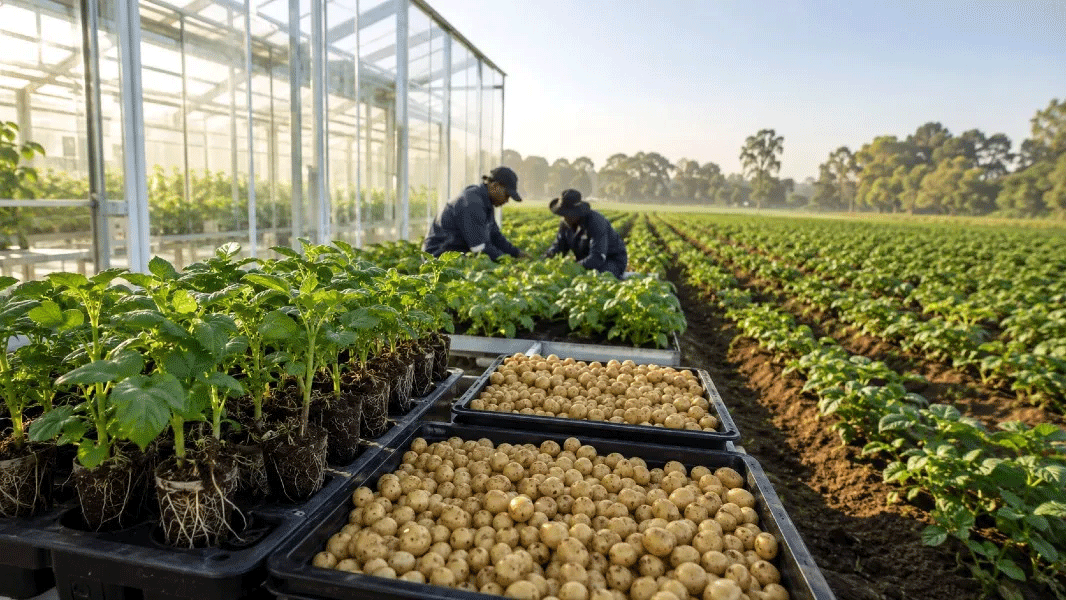
Potato breeders continue to deliver varieties with improved disease resistance, climate resilience, storability and market quality, yet the real constraint on innovation begins after a variety is released: multiplying enough healthy planting material and delivering it to growers at an affordable price. Unlike cereals, maize or oilseeds, conventional potatoes are propagated vegetatively through bulky, perishable and costly tubers that can carry viruses, bacteria, fungi and nematodes from one generation to the next. Even a variety that has survived more than a decade of crossing, selection, disease screening and field trials accomplishes very little commercially until sufficient quantities of healthy planting material reach farmers. The gap between sophisticated seed systems in Europe and North America and the informal, often recycled planting material used in many emerging production regions helps explain the enormous yield disparities across the global potato industry. Variety release is therefore the beginning, not the end: a small quantity of pathogen-tested starting material must pass through tissue culture, minitubers, early-generation field seed and foundation classes before certified commercial seed becomes available—a process that takes years, land, infrastructure and technical competence.
Several developments are reshaping how that bottleneck might be addressed. Rapid multiplication technologies such as aeroponics, sand hydroponics and rooted apical cuttings can accelerate early-generation seed production and reduce costs, while decentralised multiplication brings seed closer to farming communities—though it complicates quality control and requires training, inspection and traceability. Hybrid true potato seed offers potentially disruptive logistical advantages, since botanical seed is light, compact and largely free of tuber-borne disease, but it demands new agronomic systems and consistent processing performance. Meanwhile, seed affordability remains as important as availability: conventional seed tubers represent a large share of establishment costs, and growers without affordable credit may rationally recycle declining seed. Processors, breeders and regulators all have a stake in earlier coordination, predictable demand signals and multiplication traits built into breeding targets. Ultimately, no single technology will solve the global seed problem; success must be measured not in plantlets produced, varieties registered or laboratories opened, but in healthy commercial hectares—reliable chains that carry clean starting material all the way to the grower’s field.
Global Potato Brief
Top five stories, prices, disease alerts and events. Weekday mornings, no advertising.
Linked in this material
- Sections
- Growing seedsNewsSeeds
Related stories
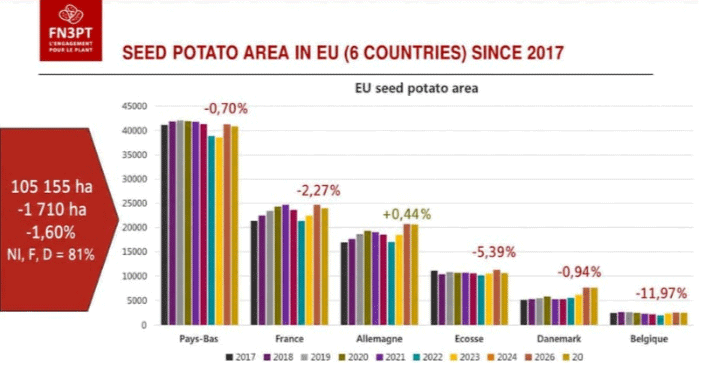
European Seed Potato Area Declines 1.6% in 2026 as Variety Landscape Shifts

Russian Experts Inspect 11 Domestic Seed Potato Varieties in Greenhouse Trial Near Dmitrov
