How McCain Foods Changed Potato Farming in Gujarat
Key takeaways
- McCain Foods followed McDonald’s to India in 1998
- Banaskantha in Gujarat suited the crop
- Punjab trials hit cold weather and sugar build-up
- West Bengal plots too small for contract farming
- Flood irrigation reached a 750 mm column per season
Why it matters
- For farmers
- Potatoes need moisture replaced, not drenching: flood irrigation at a 750 mm column both wastes water and drives the humidity that brings pest and fungal pressure.
60-second summary
Banaskantha in Gujarat has grown potatoes since the days of the Raj, but the shift to growing them for processors came with McCain Foods, which followed McDonald’s into India in 1998. The company tried Punjab, Haryana and Uttar Pradesh first and found the cold slowed weight gain and raised sugars, which turn fries brown. West Bengal had the climate but plots too small for contract farming. In Gujarat McCain found waste instead: flood irrigation putting a 750 mm column of water on the crop over a season, when potatoes need replacement of what evaporates and transpires, and heavy nitrogen to offset leaching through sandy soil.
Contrary to NGO stories of exploited farmers and middlemen running riot, Gujarat’s potato farmers have scripted an entrepreneurial success story by teaming up with multinationals and other buyers of their produce.
The Banaskantha District (Gujarat, India) has known potato farming from the days of the British Raj, but it is Canada’s McCain Foods, the family-owned global supplier to McDonald’s, and a seller of own-brand wedges, fries and tikkies, that has taught farmers here to grow them scientifically. McCain followed McDonald’s to India in 1998. It worked on potatoes in Punjab, Haryana and Uttar Pradesh but found the cold weather inhibiting weight gain and adding sugar (which caramelises and turns fries dirty brown). West Bengal, like Gujarat, has the ideal climate, but plot sizes are too small for contract farming, so it gave up trials about three years ago.
McCain found enormous waste in Gujarat. Flood irrigation was the practice;the water flushed would add up to a 750 mm column by the end of the crop season. But potatoes need moisture, not drenching. Just as much water should be replenished as evaporates from soil and transpires through leaves. Farmers lavished nitrogenous fertiliser to make up for the nutrient leaching through the sandy soil. High humidity brought pest and fungal attacks.
Weekdays. Unsubscribe in one click.
McCain persuaded farmers to use sprinklers, cutting water and nitrogen use by a third. They are commonplace now, aided by government subsidies, and eight-hour rationed power supply to the farm grid. How long the sprinklers should be on is determined by data provided by the company’s two weather stations, one at a spot on the way to Mt Abu (in Rajasthan), and the other at Himmatnagar in Sabarkantha district. Through phone calls and text messages, field staff convey the information to farmers. Other innovations have reduced planting time and energy use in cold storages.
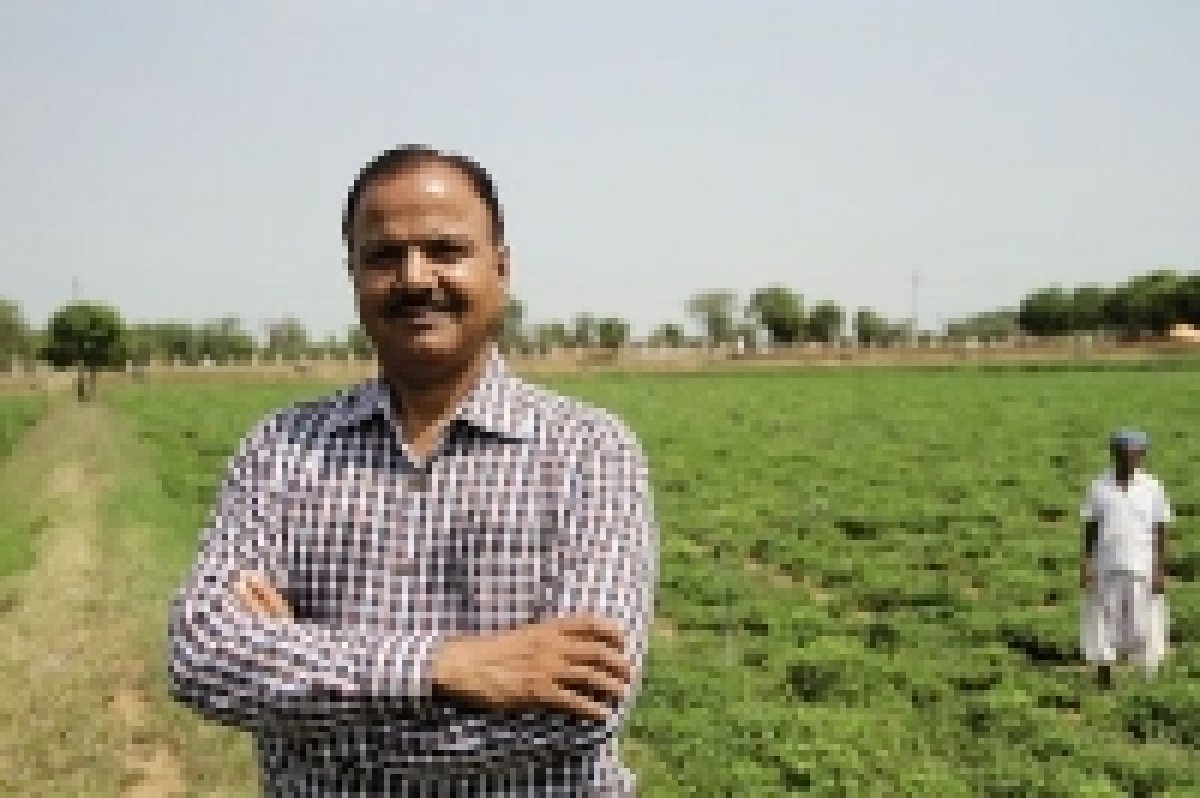
McCain began contract farming in 2006 with four farmers and 16 acres in Badgam village. Today, 900 of them assure it a produce of 4,500 acres. The landholdings in this area are quite big. Half the farmers own more than 10 acres each. But everyone, small or big, is invited, says procurement officer Gopal Dass Sharma, who is known to be free with agronomic advice even to farmers not on contract. The company’s plant at Mehsana has an appetite of 50,000 tonnes a year, most of which is mopped up from within the vicinity.
In November, at the beginning of the potato season, farmers sign a contract pledging to supply at least 10 times the quantity of seed by the third week of March, after which purchases stop. The quality parameters are specified;a detailed schedule of farming practices, written in Gujarati, is provided for each variety of potato. Agronomic advice is also available on call. Farmers get seed spuds for half the price;the rest is deducted from the sale price. If farmers default, post-dated cheques are encashed.
An amalgam of factors—a law that allows farmers to sell directly rather than through mandis;a choice of buyers;a rash of cold storages incentivised by subsidies and regular power supply;a network of good rural roads and access to information on the internet and the mobile phone—has given farmers better control over their lives.
Global Potato Brief
Top five stories, prices, disease alerts and events. Weekday mornings, no advertising.
Linked in this material
- Country
- India
- Companies
- McCain FoodsMcDonald’s
- Technologies
- IrrigationContract farming
- Sections
- News
Related stories
Kursk Region Warns of Devastating Potato Wart Disease as Golden Nematode Also Detected in 2026
Russia and Kazakhstan: Half of Surveyed Farms Report Lower Potato Yields in 2026