Slovenia: Potato Self-Sufficiency Is Only 41% as 2025 Harvest Falls to 60,820 Tonnes
Slovenia grew only 41% of the potatoes it used in 2024, SURS data show. In 2025, the harvest fell by about 19% to 60,820 tonnes, and imports again exceeded domestic output.
Slovenia produced only 41% of the potatoes it used in 2024, according to the Statistical Office of the Republic of Slovenia (SURS). That was 3 percentage points more than a year earlier. The same supply balance shows that 79 kg of potatoes per resident were available for consumption.
The 2025 harvest was smaller. Eurostat data show 60,820 tonnes from 2,830 hectares, with an average yield of 21.51 tonnes per hectare. In 2024, the crop was 74,640 tonnes from 2,860 hectares, at 26.07 tonnes per hectare. So output fell by about 19%, mostly because of a lower yield.
A quarter-century of decline
In 2000, Slovenia grew potatoes on 8,950 hectares and harvested 186,160 tonnes, Eurostat data show. Since then, the area has fallen by about 68%, and output by about 67%. Most of the decline happened before 2012. Since then, the area has stayed between about 2,700 and 3,600 hectares.
Weekdays. Unsubscribe in one click.
The problem is not new. In 2020, the farm weekly Kmečki glas reported that potatoes were grown on 2,793 hectares in 2019. Citing SURS, it said Slovenia was 48% self-sufficient in potatoes in 2018. The article also quoted concerns that Slovene growers have fewer approved crop protection products than competitors in Belgium, France, the Netherlands and Germany.
Trade
Imports fill the gap. Eurostat trade data for fresh potatoes (HS code 0701) show imports of 79,535 tonnes in 2025 and 88,395 tonnes in 2024. This is more than the whole domestic harvest. Slovenia also exports potatoes: 42,350 tonnes in 2025 and 53,334 tonnes in 2024. The data do not show how much of this is re-export of imported potatoes.
Yields vary a lot from year to year. Since 2010, the Eurostat average has ranged from 19.47 tonnes per hectare in 2013 to 30.27 tonnes in 2020. With a small area, one bad season changes the national balance quickly.
Why it matters
Slovenia is one of the most import-dependent potato markets in Central Europe. Less than half of the potatoes used in the country are grown there. A weak harvest, like 2025, raises the need for imports even further.
For exporters in neighbouring countries, Slovenia is a steady buyer. For local growers, the gap is also an opportunity: demand exists, but they need stable yields, storage and access to modern crop protection to compete with imported potatoes.
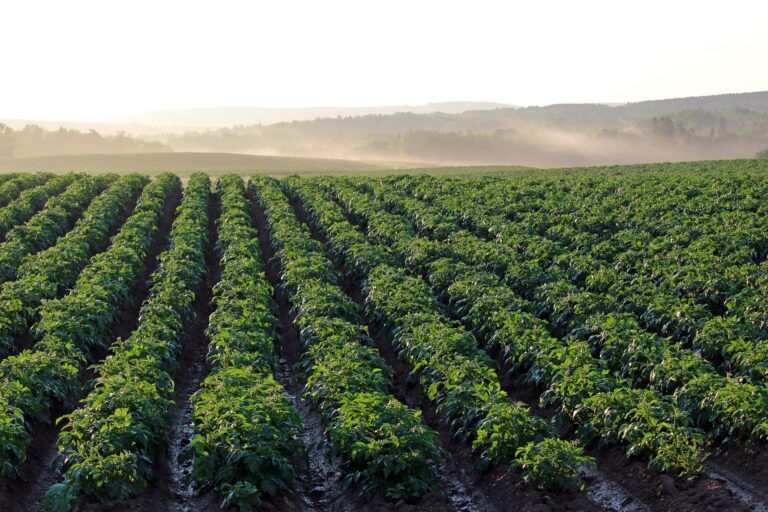
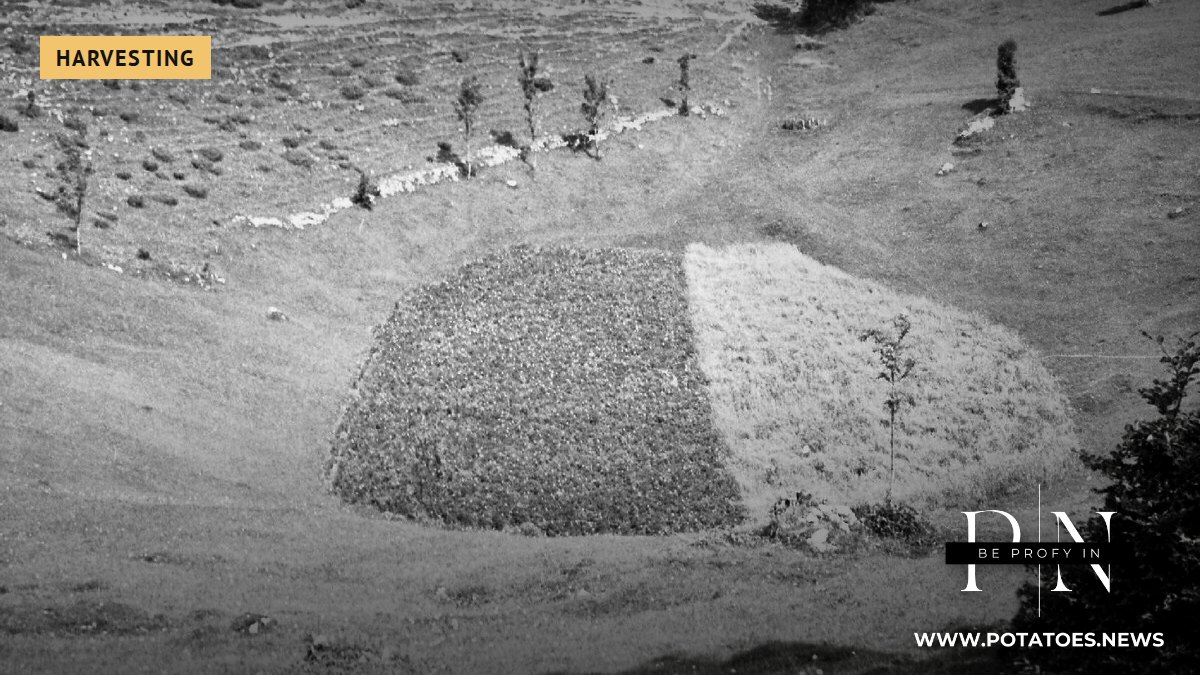
Photo: A field half planted with potatoes in Slovenia (historical photo) (illustrative). Fanči Šarf / Wikimedia Commons, Public domain