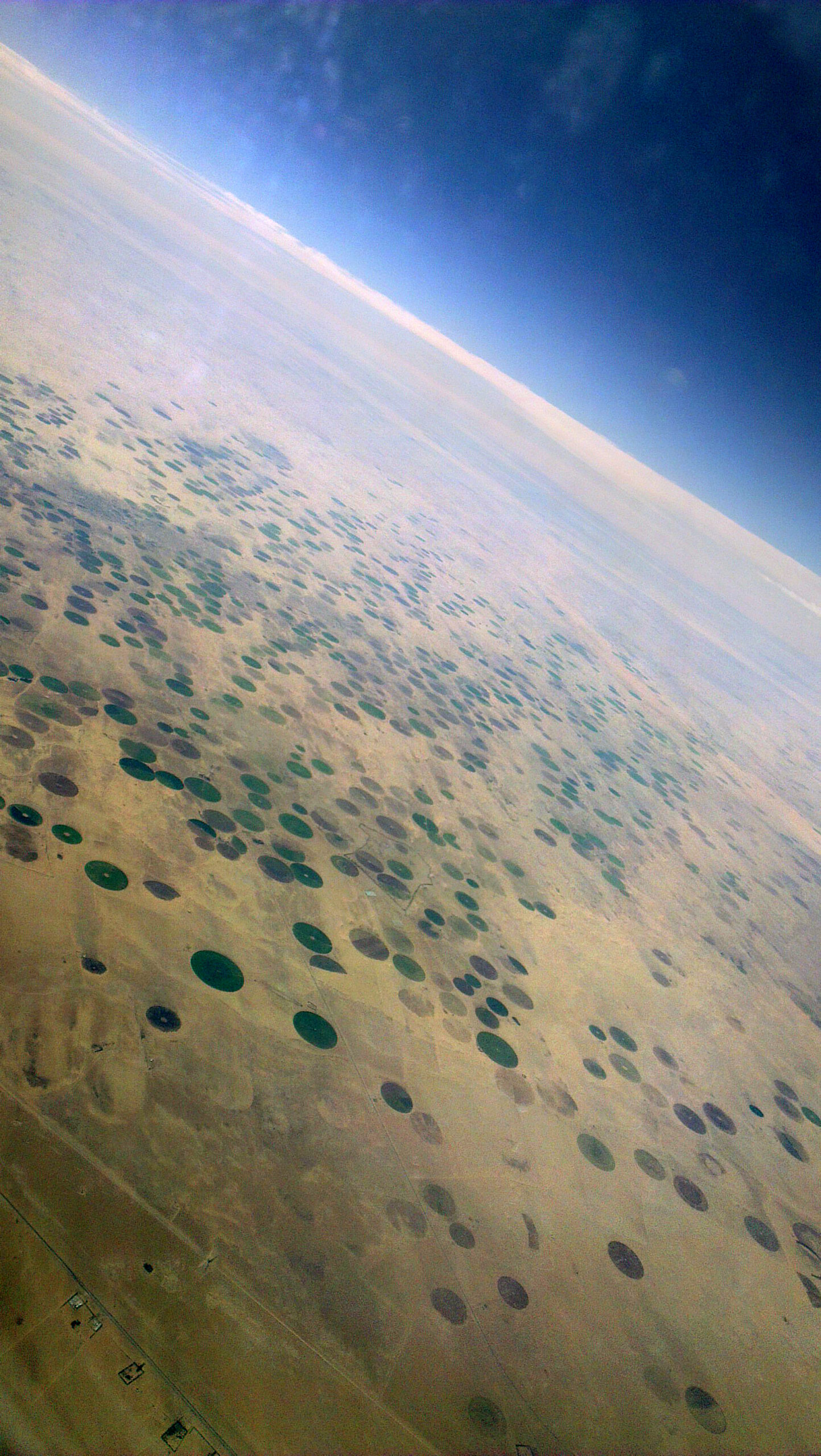
Saudi Arabia now grows almost all the potatoes it eats. According to data from the General Authority for Statistics (GASTAT), reported by Argaam on 18 December 2025, the country’s self-sufficiency rate for potatoes rose from 87% in 2023 to 93% in 2024.
The Ministry of Environment, Water and Agriculture reported in November 2024 that potato production exceeded 621,750 tonnes in 2023, according to the Saudi Press Agency. This was 47% more than the 423,770 tonnes harvested in 2021. The area grew from 15,890 ha in 2021 to more than 17,000 ha in 2023. The ministry gave a self-sufficiency rate of 86.8% for 2023, which matches the GASTAT figure.
From almost nothing to a major crop
FAOSTAT data, published by Our World in Data, show how new the crop is. In 1961 Saudi Arabia produced only 600 tonnes of potatoes. Production was 4,100 tonnes in 1980, 63,638 tonnes in 1990 and 380,579 tonnes in 2000. In 2024 the harvest reached 625,071 tonnes.
Yields also rose. The average was 8.6 t/ha in 1961, 19.8 t/ha in 1990, 26.2 t/ha in 2000 and 33.2 t/ha in 2024. Based on these figures, the potato area in 2024 was about 18,800 ha.
Growth in the last decade
Production was close to 400,000 tonnes for most of the 2000s. FAOSTAT shows 398,993 tonnes in 2010 and 459,186 tonnes in 2015. Growth then picked up. Output reached 562,310 tonnes in 2020 and more than 620,000 tonnes in 2023 and 2024.
The ministry data do not give a regional breakdown, and no official data on water use per tonne of potatoes were found for this article.
Why it matters
At 93% self-sufficiency, the Saudi market for imported table potatoes has become small. Exporters of fresh table potatoes now compete for a share of less than one tenth of the market.
For suppliers of seed, irrigation and storage, Saudi Arabia is a stable, high-yield market. The main open question is water. In a desert country, any further growth in area is likely to depend on how much irrigation water is available for agriculture.
Photo: Centre-pivot irrigated crop fields in central Saudi Arabia, seen from the International Space Station (illustrative). Assassin3577 / Wikimedia Commons, CC BY-SA 3.0