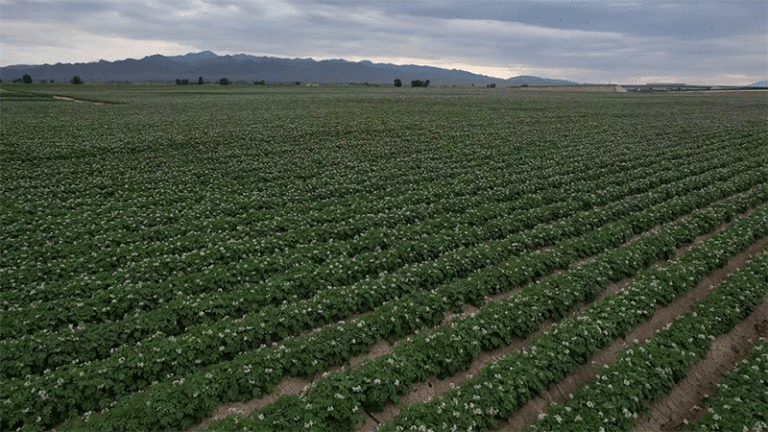
Saudi Agriculture 2026: Subsurface Drip Irrigation Pioneers Desert Potato Farming

Key takeaways
- Subsurface drip installed at 25 cm depth
- Water use down 40% in early field data
- Nitrogen leaching down 30%
- Water and nutrients delivered to the root zone
- Biostimulants added against thermal stress
Why it matters
- For farmers
- Burying the line removes evaporation from the equation, and the nitrogen figure matters as much as the water one: less leaching means less fertiliser bought and less salt left in the profile.
- For suppliers
- Biostimulants are being scheduled through the irrigation system rather than applied separately, which puts them into the drip specification.
60-second summary
Subsurface drip irrigation, installed at a depth of 25 centimetres for potato cultivation, was the technology in focus at Saudi Agriculture 2026 in Riyadh. Early field data reports a 40% reduction in water use and a 30% drop in nitrogen leaching — the two problems that define desert production, scarcity and soil salinity. Delivering water and nutrients straight to the root zone removes evaporative loss and improves fertiliser efficiency. Against thermal stress, which degrades both tuber quality and yield, agronomists are adding biostimulants such as humates and amino acids to the irrigation schedule to support root development and metabolic stability through peak summer heat.
At Saudi Agriculture 2026 in Riyadh, a transformative irrigation technology takes center stage as the Kingdom intensifies its quest for food security in arid climates. The spotlight falls on Subsurface Drip Irrigation (SDI), strategically installed at a depth of 25 centimeters specifically for potato cultivation. Early field data reveals a compelling 40% reduction in water usage alongside a 30% decrease in nitrogen leaching, effectively addressing two critical challenges in desert agriculture—scarcity and soil salinity. By delivering water and nutrients directly to the root zone, the system minimizes evaporative losses and optimizes fertilizer efficiency, creating a resilient production model for high-value crops in hyper-arid environments.
To combat the pervasive threat of thermal stress, which can drastically reduce tuber quality and yield, local agronomists are integrating biostimulants such as humates and amino acids into the irrigation schedule. These organic compounds enhance root development and improve the plant’s physiological tolerance to extreme heat, ensuring metabolic stability during peak summer temperatures. The synergy between precision hardware and biological support systems is proving pivotal, as Saudi Arabia moves beyond experimental plots toward scalable commercial applications. With the 2026 forum serving as a knowledge-exchange hub, the SDI model is positioned not only as a domestic success story but as a replicable blueprint for dryland farming across the MENA region, reinforcing the nation’s commitment to sustainable intensification under Vision 2030.
Global Potato Brief
Top five stories, prices, disease alerts and events. Weekday mornings, no advertising.
Linked in this material
- Country
- Saudi Arabia
- Technologies
- Subsurface drip irrigationBiostimulantsFertigation
- Events
- Saudi Agriculture 2026
- Sections
- IRRIGATIONNews
Related stories

Russia’s Smart Flexible Irrigation System: AI and Digital Twins Reshape Water Management
Beating the Drought: One Farmer’s Shift to Drip Irrigation Saves His Potato Crop