Ruts After a Wet Harvest: How Not to Lock In Next Year’s Potato Yield Losses
Digging in waterlogged fields saves this season's crop but leaves compacted soil for the next one. AHDB data show compaction can cut potato yields sharply, while subsoiling pays off only where the problem is confirmed.
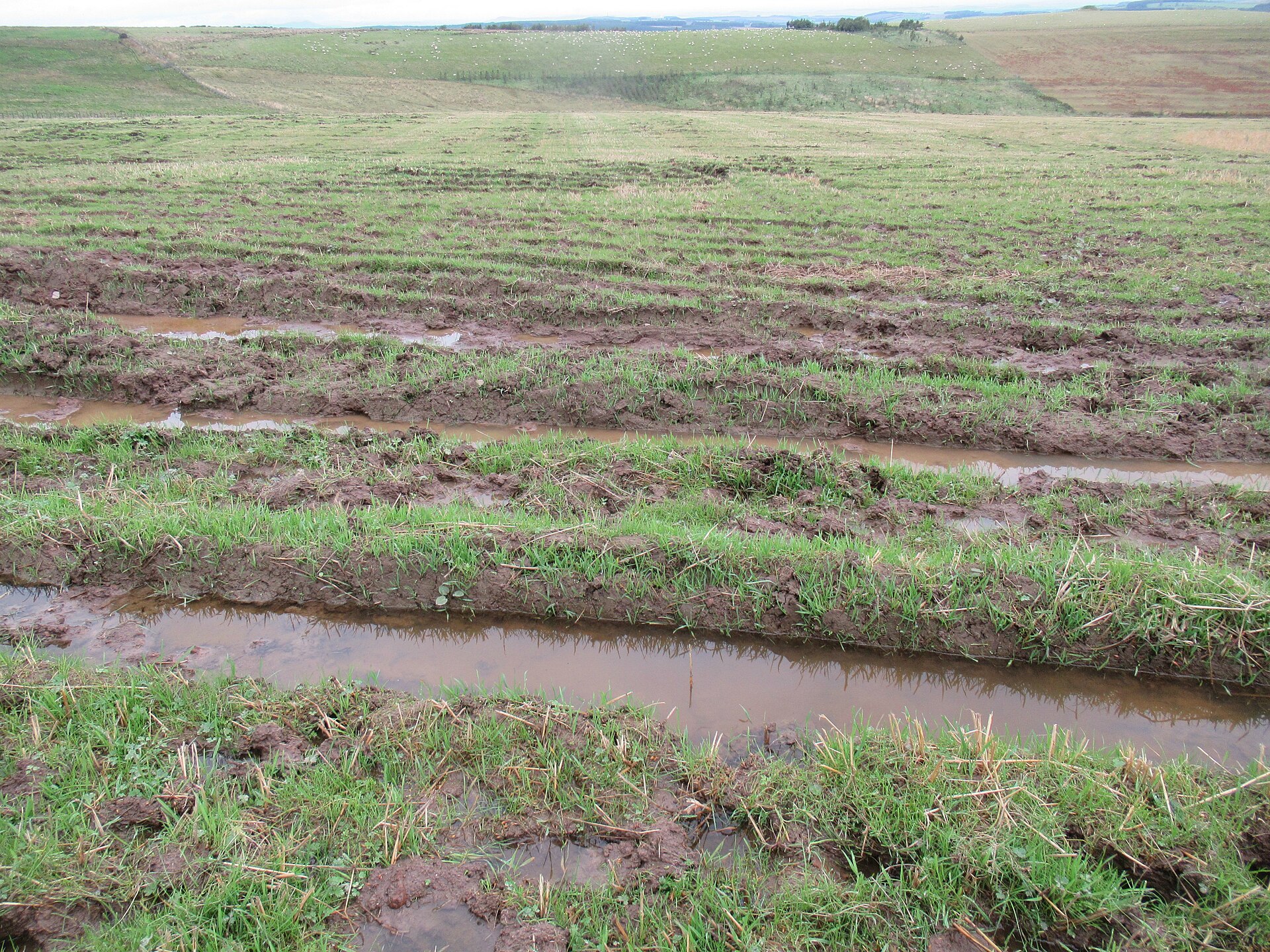
Digging in waterlogged soil solves this season’s problem but leaves a bill for the next. Heavy harvesters, tractors and loaded trucks move slowly across wet fields, often with wheel slip, and compact the soil below the plough layer. For potatoes, one of the crops most sensitive to soil structure, this legacy can cost a large part of the next crop.
What compaction costs
The UK Agriculture and Horticulture Development Board (AHDB) reviewed 16 experiments that compared potato yields on compacted and loose soil. In 13 of them, compaction reduced yield significantly. The average loss was 18 t/ha against a mean yield of 54 t/ha on loose soil, and in some experiments losses reached 25–38 t/ha. Potatoes are most vulnerable in the first 3–4 weeks after emergence: in loose soil, roots grow 1.5–2 cm a day, and a dense layer just below the seed tuber sharply slows them. According to AHDB, the effects of compaction last the whole season and, once created, are almost impossible to remove completely.
How to recognise the problem
Compaction is easy to confuse with other causes of yield loss. AHDB lists typical signs: uneven emergence, slow canopy growth, wilting leaves when the soil is moist, nutrient deficiency symptoms and more misshapen tubers. So before any deep cultivation, specialists advise a field diagnosis. Dig a soil pit with a spade in several places and assess soil structure (the Visual Evaluation of Soil Structure, VESS), adding a penetrometer where possible.
Weekdays. Unsubscribe in one click.
Subsoiling is not a universal answer
Subsoiling after a wet harvest seems the obvious fix, but the data are mixed. Of 83 published subsoiling experiments in potatoes reviewed by AHDB, only 28 gave a significant yield increase, and three gave lower yields. Even where soil resistance fell measurably, the yield gain was often small, about 5 t/ha.
AHDB gives these practical rules for soils after prolonged waterlogging:
- Subsoil only where compaction is confirmed by a soil assessment, and only to the depth of the compacted layer.
- Check soil moisture at working depth before any work (a simple ribbon test). In wet soil a subsoiler smears the layer instead of shattering it.
- Do not plough straight after waterlogging: worked soil takes in more rain, and seedbed conditions can become worse by spring.
- Keep traffic to a minimum and stay off the field until the soil has dried.
- Inspect and clear field drain outfalls and ditches in autumn.
What to do with low spots
Waterlogged hollows, where machines get stuck and part of the crop is lost, are a separate question. Canadian specialists advise leaving areas with signs of rot unharvested, so that infection does not reach the store. In the long term, such areas need levelling, drainage or a decision on whether to plant potatoes there at all.
Why it matters
In a season of long rains, the goal is to lift the crop before frost, and some compaction is almost unavoidable. But decisions on how to restore the field are made in autumn and set the starting conditions for next year’s potatoes. Targeted diagnosis and work on dry soil cost less than blanket subsoiling by the calendar, or losing a third of the crop on compacted patches.
Photo: Water-filled tractor ruts in a field near Falla, Scotland (illustrative). ian shiell / Wikimedia Commons, CC BY-SA 2.0