
Russian Scientists Boost Potato Yields by 15% with Drone-Based Treatment in High-Risk Farming Zones
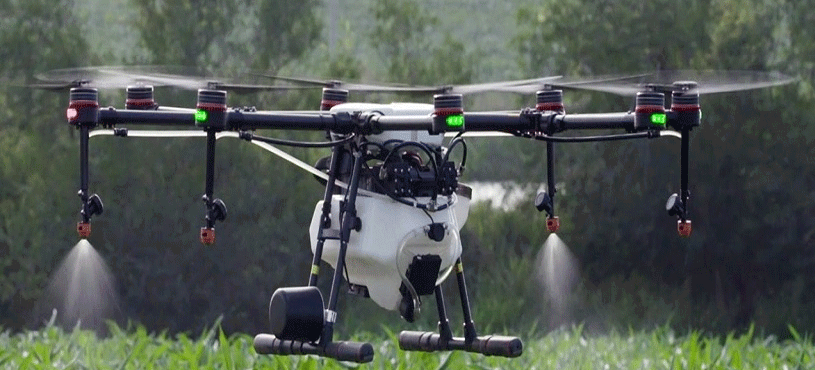
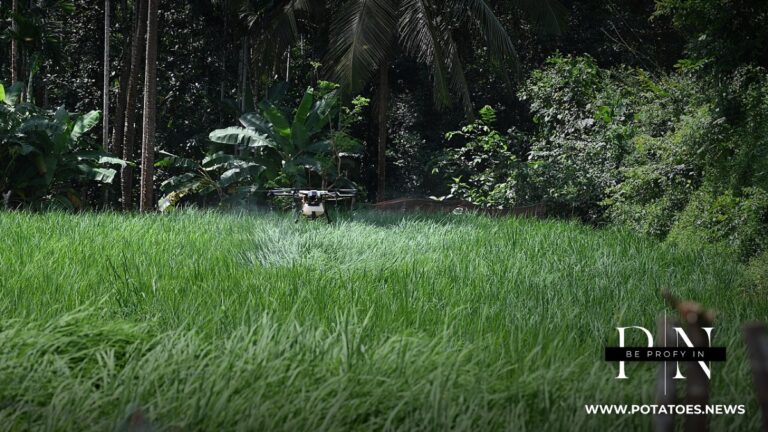
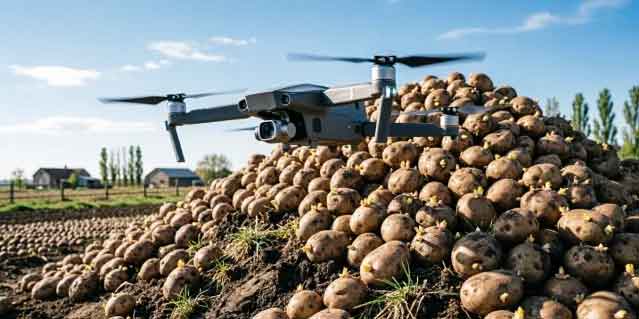
Researchers from the St. Petersburg Federal Research Center of the Russian Academy of Sciences (SPb FIC RAS) have developed an innovative method using three unmanned aerial vehicles (UAVs) to treat potato fields in high-risk agricultural zones, achieving a yield increase of over 15%. The integrated approach involves drones conducting aerial surveys and precisely applying pest-control agents to the soil, addressing the chronic challenge of missed agronomic treatments in northern territories where farming is hampered by short growing seasons, late spring and early autumn frosts, permafrost, floods, heavy rains, waterlogging, and droughts. According to Anton Savelyev, head of the Laboratory of Autonomous Robotic Systems, field experiments demonstrated a 15.2% productivity gain compared to conventional ground-based machinery, with UAVs proving especially valuable in waterlogged conditions where traditional equipment cannot operate effectively.
While the results are promising, Savelyev emphasized that final conclusions regarding the agronomic and economic superiority of drone-based treatment will require several years of repeated trials and detailed cost-benefit analysis. The technology’s practical potential lies in its ability to perform timely applications even when fields are inaccessible to tractors, potentially reducing crop losses and stabilizing output in precarious climates. If validated over time, this drone-assisted system could become a game-changer for risky farming regions, offering a scalable, precise, and weather-resilient alternative to conventional methods.