Russia: Sakhalin Institute Rates Four Belarusian Potato Varieties Promising Under Heavy Blight Pressure
Umka, Yuliya, Briz and Lileya yield over 30 t/ha with more than 75% marketable tubers in the island's humid monsoon climate, the Belarusian potato centre says.
Russian scientists on Sakhalin have rated four Belarusian potato varieties, Umka, Yuliya, Briz and Lileya, as promising for the island, according to the Belarusian Research and Practical Centre for Potato, Fruit and Vegetable Growing. The centre told the Belarusian news agency BelTA on September 22, 2026 that the four varieties yield more than 30 t/ha, produce over 75% marketable tubers and show relative resistance to the main potato pathogens.
The assessment comes from the Sakhalin Research Institute of Agriculture (SakhNIISKh), a branch of the N.I. Vavilov All-Russian Institute of Plant Genetic Resources. The two sides signed a scientific cooperation agreement in 2025, and Belarus sent the institute 15 current varieties for testing.
The shipment covered early varieties Pershatsvet, Yuliya, Umka, Krasavik and Zorachka, mid-early Briz, Mastak, Feniks, Nesterka, Desyatka and Karsan, and mid-season Skarb, Venera, Viliya and Veles. Lileya is not on that list. It was tested on the island in an earlier programme.
Weekdays. Unsubscribe in one click.
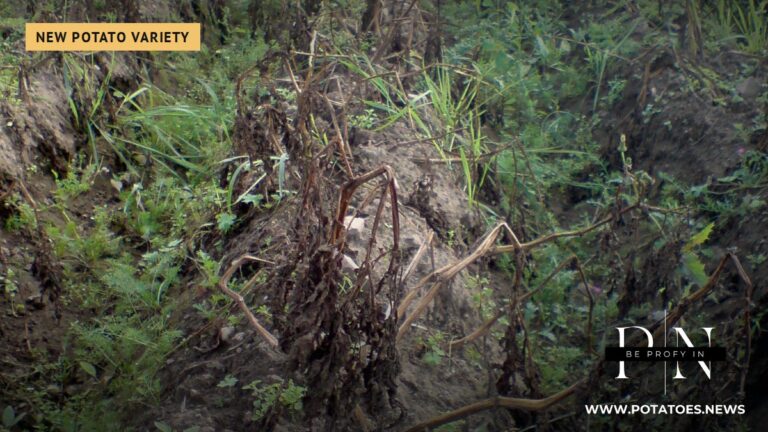
Sakhalin is a hard test for late blight (Phytophthora infestans). The island has a monsoon climate with very high humidity and frequent rain, which keeps leaves wet and favours infection. The Belarusian centre also points out that the pathogen reproduces sexually there, constantly forming new combinations. For a breeder, that makes the island a useful place to see whether a variety’s resistance holds.
Cooperation began in 2016 with two state farms, Korsakovsky in Korsakov district and Zarechnoye in Tomari district. In the first ecological trial at Zarechnoye, Skarb yielded 56 t/ha and Palats 52 t/ha, while Lel reached 35 t/ha, Lileya 26 t/ha and Manifest 22 t/ha. In April 2016 the farm received 150 tonnes of super-elite Briz seed, which yielded 35–38 t/ha in 2016–2017.
Trials of Belarusian varieties on Sakhalin continue this season. According to the centre, 31 Belarusian potato varieties are admitted for use in Russia in 2026, across nine zones of the Russian State Register of Breeding Achievements. Between 2021 and 2026 Belarus also sent varieties to Uzbekistan (20), Sudan (4), China (19 samples) and Nicaragua (12).
The figures were reported by the Belarusian centre. POTATOES NEWS has not seen the Sakhalin institute’s own trial report.
Source: BelTA, September 22, 2026, citing the Research and Practical Centre of the National Academy of Sciences of Belarus for Potato, Fruit and Vegetable Growing
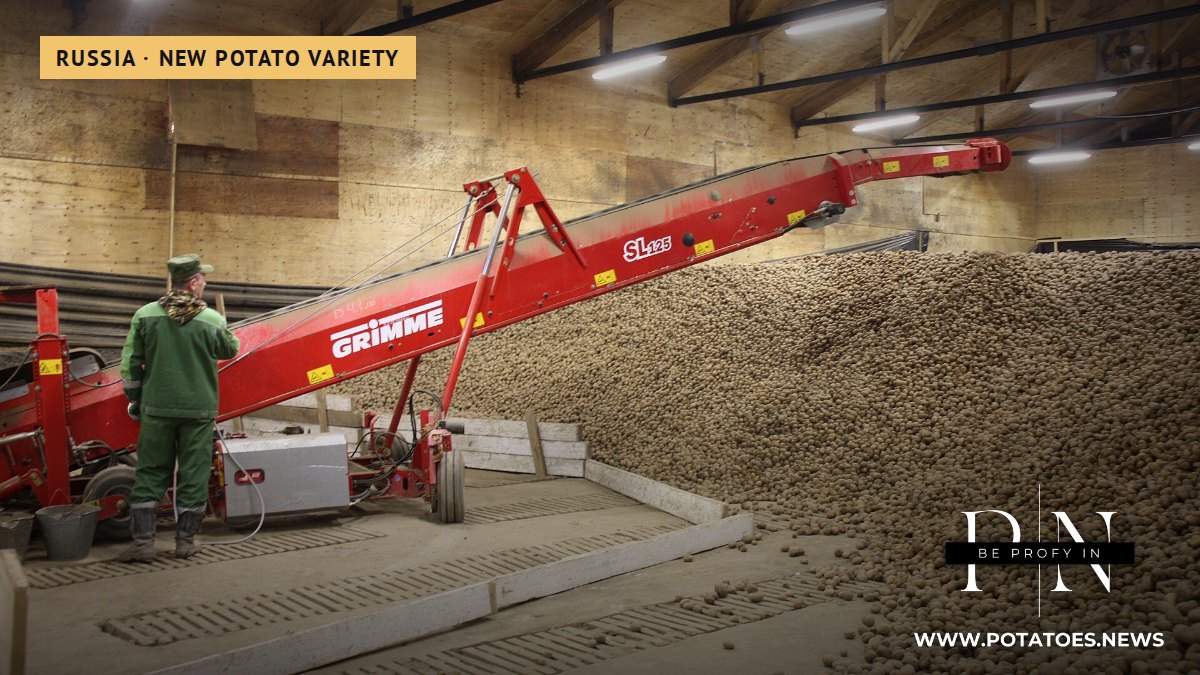
Photo: Vegetable storage base on Sakhalin Island. Ministry for the Development of the Russian Far East / Wikimedia Commons, attribution licence