Seed inspectors in Primorsky Krai have checked 6,700 tonnes of seed potatoes this year. The work was done by the regional branch of Rosselkhoztsentr, the state crop inspection body. The Potato Union published the report on 24 September.
According to the agency, the checked material meets the national standard GOST 33996-2016. This standard sets the quality rules for seed potatoes in Russia.
Area and varieties
Seed potatoes in the region were planted on 2,260 hectares. Growers used domestic varieties. The report names three of them: Kazachok, Meteor and Krasa Meshchery.
Inspectors made field checks during the summer. In September they began to take samples during harvest. The 6,700 tonnes are the volume checked so far this season.
Soybean work is much larger
The same branch also inspected soybean seed. It checked 43,700 tonnes of soybean seed across more than 250,000 hectares. Growers used 36 domestic soybean varieties.
The comparison shows the scale of the two crops in the Far East region. Soybean is the main field crop there. Seed potato production is a small, specialised sector.
Context
Russia is pushing growers to use more seed of domestic varieties. Regional inspection reports are one of the few public data points on how much certified seed is actually produced.
The report does not say how much of the seed will stay in Primorye. It also does not give the seed classes or the share of lots that failed checks.
Why it matters
For growers in the Russian Far East, local certified seed cuts the need to bring seed over long distances. Transport over thousands of kilometres adds cost and risk of damage.
The volume is modest. But the use of only domestic varieties in the report fits the national policy of reducing reliance on imported genetics. Seed buyers should ask suppliers for inspection documents that confirm the standard for each lot.
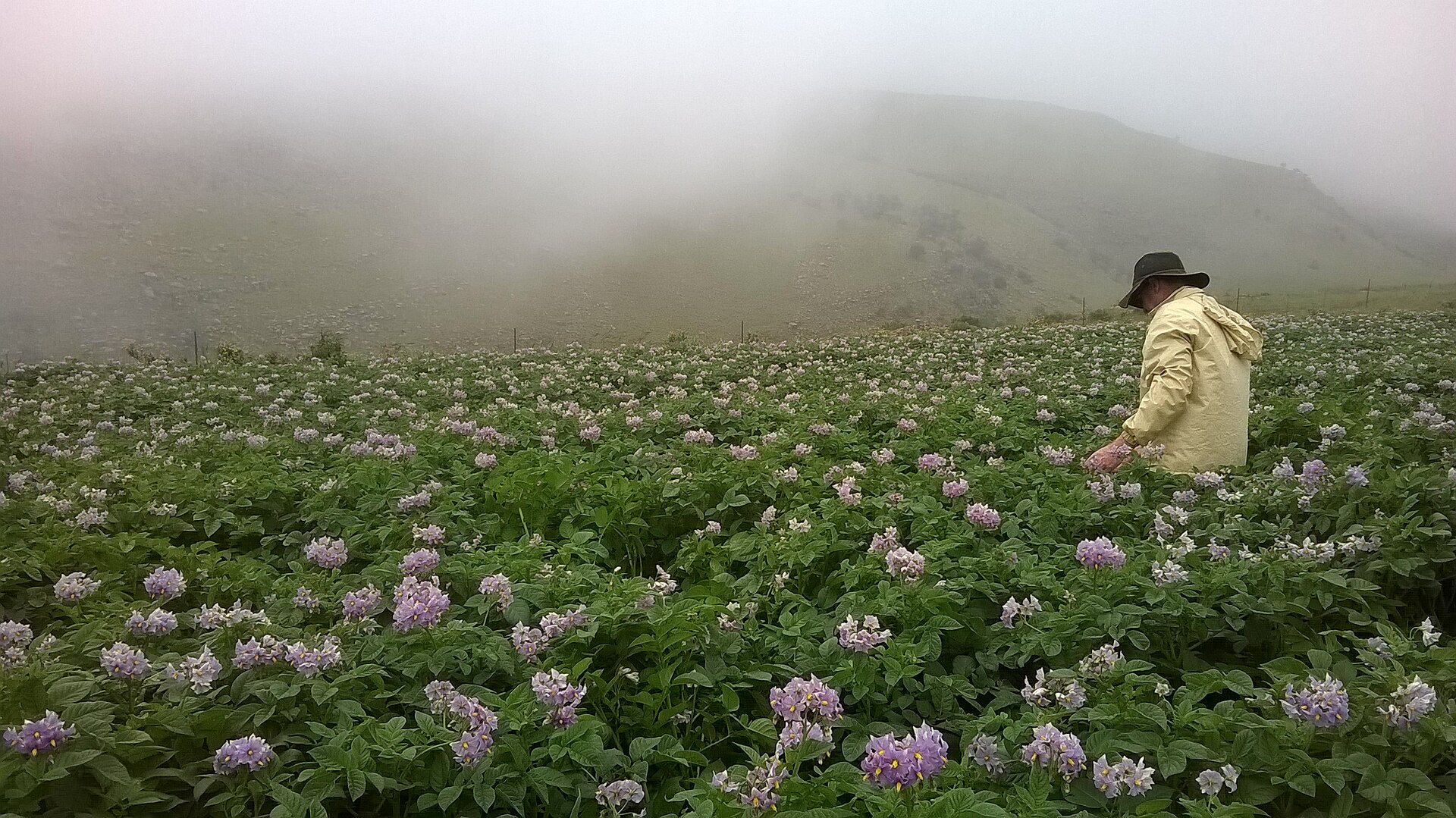
Photo: Field inspection of a seed potato crop (illustrative). Philippus Jacobus Steyn / Wikimedia Commons, CC BY-SA 4.0