Russian Agriculture Minister Oksana Lut has reviewed a vegetable storage project in Penza region. The project belongs to the agricultural firm Razdolye in Penza district. Local outlet Stolica58 reported the visit on 19 September.
The complex will hold 20,000 tonnes of produce at one time. Total project cost is 1,447.3 million roubles. According to the project data, the investor has already put 240 million roubles of own funds into it.
Two phases to 2029
The first phase will store 10,000 tonnes. It is due to open in 2027. Full completion is planned for 2029.
The payback period is 7.5 years. The project will create 131 jobs. The average salary will exceed 70,000 roubles per month.
The Potato Union, the Russian potato industry association, republished the report on 24 September. Its version lists the planned equipment:
- modern climate control systems
- washing and sorting lines
- potato packing equipment
- an independent water supply
- a 1.5-megawatt power substation
Dmitry Lavrentyev founded the firm. He said the project aims to strengthen the region as a reliable vegetable supplier for the whole Volga area.
The minister visited Penza region on 18 September. During the same visit, Governor Oleg Melnichenko thanked the ministry. He said it had helped to solve fuel supply for the harvest campaign.
Why it matters
Storage with washing and packing lets growers sell potatoes later in the season. It also lets them supply retail chains with packed product instead of bulk potatoes from the field.
By our calculation, the cost is about 72,000 roubles per tonne of storage capacity. That is a useful benchmark for other investors in Russian vegetable storage. Only 240 million roubles, or about one sixth of the budget, has been invested so far. The reports do not say how the rest of the cost will be financed. The second phase still has to be financed after 2027.
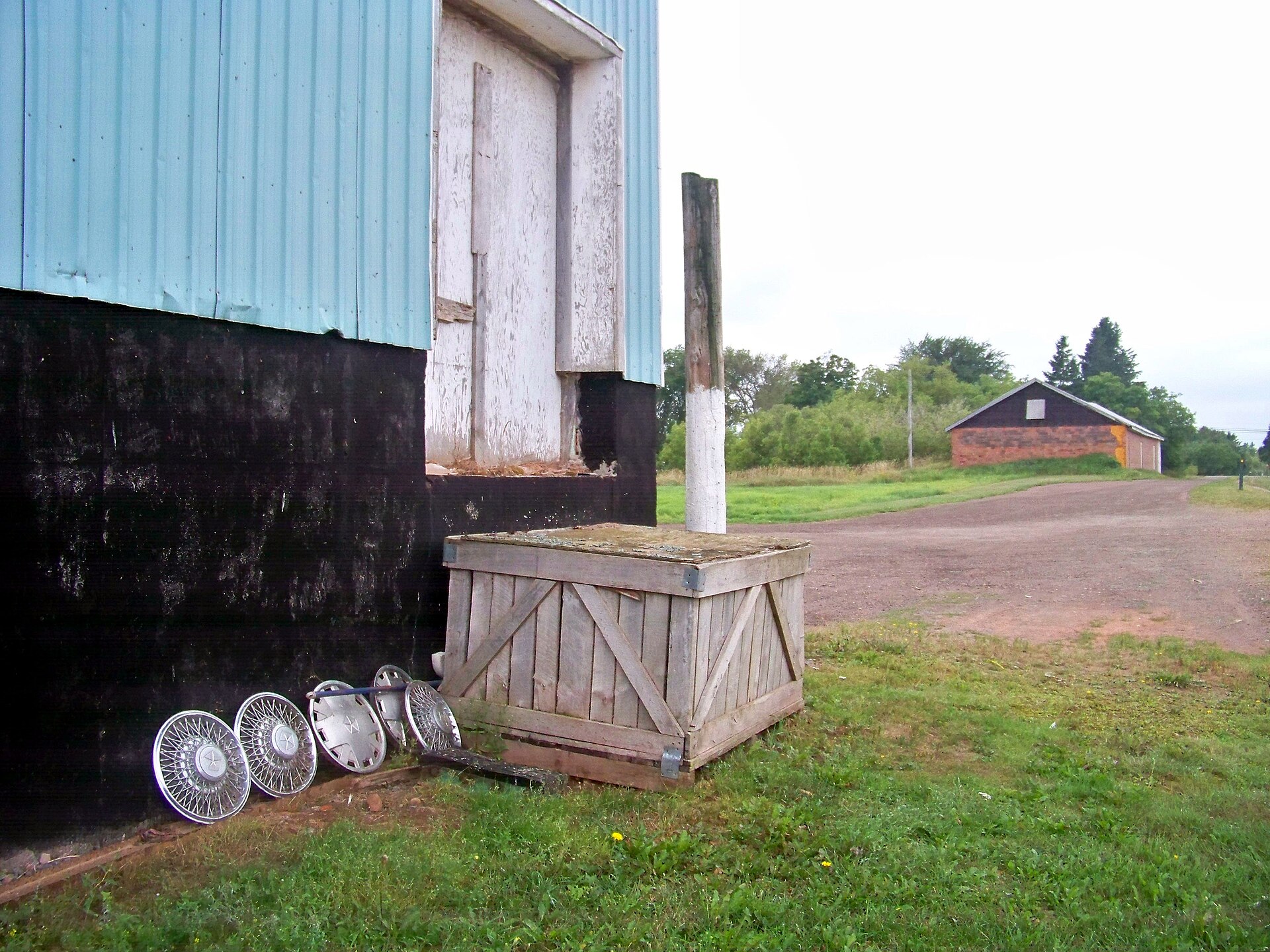
Photo: A potato warehouse in York, Prince Edward Island, Canada (not Russia) (illustrative). Larry from Charlottetown, PEI, Canada / Wikimedia Commons, CC BY 2.0