
Record Rains Turn Ordinary Ural Potatoes into ‘Elite’ Baby Spuds – But Are They Safe to Eat?
Key takeaways
- Excess moisture stopped normal tuber development
- Not a mutation, not disease — weather alone
- Edible provided they have not rotted
- Not true baby cultivars, just undersized
- Chelyabinsk crops fine, Sverdlovsk fields affected
Why it matters
- For farmers
- Undersized does not mean unsellable — but it does mean the crop leaves the field outside its intended grade.
- For traders
- Small-calibre volume arriving unplanned is a grading and pricing problem before it is a supply one.
60-second summary
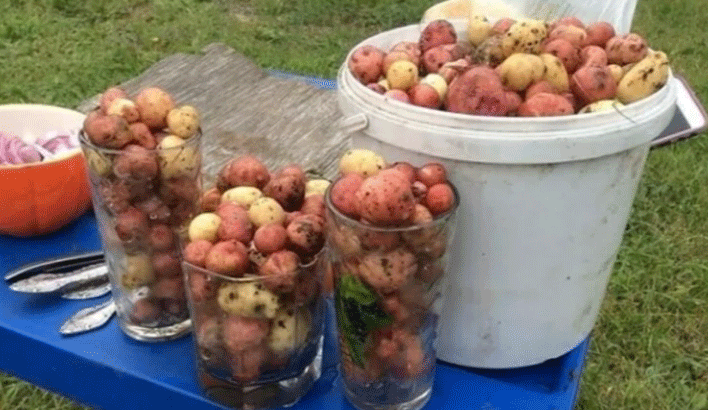
Record rainfall in Russia’s Sverdlovsk region has produced miniature potatoes resembling the gourmet “baby” varieties restaurants pay for. Lydia Guseva, deputy head of economics at the Ural Research Institute of Agriculture, says the stunting is purely weather-related — excessive moisture prevented normal development — and is neither a genetic mutation nor disease. The tubers are edible provided they have not rotted, but they are ordinary varieties that failed to bulk up rather than true baby cultivars. The institute’s field trials show a sharp contrast between regions: Chelyabinsk crops are thriving while Sverdlovsk fields are full of undersized tubers that never reached maturity. Harvest figures are already well below last year, with only half the grain crop collected and potato digging not yet started because of persistent rain, so the extent of the damage is still unclear.
This year’s unprecedented downpours in Russia’s Sverdlovsk region have produced a surprise harvest: miniature potatoes that look and taste like gourmet “baby” varieties, much prized by restaurants for their neat size and delicate flavor. While local gardeners joke about their meager yields, agricultural experts have weighed in on whether these shrunken tubers are fit for the table. According to Lydia Guseva, Deputy Head of Economics at the Ural Research Institute of Agriculture, the stunted growth is purely weather-related – the excessive moisture prevented normal root development – not a genetic mutation or disease. She confirms that the potatoes are perfectly edible, provided they haven’t rotted, though they are not true baby cultivars but rather ordinary sorts that failed to bulk up.
Meanwhile, the institute’s field trials across Sverdlovsk and Chelyabinsk regions reveal stark contrasts: while Chelyabinsk’s crops are thriving, Sverdlovsk’s fields are full of “baby” potatoes that never reached maturity. Harvest figures are already far below last year’s, and with only half the grain crop collected and potato digging yet to start due to persistent rains, the full extent of the damage remains unclear. Social media, however, is alive with dark humor – residents joke about feasting on “elite” spuds, note the high price of baby potatoes in city restaurants, and wryly predict a surplus of fancy produce for cafes this season. For now, scientists urge calm: the mini-tubers are safe, but the real worry is what the final tallies will show when the mud finally clears.
Global Potato Brief
Top five stories, prices, disease alerts and events. Weekday mornings, no advertising.
Sources
- Lydia Guseva, Ural Research Institute of Agriculture — quoted in the article
Linked in this material
- Country
- Russia
Related stories

Russian Potato Farmers Face Twin Crises in 2026: Extreme Weather and Retail Market Discrimination

Extreme Weather Devastates Potato Harvests Across Russia and Kazakhstan, Driving Prices Up


