Rains of 16–70 mm Sweep Southeast Buenos Aires Ahead of Potato Planting
A widespread rainfall event delivered between 16 and 70 millimeters across the southeast of Buenos Aires province, with Coronel Vidal recording the maximum of 70 mm — uneven but broadly welcome moisture for Argentina’s main fresh potato region just before planting.
A rainfall event swept the southeast of Buenos Aires province in the days around 8 October, leaving totals ranging from 16 to 70 millimeters across the region’s agricultural districts, according to a monitoring summary from YPF-AGRO stations published by Argenpapa.
The maximum was recorded at Coronel Vidal with 70 millimeters. Other significant totals included Los Patrios at 48 mm, La Loma at 47 mm, La Negra at 46 mm, Polaridad Vieja and El Relincho at 45 mm each, Claraz and San Manuel at 40 mm, El Retiro at 38 mm, Nahuel Rucá at 35 mm, Lobería at 34 mm, Napaleofú at 33 mm, and the key potato centers of Balcarce and Tandil at 30 mm each. The driest stations in the network still received at least 16 mm.
Weekdays. Unsubscribe in one click.
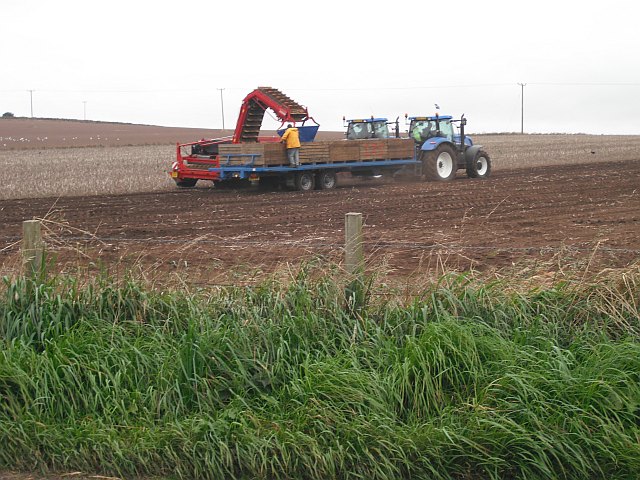
For the region’s potato growers, the timing matters. The southeast of Buenos Aires — the Balcarce–Tandil–coastal corridor — is the core of Argentina’s fresh table potato production, and planting for the new season is beginning now. Soil moisture at planting determines emergence uniformity and early canopy development, and it reduces or eliminates the need for pre-plant irrigation on rainfed fields, which make up much of the area.
The unevenness of the distribution is the other side of the story. A 70 mm event at Coronel Vidal against 16 mm at the driest stations means soil moisture reserves now differ sharply over short distances. Growers on the wetter end face the opposite risk windows later: waterlogged seedbeds delay planting operations and raise the pressure of soil-borne and seed-borne rot — the same mechanism that destroyed part of last season’s seed in the northwest (as reported from Jujuy) after excessive rains.
The YPF-AGRO station network is one of the more granular public rainfall references available to the region’s producers, and its readings are followed closely at this time of year because they feed directly into two decisions: the exact planting window on each farm, and the early fungicide program. A humid spring in the southeast historically correlates with earlier and stronger late blight pressure — the disease that defines the region’s crop protection calendar.
Meteorologists speaking at regional grower events this week, including the PGP Agronegocios field day in Balcarce, have tied the season’s rainfall outlook to the evolving El Niño pattern, which typically shifts precipitation distribution across the pampas. Growers making planting and protection decisions over the next three to four weeks will be watching both the station data and the seasonal forecast updates.
For the fresh potato sector specifically, the rainfall map doubles as a planting-schedule map. Farms around Balcarce and Tandil with their 30 mm can move into seedbed preparation almost immediately where soils were dry; operations near Coronel Vidal, with more than double that amount, face days of waiting before machinery can enter without compaction damage. The event also matters for what it means downstream: uniform emergence across the region’s staggered plantings is the foundation of the staggered harvest that supplies Argentina’s fresh markets through the season, and this rain — for all its unevenness — arrived exactly when the crop needed its first moisture.