Potato Blight vs. Early Blight: How to Tell Them Apart and Why It Matters for Your Crop
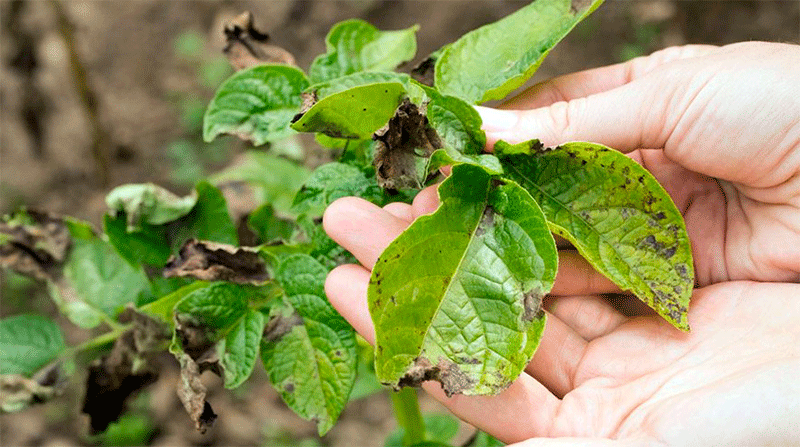
In Belarus, where potatoes are a staple food, two formidable fungal-like diseases—late blight (Phytophthora infestans, literally “plant destroyer”) and early blight (Alternaria)—constantly threaten solanaceous crops like tomatoes, peppers, and eggplants. Though their symptoms can look similar, confusing them leads to wasted fungicides and devastating yield losses. Late blight thrives in cool, wet weather—triggered by sudden summer rains, heavy dews, and fog—and spreads with lightning speed, destroying entire fields in days. Its telltale sign is a delicate white, cottony mold on the undersides of leaves, right at the border between living and dead tissue. Early blight, by contrast, prefers hot, dry conditions; it causes yellowing and brown spots but never produces that white powdery bloom. Recognizing this difference is the first critical step in choosing the right protection strategy.
Scientists from Belarus’s Scientific and Practical Center for Potato and Horticulture emphasize that prevention is far easier than cure. The first preventive spray should be applied when shoots reach 15–20 cm in height, using systemic fungicides (e.g., Ridomil Gold, Acrobat) that protect plants from within during active growth. Once flowering begins, switch to contact fungicides (e.g., Bordeaux mixture, HOM, Abiga-Pik) and rotate products to prevent resistance. Treatments are repeated every 10–14 days, stopping 20–30 days before harvest. Climate patterns are shifting: late blight now appears later (late June to early July) while early blight has become more dominant due to prolonged droughts. Resistant Belarusian varieties—such as “Lileya” (early), “Ragneda,” “Atlant,” “Vector,” and “Zdabytak” (mid-late)—offer genetic defense, but even the best cultivars fail without timely spraying. Always apply in calm, dry weather, using a fine mist nozzle to coat the undersides of leaves, and reapply if rain occurs within 3–4 hours for systemic products (or immediately for contact ones). Proper diagnosis, timely action, and disciplined rotation remain the keys to saving the harvest.
Защита в РФ · справка редакции
Weekdays. Unsubscribe in one click.
Фитофтороз (Phytophthora infestans): что зарегистрировано на картофеле в России
- Флуазинам (FRAC 29, контактный): Ширлан, СК — № 041-02-1705-1, до 30.01.2028; Батлер, КС — № 178-02-3836-1, до 24.10.2032.
- Мандипропамид (FRAC 40): Ревус, КС — № 041-02-3558-1, до 21.03.2032.
- Циазофамид (FRAC 21): Ранман Топ, КС — № 066-02-9725-1, до 10.12.2035.
- Пропамокарб + флуопиколид (FRAC 28 + 43): Инфинито, КС — № 019-02-2311-1, до 14.07.2029.
- Фамоксадон + цимоксанил (FRAC 11 + 27): Тонус, ВДГ — № 010-02-3212-1, до 12.07.2031.
- Фамоксадон + оксатиапипролин (FRAC 11 + 49): Зорвек Энкантия, СЭ — № 029-02-2859-1, до 27.10.2030.
- Манкоцеб + диметоморф (FRAC M3 + 40): Акробат МЦ, ВДГ — № 015-02-2310-1, до 09.07.2029.
- Резистентность: чередуйте группы FRAC, не повторяйте одну группу подряд; системные препараты применяйте профилактически или в смеси с контактным партнёром. Фениламиды (FRAC 4: металаксил, мефеноксам) — только в смеси и не там, где подтверждены устойчивые популяции.
Альтернариоз (Alternaria solani, A. alternata): что зарегистрировано на картофеле в России
- Дифеноконазол (FRAC 3): Скор, КЭ — № 041-02-4371-0, до 22.01.2027; Дискор, КЭ — № 002-02-3369-1, до 15.11.2031; Раёк, КЭ — № 021-02-2611-1, до 18.03.2030.
- Боскалид + пираклостробин (FRAC 7 + 11): Сигнум, ВДГ — № 014-02-4529-0, до 24.04.2027; Ралли, СК — № 021-02-9607-0, до 30.09.2028.
- Азоксистробин (FRAC 11): Афродита 250, КС — № 528-02-3701-1, до 05.06.2032.
- Манкоцеб (FRAC M3, контактный): Дитан М-45, СП — № 009-02-2244-1, до 23.05.2029; Индофил М-45, СП — № 159-02-2388-1, до 10.09.2029.
- Резистентность: стробилурины (11) и SDHI (7) — не более 2–3 обработок за сезон и не подряд одной группой. Препараты против фитофтороза (в частности, фениламиды) на альтернариоз не действуют.
Справка редакции potatoes.news по Реестру пестицидов и агрохимикатов, разрешённых к применению на территории РФ (Минсельхоз России, версия от 29.09.2026). Перечень не исчерпывающий, приведён в информационных целях и не является рекомендацией конкретных препаратов или производителей. Нормы расхода, сроки ожидания и кратность обработок — строго по регламенту в Реестре и на этикетке; перед применением убедитесь, что регистрация действует.