Poland: GUS Sees 2026 Potato Crop at 5.9 Million Tonnes, Down 15.4%
Statistics Poland estimates the 2026 potato harvest at about 5.9 million tonnes, 15.4% below 2025, with an average yield of 313 dt/ha.
Poland will harvest about 5.9 million tonnes of potatoes in 2026, according to a preliminary estimate from Statistics Poland (GUS) published on 30 September. This is about 15.4% less than the harvest of 2025.
GUS puts the average potato yield at 313 decitonnes per hectare, or 31.3 tonnes per hectare. This is 4.3% lower than last year. The potato area is about 0.2 million hectares. The estimate covers potatoes grown in fields and in home gardens.
Because the yield fell by only 4.3%, most of the drop in production comes from the smaller area (our reading of the GUS figures). An earlier analysis by the farm portal farmer.pl, based on EU data, put the Polish potato area at 185,206 hectares in 2026, down from 210,760 hectares in 2025.
Weekdays. Unsubscribe in one click.
GUS said growing conditions from planting until June were not very good. Rain in June then helped the crop, especially later varieties. But the condition of plants stayed uneven across the country.
Potatoes are not the only crop with a smaller harvest. GUS also expects lower output of cereals (35.5 million tonnes, down 5.0%), rapeseed (3.0 million tonnes, down 17.3%) and sugar beet (15.7 million tonnes, down 15.5%).
The GUS figure is close to an earlier forecast from the Institute of Agricultural and Food Economics (IERiGŻ-PIB). At a seminar in July, IERiGŻ experts expected about 6 million tonnes, down from about 7 million tonnes a year earlier. They also said that prices for contract potatoes, especially starch potatoes, would fall by about 20%, while free-market prices would likely rise as the season goes on.
Why it matters
Poland is one of the largest potato producers in the European Union. A drop of about one million tonnes means less supply for the domestic ware market, for the starch industry and for chip and fry makers. At the same time, the harvest in Germany, the Netherlands, Belgium and France is also much smaller this year.
For Polish growers, this can be an opportunity. If quality in storage stays good, free-market prices may rise during the winter and spring. Some traders also expect more export demand from Western Europe. But starch potato growers are in a weaker position: their prices for 2026 were agreed at a much lower level than in 2025, so a smaller crop does not help them in the same way.
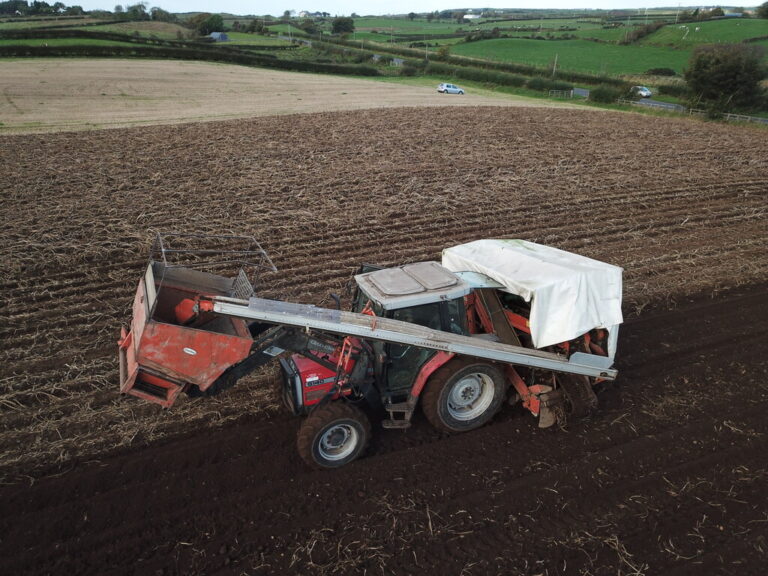
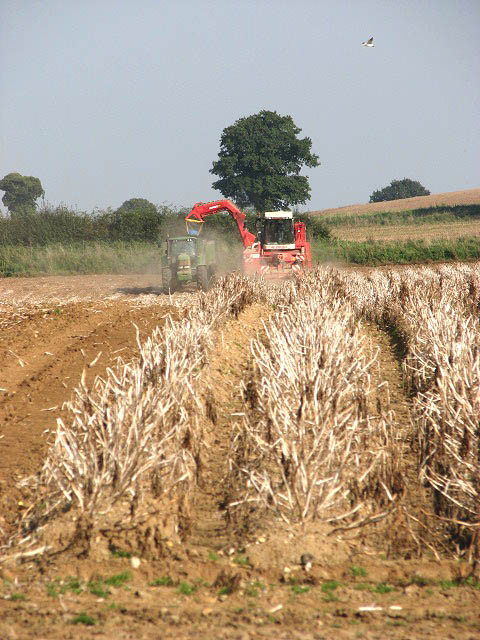
Photo: Potato harvest (not Poland) (illustrative). Robert Ashworth from Bellingham, WA., USA / Wikimedia Commons, CC BY 2.0