Peru: Yellow potato hits S/5 per kilo in Lima as El Niño fears weigh on food prices
Wholesale yellow potato prices in Lima have risen about 30% this month, with retail prices reaching S/5 per kilogram, as traders point to El Niño and supply-side pressures in Peru's highland growing regions.
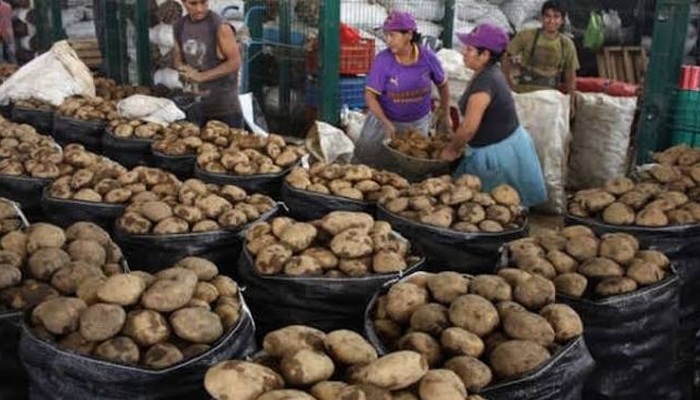
Wholesale prices for Peru’s prized yellow potato have risen by around 30% in Lima this month, and retail prices in some city markets have reached S/5 (Peruvian soles) per kilogram. Traders blame El Niño, which Peru’s official forecasting body expects to reach “extraordinary” strength before early 2027. The data, however, point to a more varied picture, in which supply-side factors in the highland growing regions matter as much as the climate headline.
Wholesale: yellow potato up by about a third
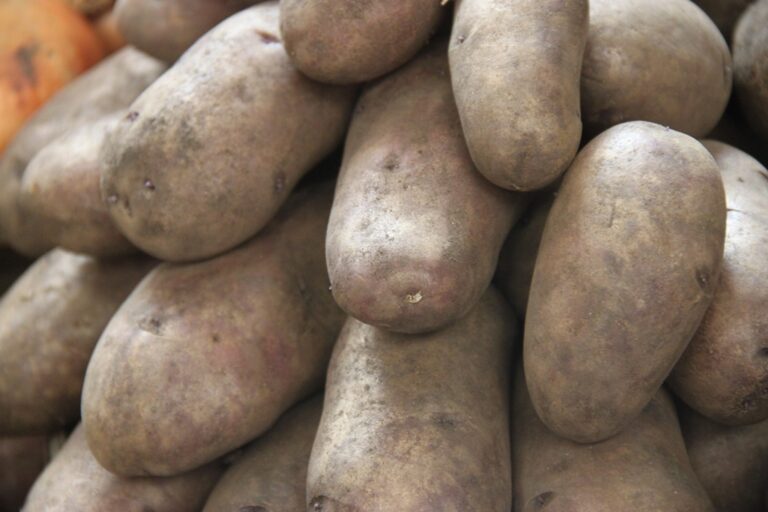
At the Gran Mercado Mayorista de Lima (GMML), the capital’s main wholesale market in the Santa Anita district, the yellow potato (papa amarilla, mostly the Tumbay variety) has climbed from its usual S/3.30–3.50 per kg to S/4.30–4.50, according to traders interviewed by Peruvian broadcaster ATV on 7 October and by Infobae on 15 October. The yellow potato is a premium, floury native type central to Peruvian cooking, notably in causa and papa a la huancaína. Traders expect prices to stay high throughout October and to ease only slightly afterwards.
Official GMML figures published by the state newspaper El Peruano for 1 October show 1,192 tonnes of potatoes arriving at the market that day, with average wholesale prices as follows:
Weekdays. Unsubscribe in one click.
| Variety | Wholesale price, 1 Oct (S/ per kg) |
|---|---|
| Peruanita | 3.63 |
| Huayro | 3.08 |
| Canchán | 2.18 |
| Negra andina | 2.08 |
| Yungay | 2.00 |
| Única | 1.93 |
For comparison, the average wholesale price of white potatoes at the GMML in October 2025 was S/0.97 per kg, according to the market operator EMMSA. Current readings for Yungay, Peru’s most widely sold white variety, vary by source: S/2.00 in the official summary for 1 October, and S/1.10–1.30 according to a GMML trader quoted on 7 October. The gap probably reflects differences in size grade and between new-crop and stored lots. Even at the lower end, white potato prices are running above last year’s level.
Retail: modest mark-ups
The retail picture comes from a report by Panamericana Televisión’s Buenos Días Perú, summarised by the Argentine potato portal Argenpapa on 1 October, from the Mercado Modelo in Carabayllo, a district in northern Lima:
- yellow potato: S/4–5 per kg;
- Yungay: S/2–2.50 per kg;
- a variety stallholders called “papa peruana”, most likely Peruanita: around S/4 per kg.
Sellers attributed the spread within each range to variety, quality, origin and supply conditions at individual stalls. The S/5 figure is not new: Panamericana reported the same top price for yellow potatoes at the Villa Sur market in Villa El Salvador as early as 27 August.
Set against the wholesale data, retail mark-ups at the start of October looked moderate: up to about 25% for Yungay and about 10% for Peruanita. This suggests that the price pressure is building further up the supply chain rather than at the market stall.
Other vegetables follow suit
The same reports point to rising prices for onions, tomatoes, carrots, celery, leeks and squash. In Carabayllo, carrots rose from S/1.50 to S/2.80 per kg (+87%), tomatoes sold at around S/5 per kg and a crate of tomatoes at S/90–100. Accounts of onion prices varied widely among sellers, from an increase of S/0.50 to a jump from S/1.20 to S/3 per kg. Stallholders said they had to pass higher replacement costs on to shoppers in order to protect their working capital.
The El Niño backdrop
Peru’s multi-sector El Niño study commission (ENFEN) has maintained a “Coastal El Niño Alert” for most of 2026. In its official communiqué No. 16-2026 of 14 September, ENFEN said that in the Niño 1+2 region, off Peru’s northern and central coast, the event was most likely to reach extraordinary magnitude between September 2026 and January 2027, and to last until the middle of the southern-hemisphere autumn of 2027, i.e. around May. The worst effects are expected in the northern regions of Tumbes, Piura, Lambayeque and La Libertad and in the northern highlands, with heavier-than-normal rain on the northern coast from November.
In August, Adrián Armas, chief economist at Peru’s Central Reserve Bank (BCR), said the effects of El Niño were already visible in the prices of potatoes, tomatoes, chilli peppers and eggs. He linked the phenomenon to July’s inflation figures, when consumer prices in Metropolitan Lima rose by 0.29% month on month and 4.07% year on year, above the BCR’s target range.
A caveat on cause and effect
The link between El Niño and potato prices is so far an assessment by traders and economists rather than a finding backed by harvest data. Most of Lima’s potatoes do not come from the coast, where Coastal El Niño is felt most strongly, but from the Andean highlands: according to EMMSA, between January 2024 and January 2025 the main suppliers were Junín (29%), Huánuco (27%), Lima region (24%) and Ayacucho (12%). In October, GMML traders cited more specific factors: lower-than-expected yields, poor weather in the producing valleys and higher road haulage costs. As Argenpapa notes, the direction of prices over the coming weeks will depend on conditions in the growing areas, the regularity of deliveries to Lima and transport costs.
Sources
- Argenpapa, 1 Oct 2026: Perú (Lima): El Niño presiona los precios de la papa y la amarilla alcanza S/5 por kilo (original source: Panamericana Televisión, Buenos Días Perú)
- El Peruano, 1 Oct 2026: Ingreso de papa a mercados mayoristas de Lima se incrementó en más de 118%
- ATV, 7 Oct 2026: Sube el precio de la papa yungay y amarilla en el Gran Mercado Mayorista de Lima
- Infobae, 15 Oct 2026: Canasta básica familiar: papa amarilla, choclo y cebolla roja suben de precio
- Panamericana, 27 Aug 2026: Fenómeno El Niño ya afecta el bolsillo
- Panamericana: Fenómeno El Niño ya afecta los precios de alimentos básicos en los mercados
- Canal N: ENFEN: Niño Costero se extenderá hasta mediados del otoño de 2027
- El Búho, 15 Sep 2026: El Niño Costero tendría una magnitud extraordinaria…
- EMMSA / MIDAGRI: potato volume and price bulletin, GMML; supply by region, Jan 2024 – Jan 2025