Pakistan Sets a 160,000-Tonne Certified Seed-Potato Target Under a Korea-Backed Aeroponic Project
The Pakistan-Korea project, run with KOPIA at the National Agricultural Research Centre in Islamabad, aims to build a local certified seed system with aeroponic facilities and trained staff.
Pakistan aims to produce 160,000 tonnes of certified seed potatoes a year under a cooperation project with South Korea, officials said at an event at the National Agricultural Research Centre (NARC) in Islamabad, reported by ARY News on 16 September and The Nation on 17 September.
The Pakistan-Korea Collaborative Project on Certified Seed Potato Production is supported by the Korea Program on International Agriculture (KOPIA). It covers certified seed production and supply, modern aeroponic infrastructure and training of technical staff. The Korean ambassador attended the event.
Federal Minister for National Food Security Rana Tanveer Hussain described the project as an important step towards a sustainable local seed system for the potato sector. The Pakistan Agricultural Research Council (PARC), chaired by Dr Murtaza Hassan Andrabi, is the Pakistani implementing side. According to ARY News, Pakistan also wants to expand cooperation with Korea in smart farming, horticulture, livestock and agricultural mechanisation.
Weekdays. Unsubscribe in one click.
The 160,000-tonne figure is a target, not current production, and the reports do not say by which year it should be reached or how much certified seed Pakistan produces today.
Aeroponics — growing plants with their roots suspended in air and sprayed with nutrient solution — is used to produce large numbers of disease-free minitubers, the first generation of a certified seed chain. Those minitubers are then multiplied in the field over several generations before reaching farmers.
A trade site, VerticalFarmDaily, reprinted the story with a date of 21 September; the Pakistani reports show the announcement was made earlier, by 16 September.
Why it matters
A domestic certified seed system of this size would reduce Pakistan’s need for imported seed and could lift yields by cutting virus loads in farmers’ planting material. For European and other seed exporters, it signals a market that intends to supply more of its own needs — though the reports give no timeline for reaching the target.
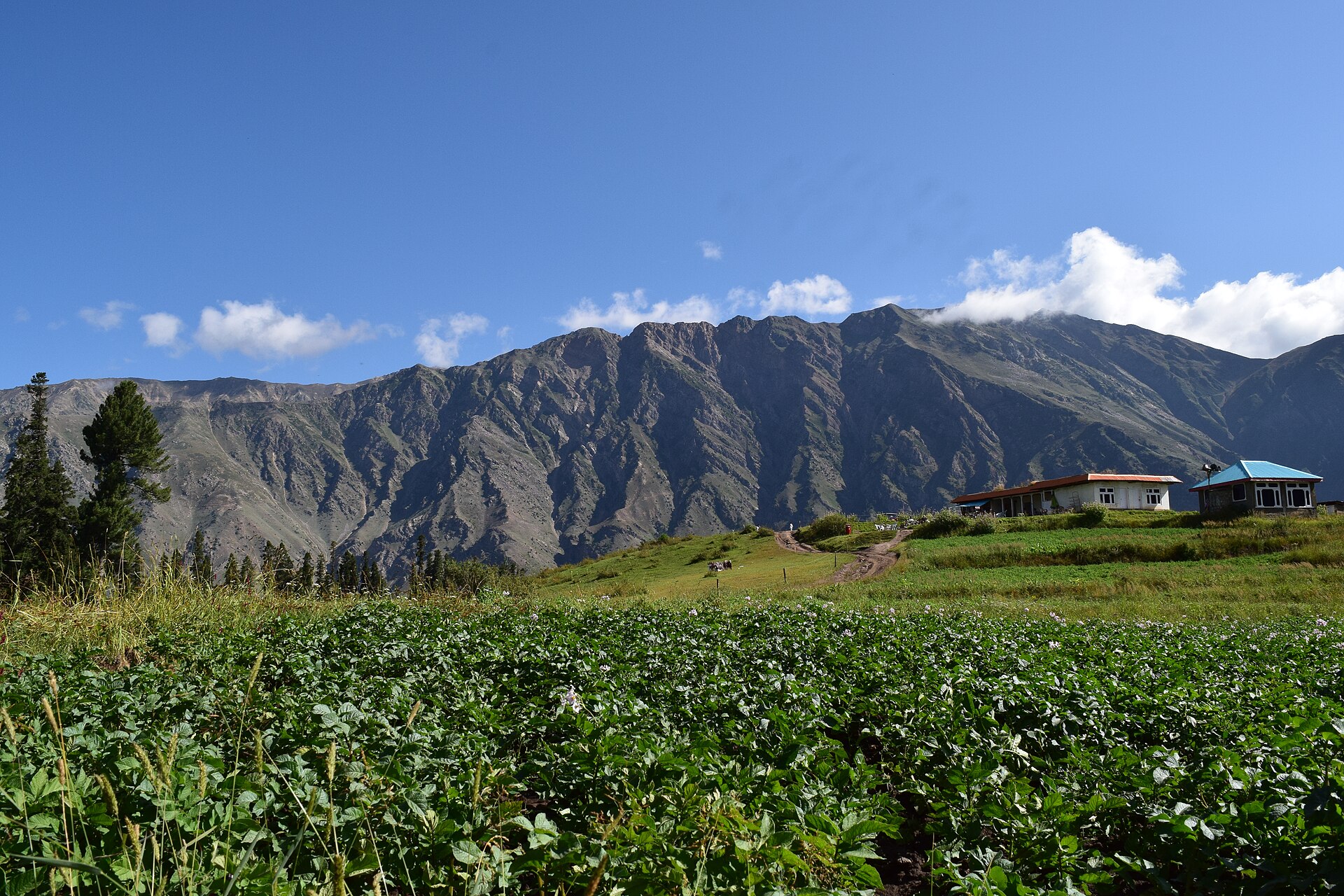
Photo: Potato fields at Lalazar in the Kaghan valley, Pakistan (illustrative). Mudassar murtaza / Wikimedia Commons, CC BY-SA 4.0