Pakistan: Fresh Border Strikes Keep the Potato Corridor to Central Asia Shut
Drone strikes and closed crossings leave Pakistan’s potato belt without its Afghan route to Central Asia as the October sowing window approaches.
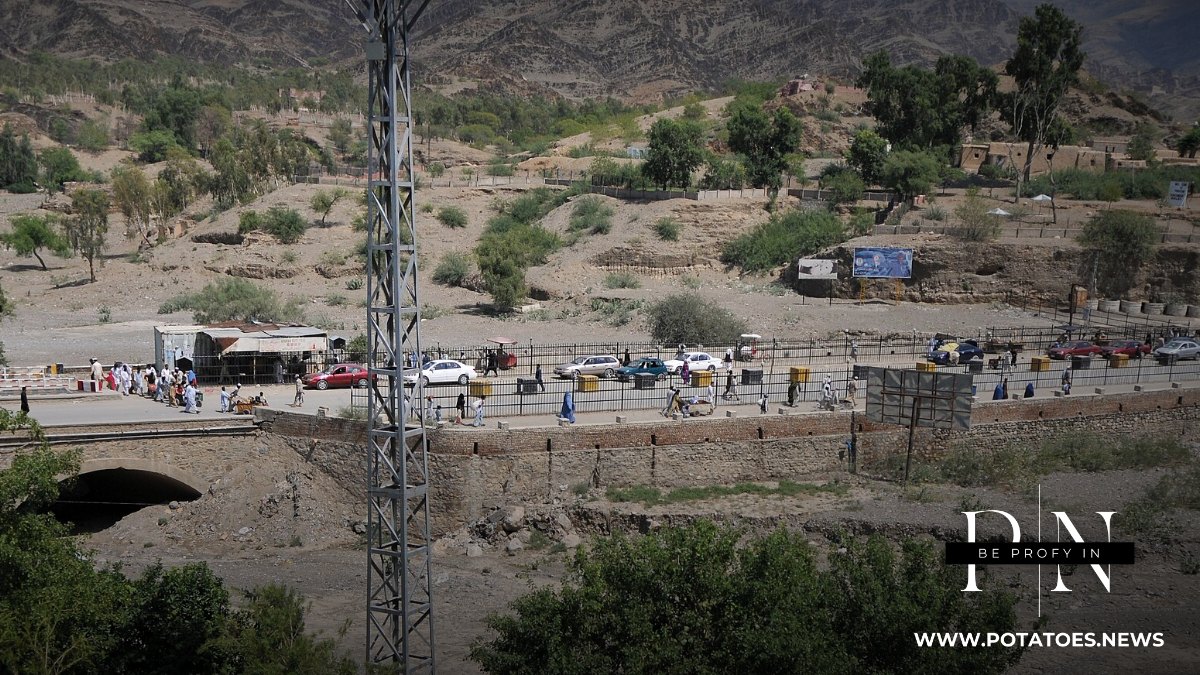
Pakistan’s potato growers are heading into the October sowing window with their main export corridor still closed. A new round of clashes on the Afghanistan border in the last week of September has pushed any reopening further away.
On 23 September, Pakistan’s air defences shot down eight drones that entered from Afghanistan, security sources told The Express Tribune: four near the Torkham border crossing, the main trade gate to Afghanistan, and four near Kohat. A day later, Information Minister Attaullah Tarar said Pakistan had carried out “precision” aerial and drone strikes on ten locations in Afghanistan that, according to Islamabad, were used to launch and store the drones. Afghanistan denied launching drones and condemned the strikes as aggression; Afghan officials said they killed at least four civilians, a toll consistent with UN mission reporting.
The escalation lands on a full year of closed trade. Pakistan suspended truck-borne trade through the main Torkham and Chaman crossings after border fighting in October 2025, and Torkham has since operated only for Afghans returning from Pakistan, with no goods moving, according to analyses by the Central Asia-Caucasus Institute (28 September) and the Pulaski Foundation (22 September).
Weekdays. Unsubscribe in one click.
For the potato sector, the corridor was more than a road. Under the Pakistan–Afghanistan Early Harvest Program, signed on 23 July 2025 and effective from 1 August 2025, tariffs on eight agricultural products, including Pakistani potatoes, fell from over 60% to 27%, the Trade Development Authority of Pakistan says in its Annual Report 2025–26. The route gave exporters access to Central Asia and onwards to Russia.
When the corridor shut, Pakistan had just harvested a record crop of about 9.4 million tonnes, 12% above the previous season, and domestic prices collapsed by 60–77% within weeks, as potatoes.news reported in December 2025. Fresh official price or planting data for the current autumn campaign were not available at the time of writing, so this report does not quote unverified figures. The autumn crop is normally sown in October for harvest from February, as the director of the Potato Research Institute in Sahiwal explained in an earlier interview.
Growers are now fixing their autumn area without knowing whether the Afghan land bridge will reopen. A second season without it would keep export-dependent districts exposed to domestic price swings and add cost to any rerouting through Iran. Watch three markers in the coming weeks: any new ceasefire effort — Türkiye, Saudi Arabia and Qatar mediated the week-long truce in March; official wholesale potato prices from Punjab; and the government’s sowing target for the 2026/27 season.
Our report on how the border closure collapsed Pakistan’s potato prices and stranded export shipments was published on 3 December 2025: read it here.
Photo: The Torkham border crossing between Pakistan and Afghanistan, 2011 (illustrative). Master Sgt. Michael O’Connor, US armed forces / Wikimedia Commons, CC BY 2.0