Haulm destruction in potatoes can be achieved by mechanical or chemical methods or using a combination of the two. Bed formation and machinery set-up If considering a combined mechanical and spray approach, check bed formation against the…
Potatoes (Solanum tuberosum L.) are an important global food since they are rich incarbohydrates and offer significant amounts of protein, vitamins, and dietary fiber . Although potatoes thrive best in temperate climates, they are grown in over 150…
Potatoes are a cornerstone of Emilia-Romagna's agricultural economy, particularly notable for the production of the Protected Designation of Origin (PDO) Patata di Bologna. To support this essential sector, the regional government has introduced a new funding initiative…
The tuber flea beetle species Epitrix papa Orlova-Bienkowskaja (Coleoptera: Chrysomelidae: Alticinae) is a new exotic pest of potato in Europe, present in Portugal and Spain. In Portugal, E. papa was probably introduced around 2004 but only emerged as a pest in…
Potatoes, a major economic crop, are significantly impacted by Fusarium dry rot, a prevalent postharvest disease. Despite the broad-spectrum antimicrobial properties of cinnamaldehyde, a naturally-derived plant substance, its efficacy against the causal pathogen of potato dry rot (Fusarium oxysporum)…
Black dot (Colletotrichum coccodes) has become an economically significant potato tuber disease due to its capacity to cause early foliage death. The disease named black dot relates to the numerous black microsclerotia that the fungus can produce…
Deciphering the mechanisms underlying insecticide resistance is key to devising appropriate strategies against this economically important trait. Myzus persicae, the green peach-potato aphid, is a major pest that has evolved resistance to many insecticide classes, including neonicotinoids. M. persicae resistance…
The future of potato crop production is a hot topic at Potatoes in Practice (PiP), the UK’s largest field-based potato event on Thursday 8 August in Dundee. Hosted by the James Hutton Institute, in partnership with the SRUC…
Synchytrium endobioticum is an A2 pest for many regions, and details of its biology, distribution and economic importance can be found in the EPPO Global Database. In the EPPO National Regulatory Control System for S. endobioticum (Standard PM 9/5) no inspection…
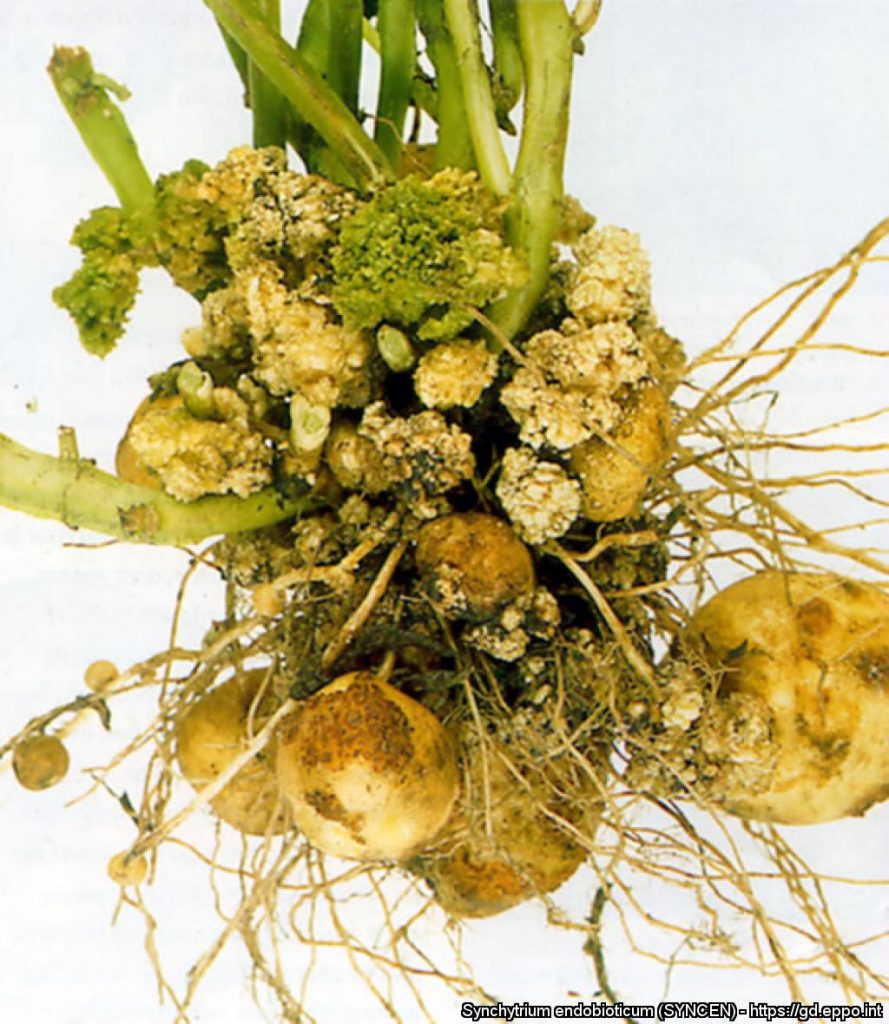
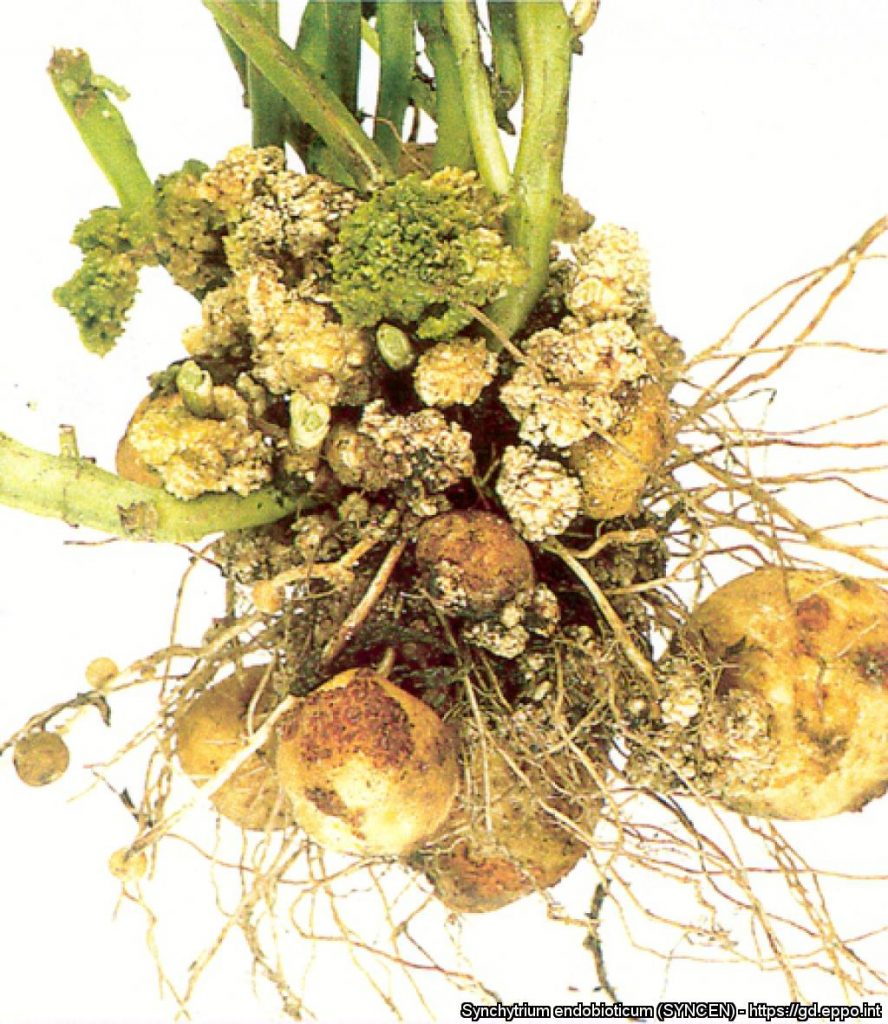
Synchytrium endobioticum causes potato wart disease. Synchytrium endobioticum is an obligate parasite which does not produce hyphae but sporangia, which contain motile zoospores. Summer sporangia are thin-walled and short-lived. They are formed in the potato tissue and…
Global Potato Production: China Leads, U.S. Holds Fifth Place In the world of agriculture, potatoes are a staple crop, essential for food security and economic stability. The Food and Agriculture Organization (FAO) of the United Nations has…
Potato wart disease is one of the most important quarantine diseases of potato in the world. The disease is caused by Synchytrium endobioticum, which after infection causes tumour-like outgrowths near a meristematic tissue. The disease has a worldwide distribution…