Netherlands: Ware and Processing Potato Exports Rise to 108,172 Tonnes as Belgium and France Buy More
NAO data show Dutch exports of ware and industrial potatoes reached 108,172 t by 31 August, up from 85,526 t, led by Belgium and France, while imports fell.
Dutch exports of ware and processing potatoes rose strongly in the first two months of the 2026 season, according to figures from the Dutch Potato Organisation (NAO) published on 18 September. From the start of the new harvest year until 31 August, the Netherlands exported 108,172 tonnes of consumption and industrial potatoes. In the same period of 2025, exports were 85,526 tonnes. This is a rise of about 26% (our calculation).
Almost all of the growth went to neighbouring countries with their own processing industry. According to NAO:
- Belgium took 70,925 tonnes, up from 51,497 tonnes a year earlier.
- France took 14,613 tonnes, almost three times the 5,021 tonnes of 2025.
- Germany took 4,658 tonnes, about half of the 9,457 tonnes of last year.
Exports to the EU as a whole reached 91,167 tonnes, against 68,150 tonnes a year earlier. Exports to Africa were stable at 8,529 tonnes. Côte d’Ivoire was the largest African buyer with 6,197 tonnes, but shipments to Mali, Gambia and Senegal fell. Exports to the Americas, mainly to Caribbean countries, were 8,383 tonnes.
Weekdays. Unsubscribe in one click.
The same NAO document shows lower imports. Up to 31 August, the Netherlands imported 206,701 tonnes of consumption and industrial potatoes. In the same period of 2025, imports were 230,233 tonnes. The import table also lists 12,876 tonnes of starch potatoes for 2026.
The early export figure for 2026 is higher than in 2024 (101,896 tonnes) and 2022 (116,276 tonnes), but lower than in 2023 (145,645 tonnes). Over the full 2025 harvest year, Dutch exports of ware and industrial potatoes reached 708,992 tonnes.
Why it matters
The numbers show how the short crop in northwest Europe is moving potatoes across borders. Belgian and French fry and flake factories need raw material early in the season, and their own growers are delivering low yields after the summer heat and drought. Dutch potatoes help to fill this gap.
For Dutch processors, this means more competition for free potatoes at home. Lower imports into the Netherlands point in the same direction. If this trend continues in autumn, free-market prices in the Netherlands may find support, even after the recent small cuts in PotatoNL quotations. The next NAO monthly figures will show if the early export pace holds.
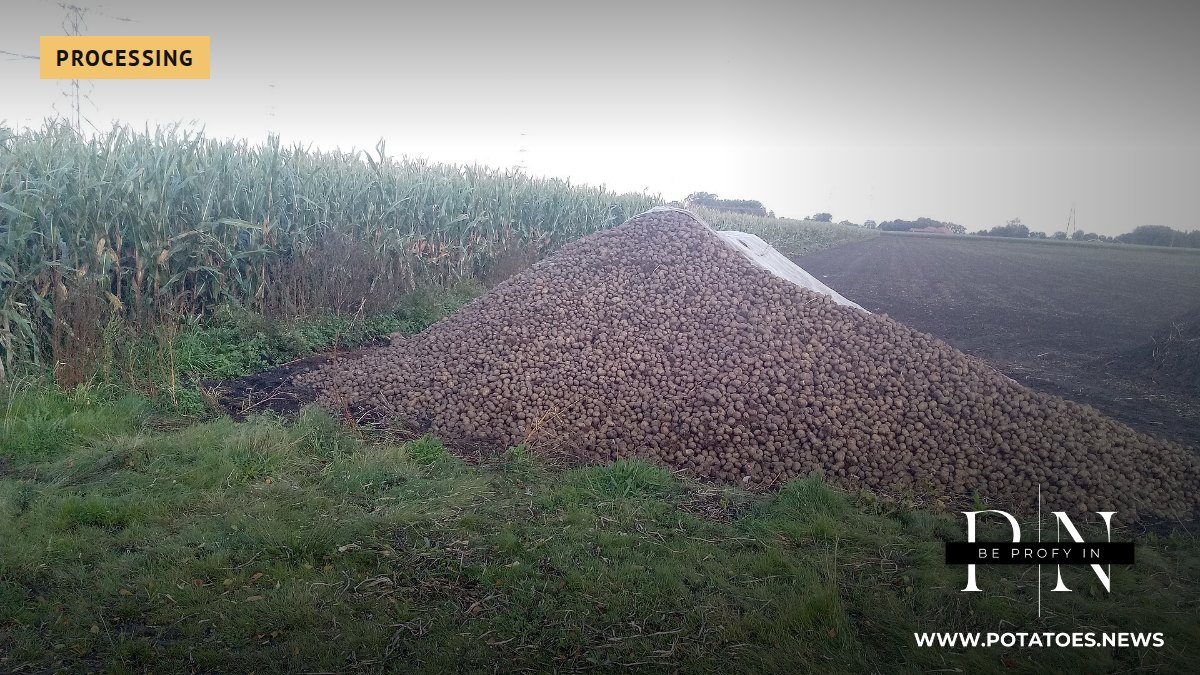
Photo: Harvested potatoes at a farm in the Netherlands (illustrative). Donald Trung Quoc Don / Wikimedia Commons, CC BY-SA 4.0