Netherlands: Over 28% of Tested Seed Potato Lots Downgraded After Virus Checks
Key takeaways
- 28% of cases downgraded so far in early NAK virus tests
- 15% of national samples had virus results by week 38
- 65% of national sampling for 2026 is still outstanding
- 2 weeks behind last year: post-harvest testing is late
Why it matters
- For farmers
- Seed growers should track class results lot by lot and keep buyers informed; ware growers should confirm 2027 seed orders and classes early.
- For traders
- Seed exporters should build flexibility into 2027 contracts on class and volume until NAK publishes fuller virus results.
- For suppliers
- Offer aphid and vector control advice for 2027 seed crops; early downgrades show strong virus pressure this season.
60-second summary
First virus results from Dutch seed potato certification point to a difficult year for seed quality. NAK reports that just over 28 percent of tested cases led to a downgrade, but this rests on only about 15 percent of national samples, so the final share could move a lot. Testing also started roughly two weeks later than in 2025, because drought and heat slowed crops and delayed lifting. The laboratory has worked at a quota of 2,250 samples a week, plus around 400 voluntary samples, and two thirds of the national sampling is still ahead. For seed buyers in Europe, Africa and Asia, this is an early signal that high-class Dutch seed may be scarcer and dearer for 2027 planting. Seed growers face lower returns on downgraded lots. The main caveat is timing: NAK itself warns that the numbers are preliminary and that regional results, which depend partly on irrigation, could change the picture.
The Dutch seed potato inspection service NAK has published its first update on post-harvest virus testing for 2026. Downgrading was recorded in just over 28% of cases so far.
The figure is provisional. By the end of week 38, only about 15% of samples nationwide had virus results. NAK said the picture may still change significantly in the coming weeks.
According to the agricultural newspaper Nieuwe Oogst, some higher seed classes show relatively high downgrading rates.
Weekdays. Unsubscribe in one click.
Testing runs two weeks late
The 2026 season started well, NAK said. Later, drought and heat affected crop development in more and more areas. Harvest started in August, and samples began to arrive for testing.
Post-harvest testing is running about two weeks behind last year. At first, there were not enough samples to use full laboratory capacity. From week 36, this changed.
For weeks 37 and 38, NAK set a quota of 2,250 samples per week. Voluntary tests and surveys add about 400 samples per week on top of this quota.
Most samples still to come
Nationally, 65% of sampling still has to be done. The share differs by region:
Groningen 70%, Flevoland 60%, Friesland 61%, Noord-Holland 69%, Drenthe, Overijssel and Gelderland 58%, and the southern region 71%.
Nieuwe Oogst reported that regional differences partly depend on whether growers could irrigate before harvest.
Post-harvest testing checks tubers for viruses after the field inspection. The result decides the final class of a seed lot. A downgrade means the lot is certified in a lower class, which usually lowers its value.
Why it matters
The Netherlands is a major exporter of seed potatoes. A high downgrading rate would reduce the supply of top-class seed for the 2027 planting season, in Europe and in export markets. Buyers and growers will watch the next NAK updates closely before closing seed contracts.
Prevention & control · Editorial note
Potato viruses in seed crops (PVY, PLRV): what growers can do
- Prevention: plant certified seed, remove plants with symptoms early, destroy haulm on time and keep seed fields away from ware crops.
- Monitoring: follow aphid flight warnings and test seed lots for viruses after harvest.
- Chemical protection in the Netherlands: no effective chemical control of the viruses; prevention only. Against aphids that spread PLRV: lambda-cyhalothrin (IRAC 3A) — check the national register of the Netherlands. Insecticides do not stop the fast, non-persistent spread of PVY.
- Resistance management: rotate IRAC groups and do not rely on one mode of action.
This note is provided by the potatoes.news editorial team for information only. It is not a recommendation of any company and is not mandatory. Use only plant protection products authorised in your country and follow the label. Product names and registrations differ between countries; consult a local agronomist.
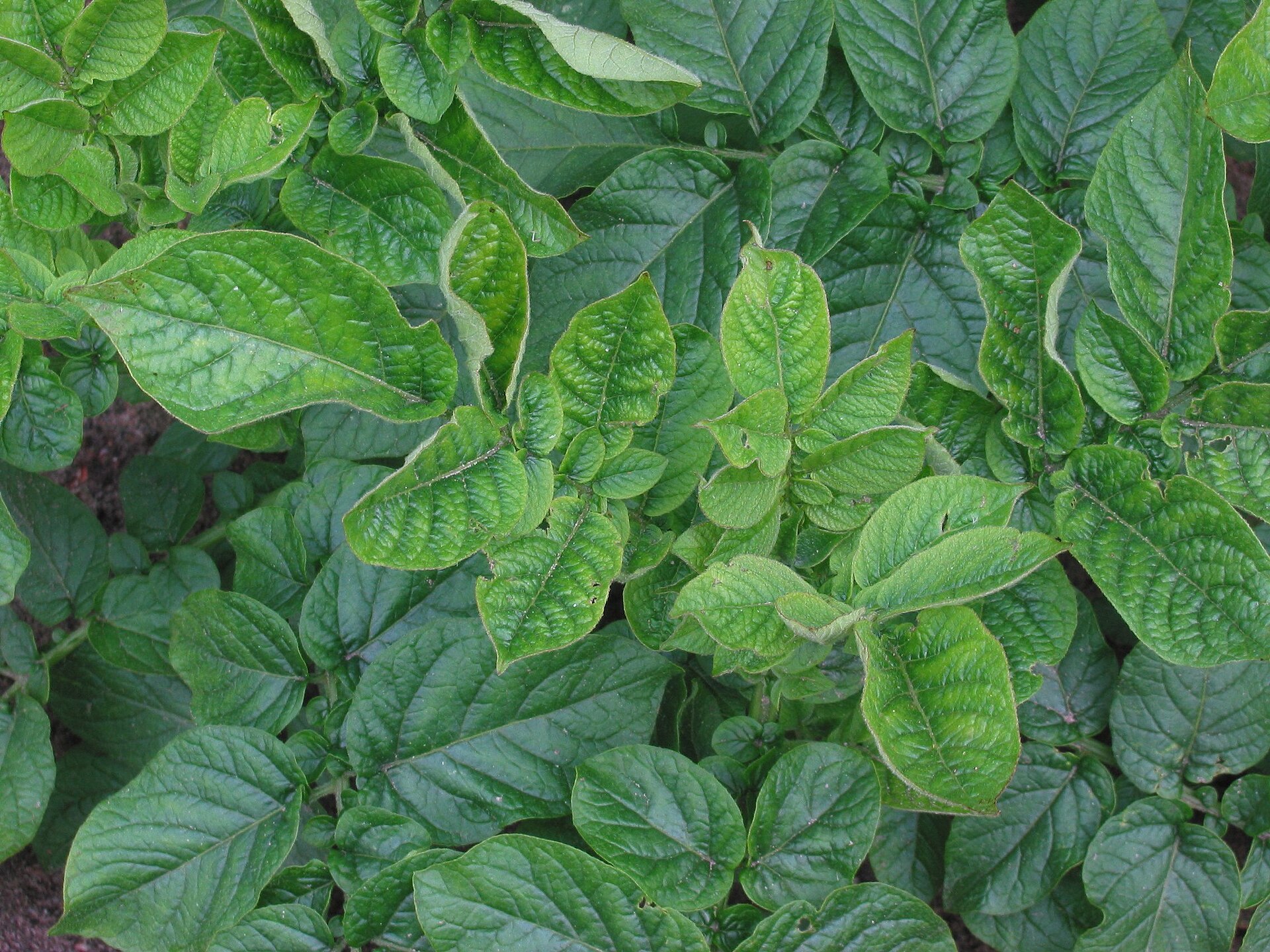
Photo: Potato plant with virus symptoms on the leaves (illustrative). Rasbak / Wikimedia Commons, CC BY-SA 3.0
Global Potato Brief
Top five stories, prices, disease alerts and events. Weekday mornings, no advertising.
What next
NAK will publish further updates on post-harvest testing as more samples are analysed. The final downgrading rate will become clear in the coming weeks.
Sources
- NAK — Nacontrole 2026 - update 1 — https://www.nak.nl/nacontrole-2026-update-1/
- Nieuwe Oogst — NAK: meer dan kwart pootaardappelen zakt in klasse na viruscontrole — https://www.nieuweoogst.nl/nieuws/2026/09/25/nak-meer-dan-kwart-pootaardappelen-zakt-in-klasse-na-viruscontrole
Linked in this material
- Country
- Netherlands
- Companies
- NAK
- Technologies
- post-harvest virus testing