Morocco: Potato Prices Reach 7-8 Dirhams per Kilo in Casablanca
Potatoes sell for 7 to 8 dirhams per kilogram in Casablanca, against about 3 dirhams a year ago, after winter floods cut northern production.
Potato prices in Casablanca have risen sharply. Potatoes now sell for 7 to 8 dirhams per kilogram in city markets.
The figures come from a report by the state news agency MAP, published by LeSiteinfo on 25 September. A second Moroccan outlet, Hibazoom, reported the same price range on the same day.
A trader at the Casablanca wholesale market said prices did not exceed 3 dirhams per kilogram last year. He called the difference striking.
Weekdays. Unsubscribe in one click.
Traders point to several causes. They include production factors, supply and demand, transport, distribution costs and intermediary margins.
Floods changed the season
The season began with low prices. In January 2026, Le Matin reported unwashed potatoes at 1.80 to 3.80 dirhams per kilogram. Farm prices were around 2 dirhams per kilogram at that time.
Then floods hit northern growing areas in January and February. The Loukkos basin was badly affected. Some farmers there lost their entire harvest.
Morocco responded with imports. In the 2025/2026 campaign, the country imported more than 12,000 tonnes of fresh potatoes, according to EastFruit data cited by Le Brief.
That volume was 2.4 times the previous record from 2008/2009. April and May accounted for nearly 80% of the imports.
The Netherlands supplied more than half of the volume. France supplied about one third. Belgium supplied the rest.
Production and costs
Morocco normally produces more than two million tonnes of potatoes each year. It covers domestic demand and exports some potatoes to sub-Saharan Africa.
Growers told Le Matin in January that production costs reach about 100,000 dirhams per hectare. At farm prices of 2 dirhams, they warned of losses.
Why it matters
Potatoes are a daily staple for Moroccan families. The price swing from a January glut to autumn highs shows how exposed the market is to weather in the north. It also shows how quickly European exporters can fill gaps when Moroccan supply falls. Low-income households feel the rise first, and pressure is growing for closer monitoring of margins along the chain.
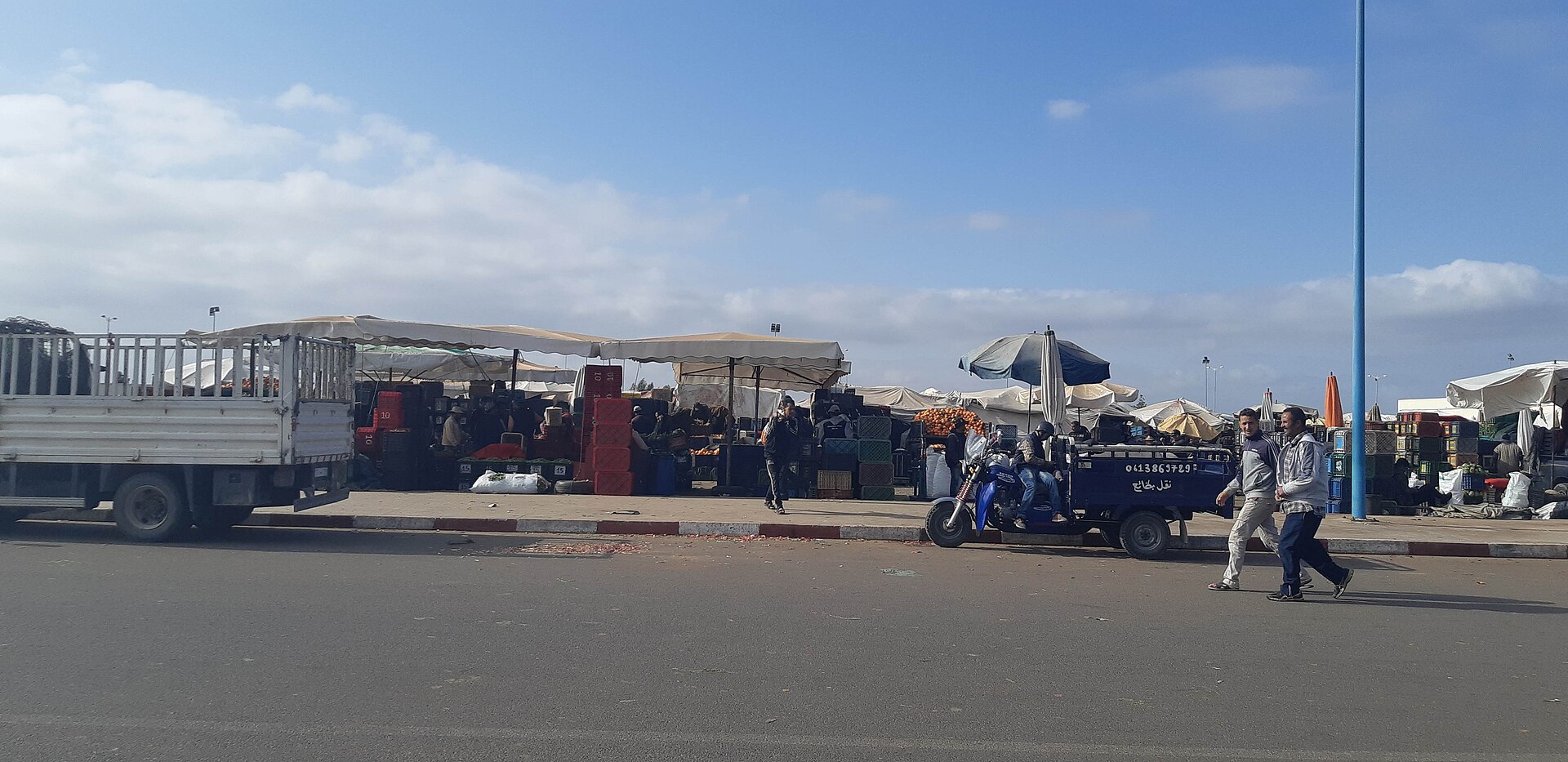
Photo: The vegetable souk in Inezgane, Morocco (illustrative). Abdeaitali / Wikimedia Commons, CC BY-SA 4.0