Latvian farms harvested 202,500 tonnes of potatoes in 2025, according to provisional data from the Central Statistical Bureau (CSP). This was 11.1% less than in 2024. The average yield fell by 9.4% to 160.8 quintals, or about 16.1 tonnes, per hectare. It was the lowest yield in four years. The area fell by 200 hectares, or 1.9%. Bad weather from planting to harvest hurt the crop.
A shrinking area
The fall in 2025 follows a longer decline. The Ministry of Agriculture says potatoes covered 22,000 hectares in 2019. The CSP says the area was 18,100 hectares in 2020, 14,000 hectares in 2023 and 12,800 hectares in 2024. In 2024, farms harvested 227,900 tonnes, 11.7% less than in 2023. The yield in 2024 was 177.5 quintals per hectare.
Eurostat shows the same direction but lower levels. It lists 120,500 tonnes from 7,500 hectares for 2025, and 7,000 hectares for 2026. In 2000, Eurostat showed 747,100 tonnes from 51,300 hectares. The Eurostat series has breaks, so it is best used for the trend, not for exact national totals.
Prices and market
The CSP says the average producer price for potatoes rose by 6.6% in 2024 to €229.81 per tonne. The data used for this article do not include import or export volumes, so the level of self-sufficiency is not clear.
Low yields remain the core problem
Latvian yields of 16–18 tonnes per hectare are low for Northern Europe. Finland reached about 29.5 tonnes per hectare in 2025, according to Eurostat. Low yields reflect many small plots, limited irrigation and wet seasons, like the one in 2025.
Why it matters
Latvia is losing potato area every year. Output now depends on fewer farms, and a wet season can cut the harvest by more than a tenth. This raises the role of imports from neighbours such as Lithuania, Poland and Germany, although official trade data were not available for this report.
The gap between CSP and Eurostat figures is also important. Anyone who uses EU data for market planning in the Baltic region should check national numbers first.
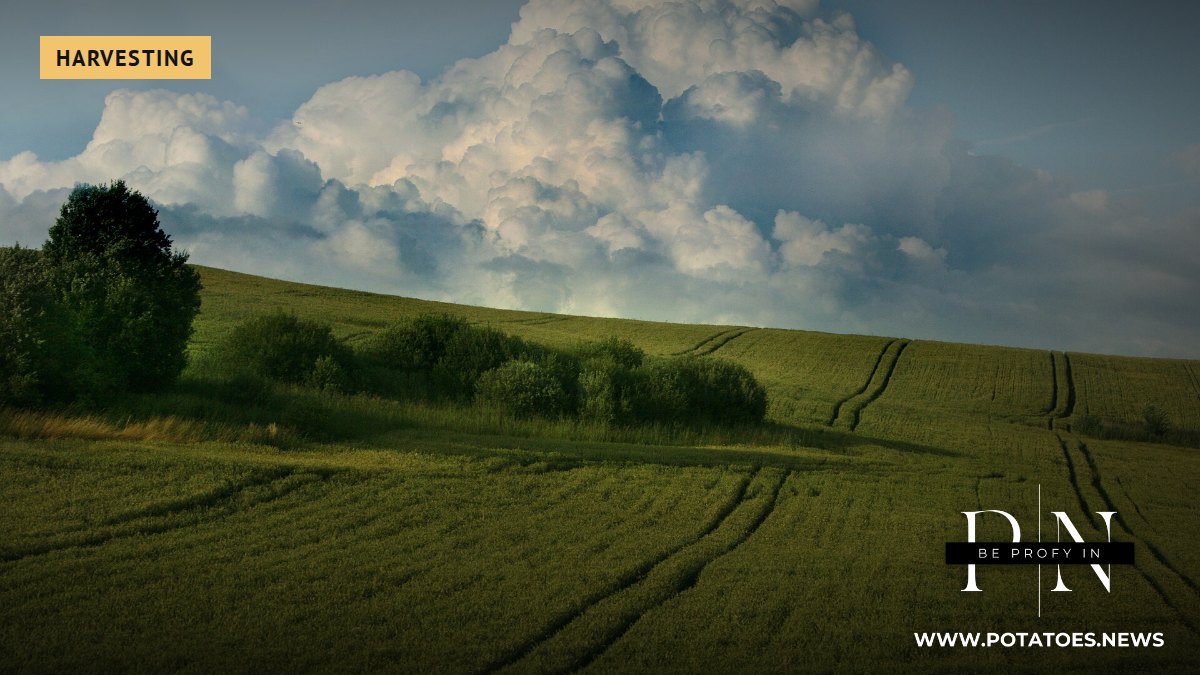
Photo: Farm field in Latvia (illustrative). simka / Wikimedia Commons, CC BY-SA 3.0