Kyrgyzstan: High-Altitude Seed Farms in Chon-Alay Report 35–50 t/ha, According to Donor Project
A KfW-funded project says seven registered seed potato farms at over 2,400 m in Chon-Alay harvested 35–50 t/ha of European varieties. Local seed costs about 100 som/kg versus 170–180 som/kg for imports.
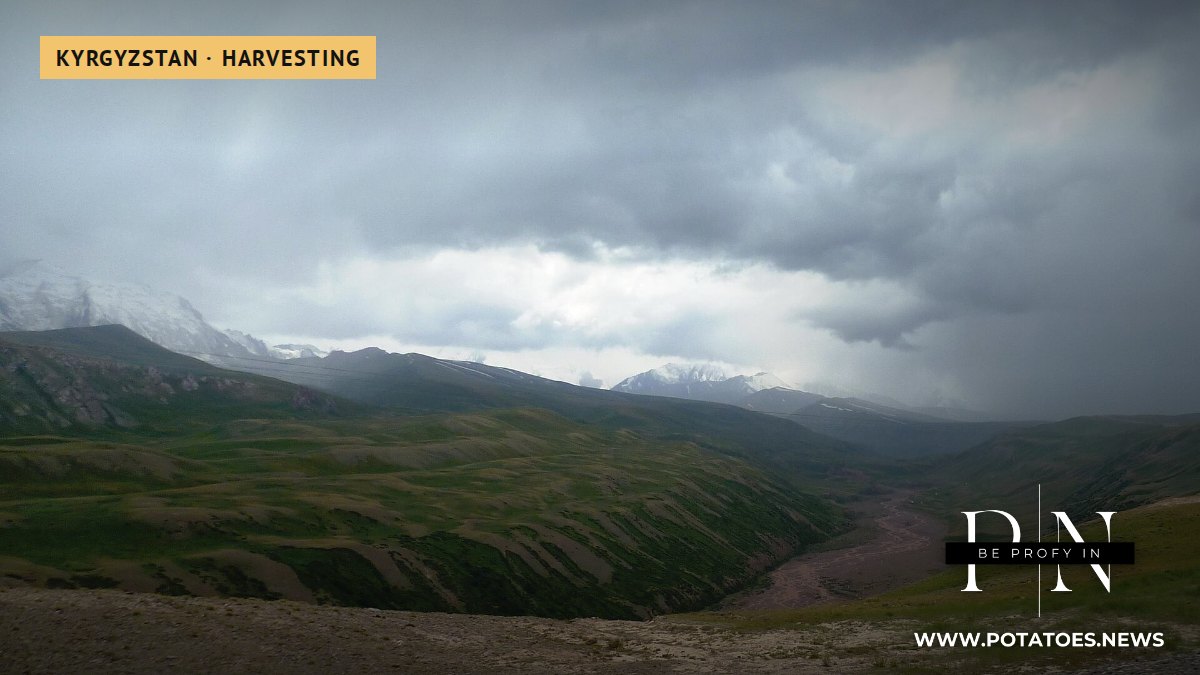
Seed potato farms in the Chon-Alay district of southern Kyrgyzstan are finishing a strong harvest, according to the Value Chain Agro Finance Project. In a LinkedIn post at the end of September 2026, the project reported on recent field monitoring in Zhar-Bashi village, where the fields lie at more than 2,400 metres above sea level.
According to the project, its team inspected 7 registered seed farms with a total area of 10.55 hectares. The European varieties Camelia, Riviera, Paradiso and Colomba gave yields of 35 to 50 tonnes per hectare, the project said. The farms grow early seed generations marked SSE, SE, E and R1. Farmers are now completing the harvest and storing sorted seed under controlled conditions. These figures come from the project only.
Who is behind the project
The Value Chain Agro Finance Project runs from April 2023 to May 2027 with a total budget of EUR 37 million. The European Union, the European Investment Bank and Germany’s Federal Ministry for Economic Cooperation and Development (BMZ) fund it through the KfW development bank. The German consultancy GOPA Pro and its local partner GOPA-CAICo implement it with Kyrgyzstan’s Ministry of Water Resources, Agriculture and Processing Industry and the Ministry of Finance. Potato is one of five value chains it supports, next to fruit and berries, cereals, vegetables and sugar.
Weekdays. Unsubscribe in one click.
The harvest follows a field day in Zhar-Bashy on 5 August 2026. There the project compared seed prices. Imported European elite seed costs 170 to 180 som per kilogram, while local seed from the Zhar-Bashy agricultural cooperative costs about 100 som per kilogram, the project said. Participants also named weak points: too few special potato harvesters, a need for modern stores with temperature and humidity control, and a need for standard labels.
Why altitude helps
High fields have fewer insects that spread potato viruses. A 2015 study in the Manas Journal of Agriculture and Life Science found that uncertified seed and viruses were a major problem in Kyrgyzstan, with more than 70% of plants affected in some seed fields. The authors wrote that the Colorado potato beetle does not occur above 2,000 metres. On its potato page, the project gives a national average yield of about 17 tonnes per hectare. POTATOES NEWS has already reported on the smaller 2026 Kyrgyz harvest and on the role of the Issyk-Kul region.
Why it matters
Good seed is a main limit for potato yields in Central Asia. If mountain farms can multiply clean European seed at home, Kyrgyz growers can pay less than for imports. Neighbours are possible buyers: in 2025, visitors from Uzbekistan to Zhar-Bashy said they were ready to buy seed, according to the project.
The area is still very small, and storage and harvest equipment remain weak points. The next test is whether the stored seed keeps its quality through winter and finds buyers for spring 2027 planting.
Photo: Landscape of Alay District, southern Kyrgyzstan (illustrative). Radosław Botev / Wikimedia Commons, CC BY 3.0 pl