Plan Irrigation in Winter, Harvest in Any Weather: KOBLiK on Water for Potatoes
Russian manufacturer KOBLiK GROUP on its IS 100 sprinkler machines for potatoes: 40–60% yield gains on responsive crops, one operator for up to 200 machines, and why 2027 projects start this autumn.
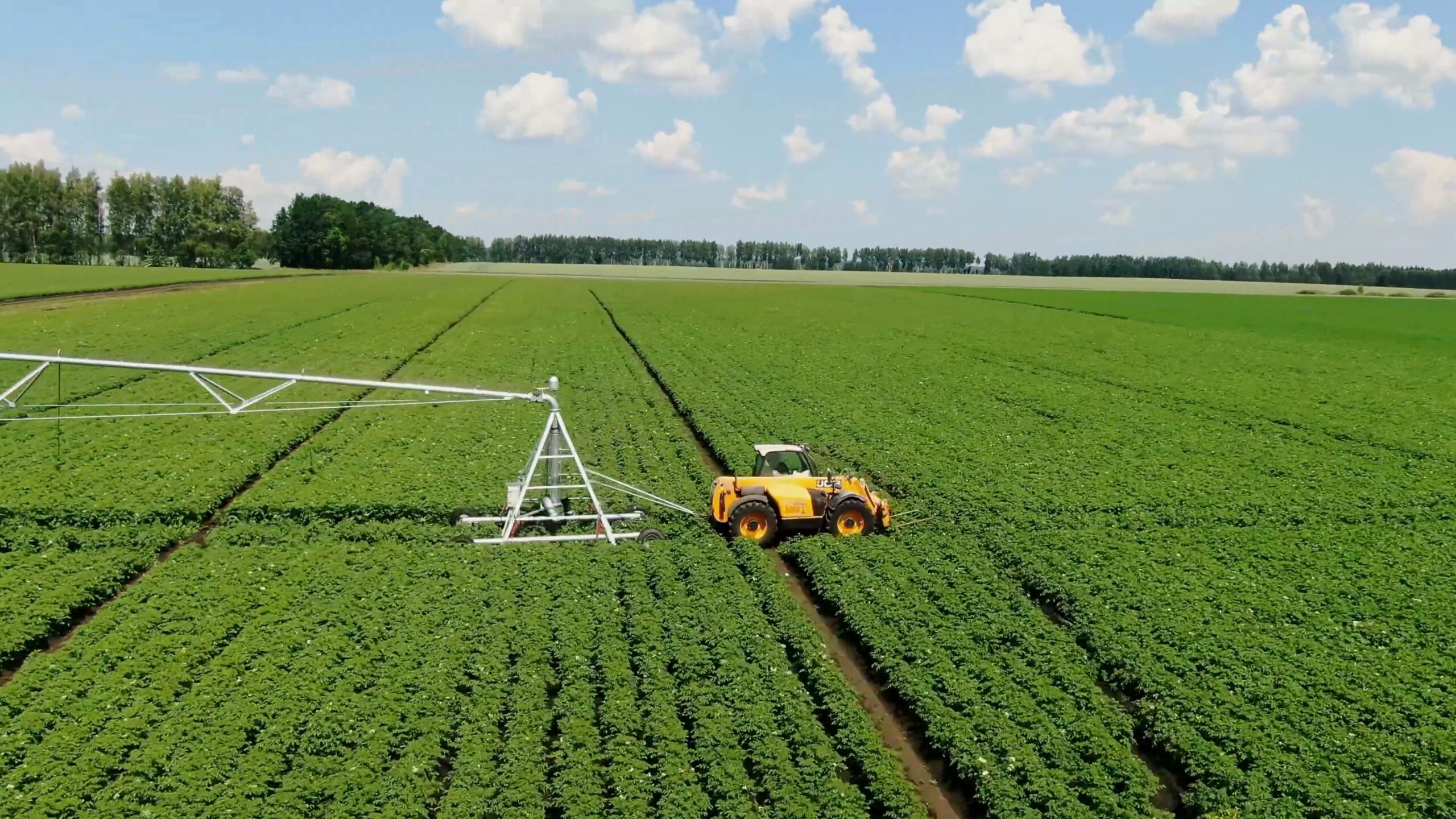
Russian potato growers planning irrigation for the 2027 season should be at their desks now, not in spring — that is the core advice from KOBLiK GROUP, the Russian machinery manufacturer, whose team answered POTATOES NEWS’ questions about how its sprinkler machines fit potato and vegetable production.
KOBLiK builds its IS 100 circular and lateral-move sprinkler machines in Russia and pitches them at moisture-responsive crops: potatoes, open-field vegetables, corn, soybeans, seed and forage plots. The promise is straightforward — take yield off the weather lottery. “Managed irrigation lets you plan the harvest and its quality instead of hoping for rain,” the company says. On responsive crops, it puts the honest benchmark for a well-run system at a 40–60% yield increase.
Uniformity first
For potatoes specifically, the critical windows are tuber initiation and bulking: moisture shortfall in those phases cuts both yield and marketable size, while uneven watering produces mixed calibres, defects and disease pressure that hit the sale price later. The IS 100 comes in four pipe diameters — including a less common ten-inch option — and four height profiles, so the machine is configured to the field rather than the other way around. Every project, the company stresses, starts with a site audit: area and geometry, soil infiltration and water-holding capacity, water source flow rate, and the crop’s irrigation demand.
Weekdays. Unsubscribe in one click.
One operator, two hundred machines
Automation is the labour answer. KOBLiK says a single operator can run up to 200 machines remotely, with irrigation and liquid-fertilizer (UAN) application managed from one cloud interface hosted in Russia — a point the company notes makes the system immune to sanctions-related service disruptions. The machines accept third-party soil-moisture sensors and fertigation equipment, which the company says cuts fertilizer application costs and improves uptake efficiency.
On economics, the company declines to quote water or energy savings without site data — “we calculate it individually at the project stage” — but points to state support covering up to half the cost of irrigation equipment as the factor that changes project economics for farms. Its most-underestimated warning: the preparatory works — water source, pump station, supply lines — routinely exceed expectations, which is why it quotes turnkey projects rather than machine prices.
A case in Voronezh
In 2024 the Azovtsev family farm in Voronezh region set out to replace labour-intensive hose-reel and drip irrigation. After auditing the existing pipeline and power capacity, it switched to wide-coverage circular sprinklers. Today four KOBLiK machines irrigate around 250 hectares of open-field vegetables under a single operator.
The company’s parting advice to farms eyeing 2027: start now. Surveys, design, state-support paperwork and delivery all take time, and those who plan in autumn and winter enter the season ready rather than rushing.
Source: written answers by KOBLiK GROUP to POTATOES NEWS (October 2026); koblik.ru.