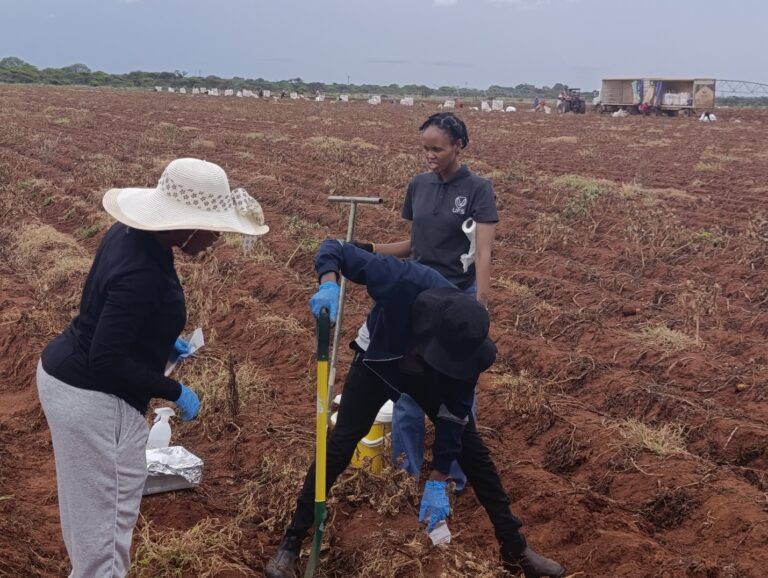
Kenya: Six-Partner Network Takes Rooted Apical Cutting Seed to Community Multipliers in Nakuru and Nyandarua
ASARECA, KALRO, the National Potato Council of Kenya, Egerton University, FIPS-Africa and two county governments worked together to scale rooted apical cuttings, training 84 value chain actors and reaching 50 local seed multipliers.
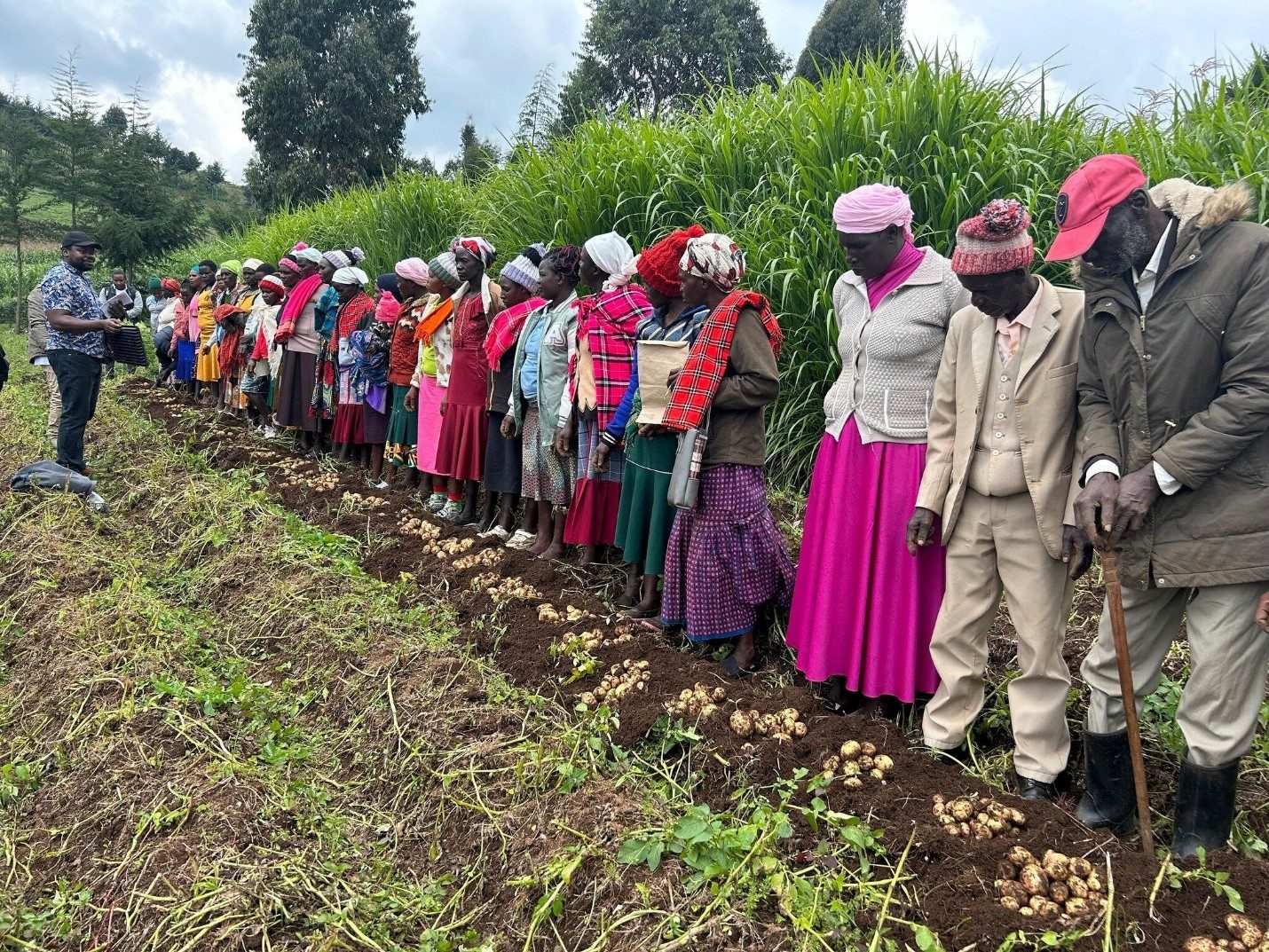
ASARECA, KALRO, the National Potato Council of Kenya, Egerton University, FIPS-Africa and two county governments worked together to scale rooted apical cuttings (RACs) of farmer-preferred potato varieties. The project trained value chain actors, supplied local seed multipliers and reached hundreds of stakeholders at field days.
Why it matters
According to the poster, potato in Kenya is grown by over one million smallholder farmers on 0.1–5 ha plots. Annual production stagnates at 2–3 million tons due to poor-quality seed and limited uptake of Good Agricultural Practices, and nearly 800,000 farmers still lack access to clean planting material.
What was done
- Six institutions under the RAC Scaling Initiative aimed to devolve seed multiplication of the varieties Shangi, Wanjiku and Unica to community level.
- Training (April 2025) for seed multipliers, producers, extension workers and researchers.
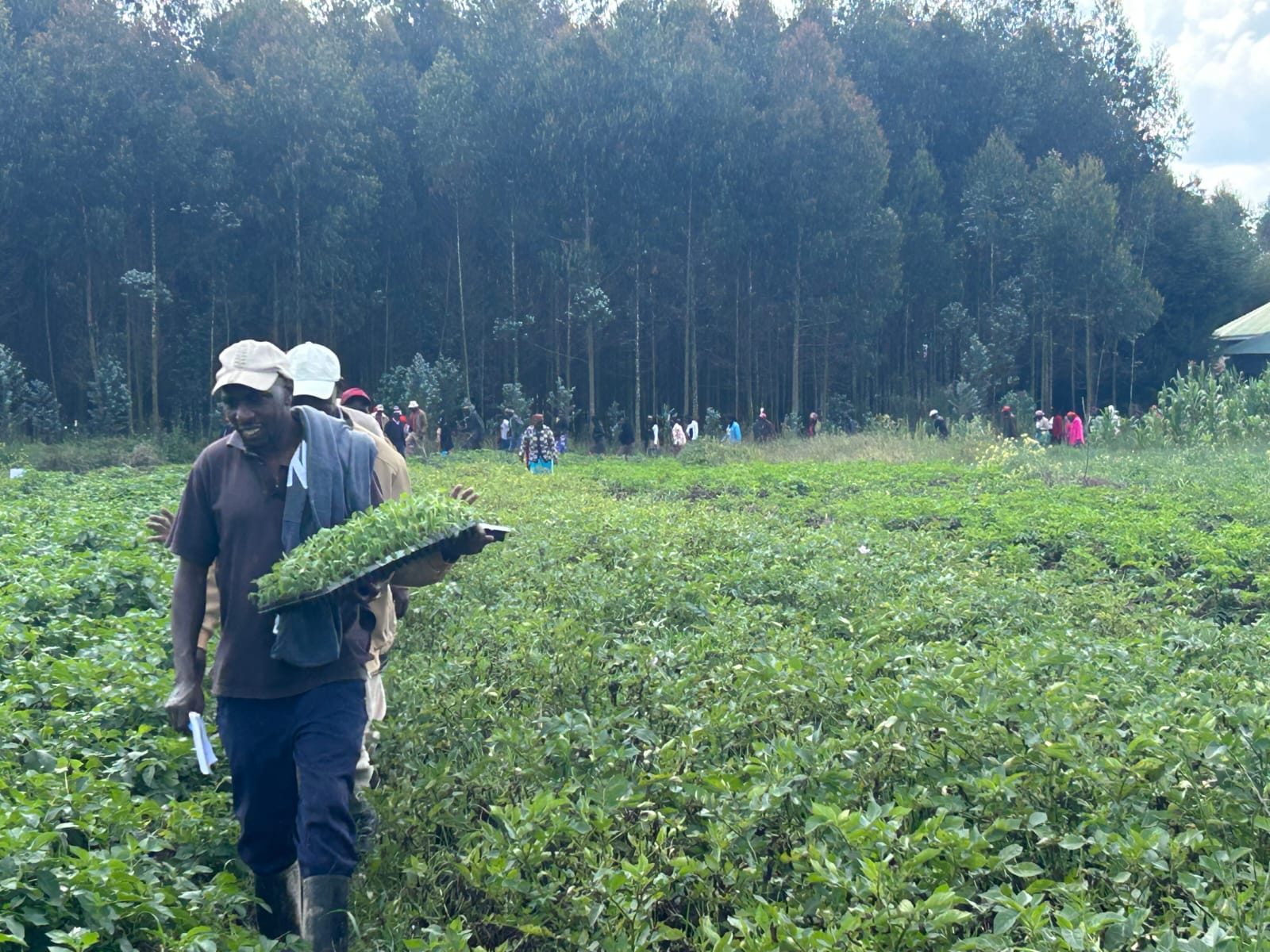
- RACs were distributed to local seed multipliers in the Yator (Nakuru) and Blessed Unity (Nyandarua) cooperatives.
- Two farmer-managed 0.1 ha demonstration fields were set up in Marioshoni ward (Nakuru County) and Murungaru ward (Nyandarua County).
- Field days (August 2025) and mass awareness via radio, TV, news articles, a video documentary and social media.
Results
- 84 value chain actors trained (April 2025).
- 250 RACs distributed.
- 50 local seed multipliers reached.
- 380+ stakeholders reached at field days (August 2025).
- Average tubers per plant by variety: Wanjiku 22, Shangi 14, Unica 11.
The authors’ conclusion
Collaborative partnership across government, academia, research and the private sector effectively expands smallholder access to quality seed. Localising multiplication of high-yielding, late-blight-tolerant varieties offers a sustainable pathway to lower seed costs, ensure timely supply, and strengthen nutrition security and trade in Kenya’s potato sub-sector.
Weekdays. Unsubscribe in one click.
Authors: Joshua Okonya, Moses Odeke, Ben Ilakut (ASARECA, Entebbe, Uganda); Elias Kamau, Harun Odhiambo (KALRO, Nairobi, Kenya); Henry Chemjor (National Potato Council of Kenya (NPCK), Nairobi); Hilary Bett (Egerton University, Nakuru, Kenya); James Ngugi (FIPS-Africa, Nairobi, Kenya). Partners named: County Governments of Nakuru and Nyandarua. Based only on a poster presented at the World Potato Congress 2026 in Kenya.
Published with the consent of the poster’s lead author, Joshua Okonya (ASARECA).