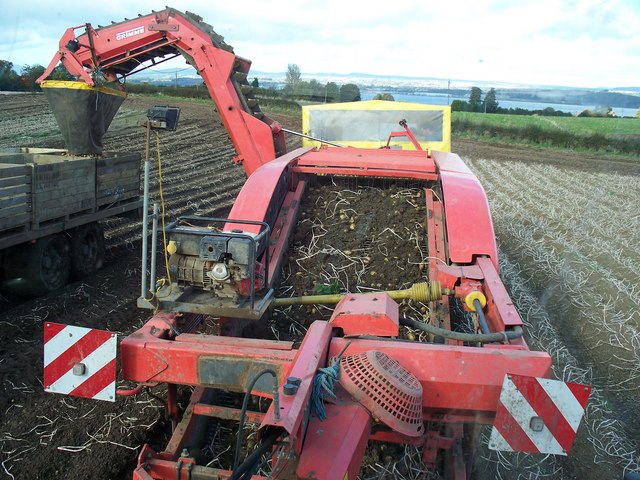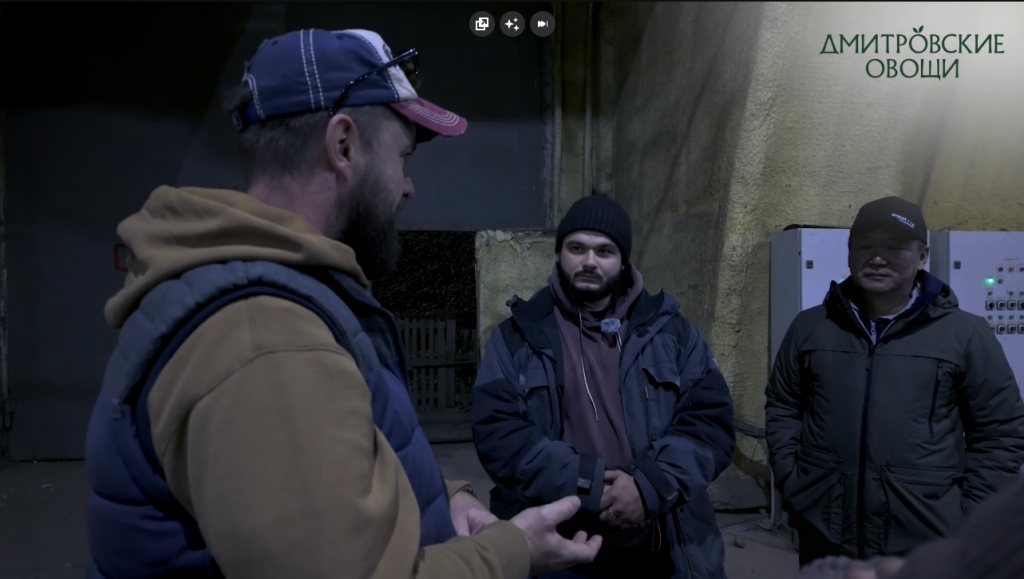
The International Potato Tour continues its journey across Kazakhstan, exploring the technologies, agronomic decisions, and real-world challenges faced by potato growers. This time, the team visits Irtyshskoye Farm in Pavlodar Region — a location that demonstrates how farmers adapt to changing weather, labor shortages, and post-harvest demands while working closely with crop-protection partners such as Avgust.
A Season of Large Tubers and Tight Deadlines
During the 2025 visit, the farm reported unusually large tubers and said its last harvester left the field on October 2. The farm representative also recalled delaying the start of work on the first frosty morning.
During the visit, the farm representative described temperatures of up to 6°C in one storage block. The participants discussed the following temperatures as examples, depending on the purpose of the tubers.
Weekdays. Unsubscribe in one click.
- 3.5°C for seed potatoes
- 4–4.5°C for table potatoes
Humidity control is critical. As the team noted, insufficient relative humidity can quickly reduce tuber weight and quality, leading to significant economic losses.
The “Combi-Bunker” Debate: Is the Investment Worth It?
One of the key discussions during the visit revolved around the high-end combi-bunker, a cleaning and soil-separating unit that one participant estimated at nearly €300,000 during the 2025 visit. While the system can reduce labor and improve sorting efficiency, the investment makes sense only when the farm’s throughput and scale justify such machinery.
The technology uses a combination of steel and semi-rubber rollers:
- Potatoes bounce off the rollers
- Soil does not
- Staff remove only the largest clods manually
Neighboring farms have adopted the system, and Irtyshskoye is considering whether the increased efficiency outweighs the cost.
Labor Optimization in Storage
At the time of the visit, the farm described the following arrangement:
- 12 workers on sorting lines
- Additional loaders and two operators
- A “mole” conveyor system for unloading
- Standard loaders for moving potatoes
However, experts suggested a more efficient unloading process using a loader and bunker system instead of long belt lines. This could:
- Reduce human labor
- Increase unloading speed
- Minimize bruising
- Improve consistency during night shifts
As demonstrated at other farms such as Agroterra, high airflow and proper ventilation greatly reduce losses and maintain quality.
Seed Quality: Diagnostics Before Planting
A recurring theme in the discussion is the importance of verified seed material:
The participants recommended testing seed samples at a trusted laboratory instead of relying only on assurances.
During the 2025 visit, one participant put the cost of an analysis in Almaty at about 50,000 KZT. He said the laboratory could check a sample for both bacterial and fungal problems.
Bacterial Diseases and Nematodes: Hard Lessons for Growers
Once bacterial infections spread in the field, they are almost impossible to stop. The only effective mitigation involves:
- Avoiding contamination at planting
- Maintaining a strict hygiene protocol
- Leaving a field out of potato production for several years
- Rotating crops responsibly
During the discussion, participants named the following crops as options when planning a rotation in the presence of nematodes:
- Oilseed mustard
- Rapeseed
- Buckwheat
- Rye
The participants also discussed concerns about lucerne (alfalfa) as a preceding crop.
The Ideal Crop Rotation
Experts recommend a minimum 3-year rotation, ideally 4–5 years:
- Potatoes
- Rapeseed
- Grain crops
- Optional: Oats for phytosanitary effect
Corn remains a challenging predecessor due to severe soil compaction and stone formation.
During a discussion about the cost of expanding production, one grower described how his farm measures yields at two stages. In his example, the figures were 48 tonnes per hectare at intake into storage and 39 tonnes per hectare sold. The figures referred to his own operation. Tour footage, 15:51–16:28.

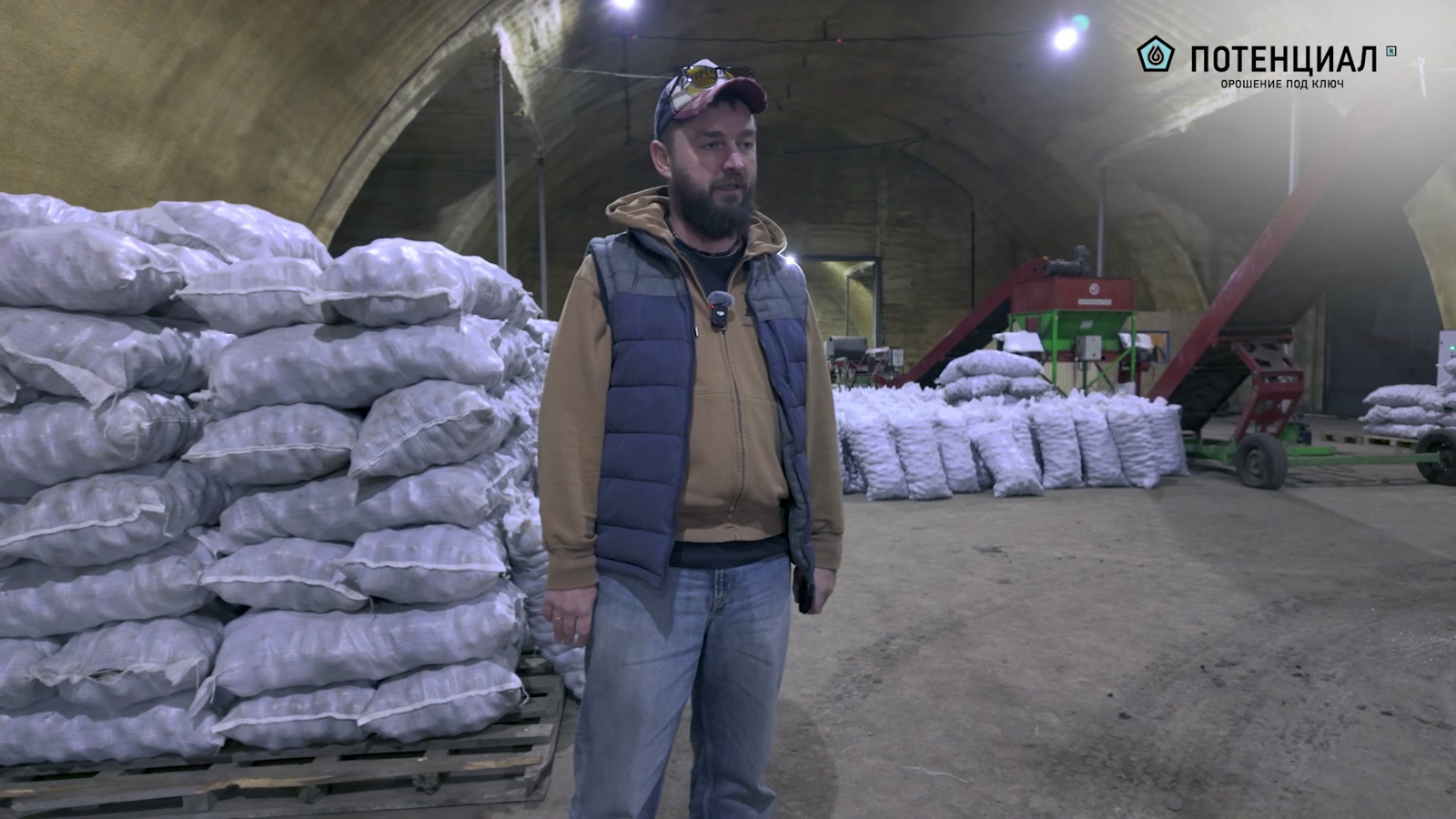
Viktor Kovalev suggested choosing storage equipment after deciding whether the potatoes were for seed, the fresh market or processing, and when they would leave storage. He gave the New Year holidays, March and June as examples of three storage horizons. He also advised comparing energy efficiency and the volume of air the equipment moves per hour. Tour footage, 19:06–19:46.
The Economics of Scale: 300 or 400 Hectares?
One of the strongest insights from the discussion was the economic trade-off between cultivated area and production efficiency.
A grower may achieve:
- 30 t/ha on 400 hectares, or
- 40+ t/ha on 300 hectares
If machinery, labor, and timing are optimized, smaller can be more profitable.
Large-scale farms operating 1,300+ hectares with multiple self-propelled harvesters confirmed the same pattern — yield is only valuable when it is stored properly, sorted properly, and sold properly.
Storage Technology: Why Spreadsheets Don’t Work in Potatoes
A final message from the agronomists:
“Excel does not work in potato farming.”
Unpredictable variables such as:
- Breakdowns
- Weather windows
- Labor shortages
- Delayed deliveries
- Rising fuel and electricity costs
…make potato cultivation highly dynamic. Profit often comes not from high prices, but from entering the market when there is no price — storing potatoes and waiting for the right moment.
Conclusion
The visit to Irtyshskoye Farm reveals the combination of challenges and opportunities facing potato producers in Kazakhstan. From storage science and equipment investments to disease management and crop rotation, the farm illustrates that modern potato production is a demanding, knowledge-intensive sector.
The International Potato Tour will continue documenting the people and technologies shaping the potato industry across Central Asia and beyond.