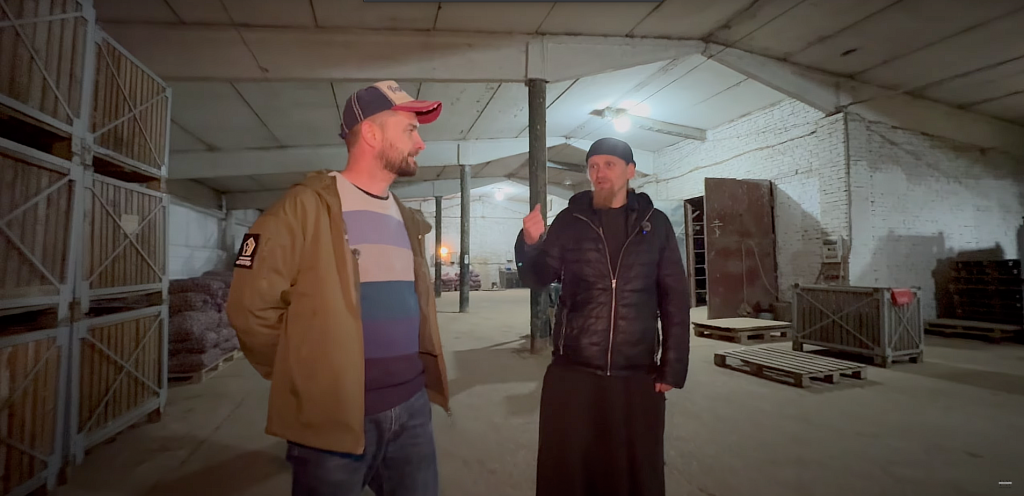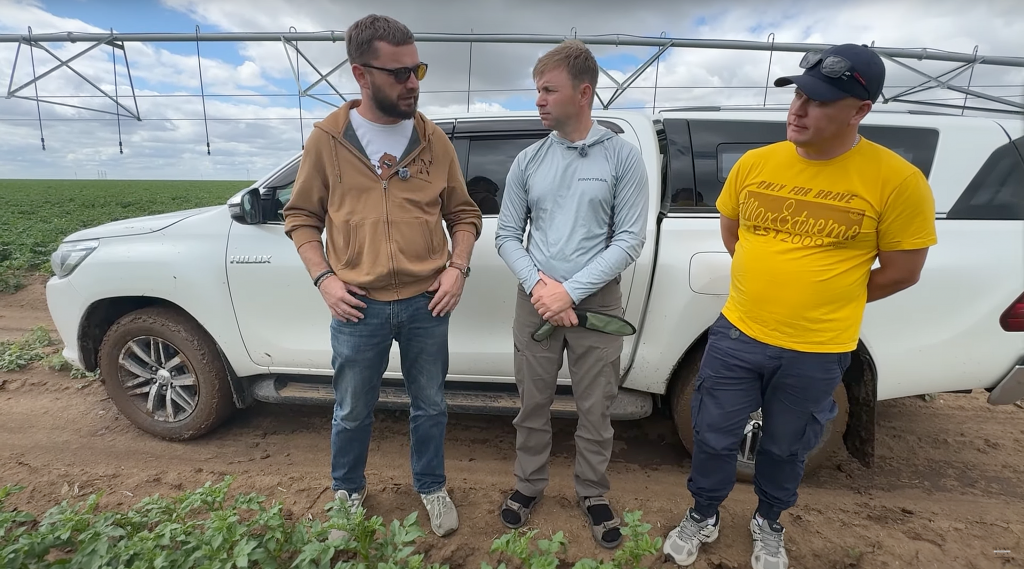
We launched the Kazakhstan stage of the Potato Enthusiast project together with Alexander Matvienko, Executive Director of the Union of Potato and Vegetable Growers of Kazakhstan. This visit is part of the International Potato Tour (Международный картофельный тур, IPT), which kicks off in Kazakhstan. Our first stop: Aktogai Agro (Pavlodar Region). We looked at how the farm runs people, machinery, irrigation, and nutrition to stay on track through a tight season.
People and incentives
Staffing is challenging—as everywhere. The farm’s answer is fair pay and clear incentives. During the 2025 visit, a farm representative put the monthly payroll at more than US$100,000. The figure covered machinery operators, grain-handling staff and office staff, with the largest share going to operators.
For 2024/25 they introduced a labor participation coefficient and two key bonuses:
- +15% for strict adherence to ag operations (sowing, planting, service);
- +10% for mentoring (training juniors with documented outcomes).
A windy, sunny spring
Moisture was in the soil but evaporated quickly due to heat and wind; May brought almost no rain. Potato planting ran May 3–6. Because the previous autumn was rainy and the harvest dragged on, most field prep shifted to spring.
Weekdays. Unsubscribe in one click.
The farm representative said that during the 2025 spring campaign the grain team worked by day and by night, from conserving soil moisture and preparing the ground through sowing. He credited navigation with making that schedule possible. Tour footage, 04:31–04:46.
Soil health: stubble, cover crops, and “karnash”
The farm keeps biomass on the field: stubble retention after cereals, cover crops for incorporation, and in maize—part to silage, part to karnash (harvesting only the cob while shredding and retaining green mass). They estimate 25–40 t/ha of plant material remains in the field, improving structure and water holding.
Irrigation & nutrition: moving toward UAN, locally
During the 2025 visit, the team was considering making UAN (urea–ammonium nitrate) on the farm. They said dry fertilizer was easier to transport than the liquid product on that route. They also planned to test UAN on a seed-potato plot under irrigation, with lower losses than granules presented as an expectation at the time.
Spacing, grades, and yield: a “Gala” discussion
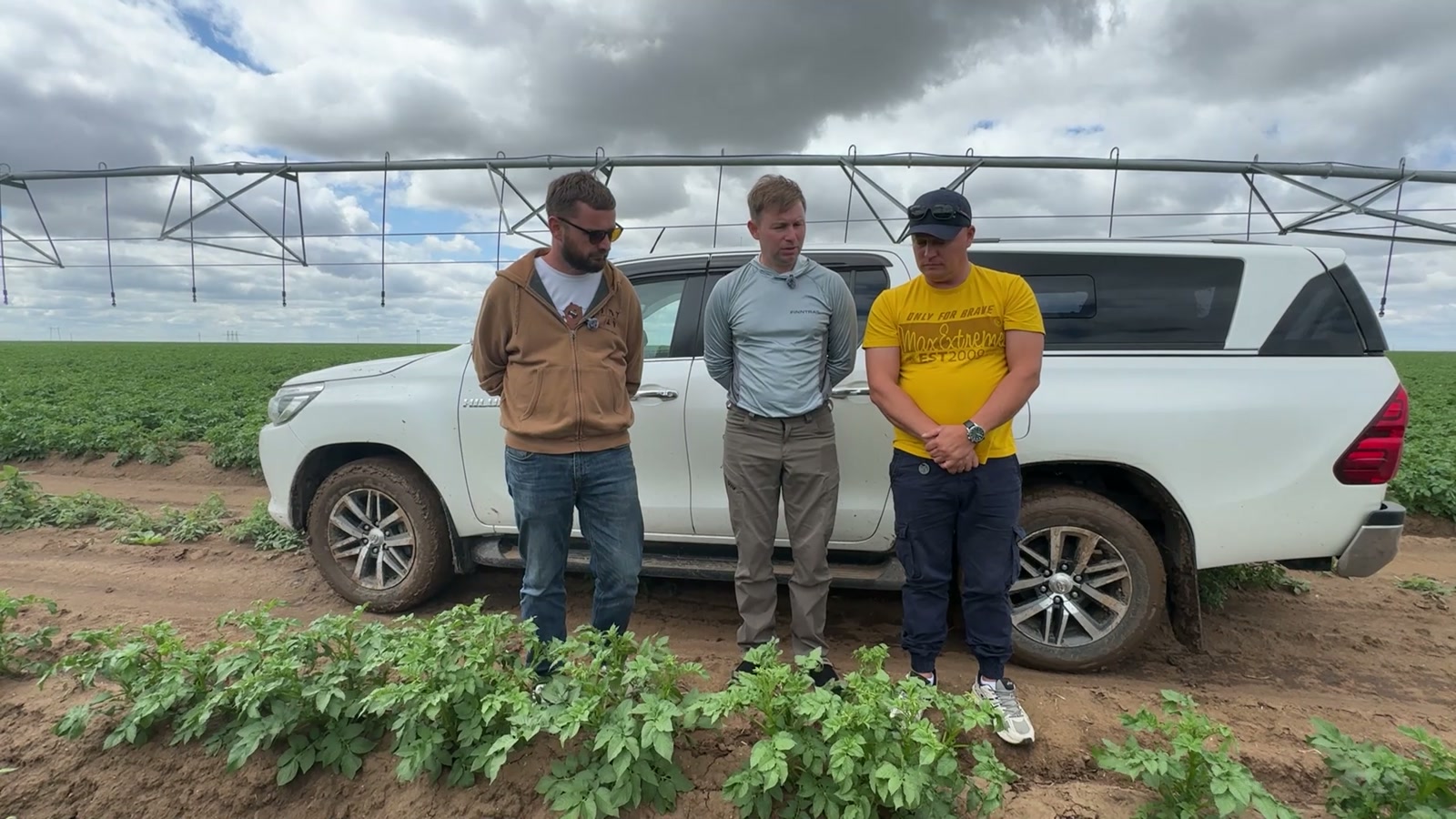
During the 2025 visit, the team reported 75 cm between rows and 34–35 cm between Gala plants in the rows shown. In a separate account of earlier practice, a participant compared 27 cm and 32 cm spacing, using the weight recorded as potatoes went into storage. The team discussed nutrition, water and ridge formation alongside spacing.
During the field visit, the representative described a small comparison set up that season. The farm applied fertilizer at planting on some fields and planted others without applying it at that stage. He said adding fertilizer during planting slowed work on a large area under a tight deadline. He also pointed out how steppe winds made it harder to spread fertilizer evenly. Tour footage, 19:01–19:30.
Varieties and the market
Commercial leaders are Gala and Vega (Norika). Vega wins on looks and taste; Gala remains a stable bestseller. Taste is largely technological—and achievable on sands and heavier soils alike.
Young agronomy talent returns
A young agronomist summed it up: “I learn from mistakes and aim to grow in yield and quality.” The discussion distinguished the weight recorded at storage intake from the volume ultimately sold.
Takeaways
- Operational discipline pays: +15% for tech compliance, +10% for mentoring.
- Keep biomass on the field: 25–40 t/ha boosts structure and moisture.
- Local UAN production: an option and trial discussed in 2025.
- Density = function of nutrition & water, not habit.
- Track both figures: distinguish the weight entering storage from the volume ultimately sold.
The International Potato Tour (IPT) continues across Kazakhstan—next up are more farms and technologies in Pavlodar and neighboring regions.