Kazakhstan: Gala Covers 41% of Commercial Potato Area, Growers’ Union Warns of One-Variety Risk
Gala takes 41.29% of Kazakhstan's commercial potato area and over 79,000 t of the 194,700 t of seed planted in 2026, the growers' union says, calling for more variety diversity.

One potato variety, Gala, now covers 41.29% of all commercial potato area in Kazakhstan, according to the Union of Potato and Vegetable Growers of Kazakhstan. The union published its variety data on 28 September 2026 through the industry portal APK-News. The union is chaired by Baizhan Ualkhanov.
Farms planted about 194,700 tonnes of seed potatoes in 2026. More than 79,000 tonnes of this seed was Gala. The variety comes from the German company Norika and has led Kazakh plantings for about ten years, according to the union.
Two Kazakh-bred varieties are in the top 10. Tokhtar was planted on 2,654 hectares and Tamasha on 2,164 hectares.
Weekdays. Unsubscribe in one click.
The union also points to varieties that are grown widely but are not in Kazakhstan’s state register. Aladin covers 3,423 hectares, Impala 1,178 hectares, and a variety known as Beloruska 1,260 hectares. Beloruska has no registered originator, the union says.
Processing varieties
The union lists several technical varieties as promising for processing: VR-808 from STET Holland, Fontane and Arsenal from the Agrico cooperative, and Lady Claire from C. Meijer, a chip variety.
Industry representatives quoted in the report say the problem is not the quality of Gala itself. The risk is the heavy concentration of production on one variety. A new disease strain, a pest or a weather event that hits Gala could affect almost half of the commercial crop at once. The union calls for more variety diversity.
Why it matters
Kazakhstan has become a large potato producer and exporter in Central Asia, and the harvest in 2026 is large. Concentration on one table variety creates technical risk in the field and in storage. It also limits market options. Processors of chips and fries usually specify their own varieties, and the union lists several such types as promising.
The use of unregistered varieties on thousands of hectares is a second issue. Without registration, there is no official seed certification chain, and seed quality control is weaker. For seed companies, the data show demand for registered alternatives. For growers, a gradual shift to two or three varieties with different maturity and uses can spread risk. For the state, the numbers support work on the register and on domestic breeding, where Tokhtar and Tamasha already show that local varieties can reach the top 10.
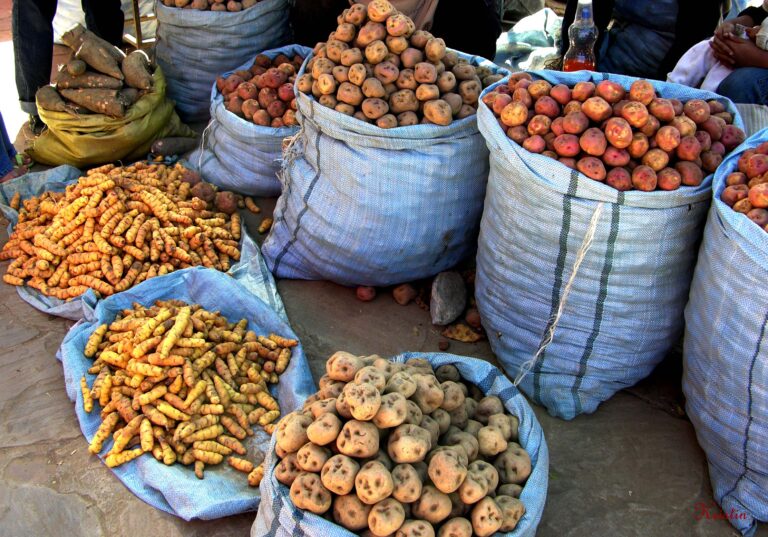
Photo: A potato tuber (not Kazakhstan) (illustrative). DenesFeri / Wikimedia Commons, CC BY-SA 4.0