Iraq: Potato Harvest Falls 72% in Five Years to 186,147 Tonnes as Area Shrinks by Two Thirds
Iraq's statistics body puts the 2025 potato crop at 186,147 tonnes on 31,579 dunums, down from 674,800 tonnes on 96,500 dunums in 2020. The data exclude the Kurdistan Region.
Iraq produced 186,147 tonnes of potatoes in 2025, according to the annual crop report of the Central Statistical Organization (COSIT). The crop grew on 31,579 dunums. The average yield was 5,894.6 kg per dunum. The report covers Iraq without the three governorates of the Kurdistan Region. Some villages in Nineveh, Kirkuk, Diyala, Anbar and Salah al-Din were also left out for security reasons.
The 2025 figure is 1.7% below 2024, when the crop reached 189,447 tonnes on 32,992 dunums. The bigger change is over five years. The COSIT time series shows this path:
- 2020: 96,500 dunums and 674,800 tonnes
- 2021: 76,700 dunums and 466,100 tonnes
- 2022: 50,600 dunums and 270,600 tonnes
- 2023: 35,900 dunums and 229,100 tonnes
- 2024: 33,000 dunums and 189,400 tonnes
- 2025: 31,600 dunums and 186,100 tonnes
So the potato area fell by about two thirds and the harvest by about 72% since 2020. Yield also went down, from 6,994.6 kg per dunum in 2020 to 5,894.6 kg per dunum in 2025. One Iraqi dunum is 2,500 square metres. This means the 2025 crop grew on roughly 7,900 hectares, with an average near 23.6 tonnes per hectare.
Weekdays. Unsubscribe in one click.
Iraq grows potatoes in two seasons. In 2025 the spring crop gave 122,921 tonnes on 15,681 dunums. The autumn crop gave 63,226 tonnes on 15,898 dunums. Baghdad was the largest spring producer with 57,501 tonnes. Nineveh led the autumn season with 26,161 tonnes.
The report does not explain why the area fell. It gives numbers only. It also does not give data on imports, storage or seed supply.
Why it matters
The report gives no consumption data. Still, a potato area that has lost two thirds of its size in five years suggests that more of the demand in central and southern Iraq may now be met from other sources, such as the Kurdistan Region or imports. Buyers, seed suppliers and exporters in the region should not rely on old production figures for Iraq.
The data also show a slow fall in yield. For seed and input suppliers this points to room for better varieties, irrigation and crop care. For analysts, the key limit is coverage: without the Kurdistan Region, the COSIT data do not show the full national crop.
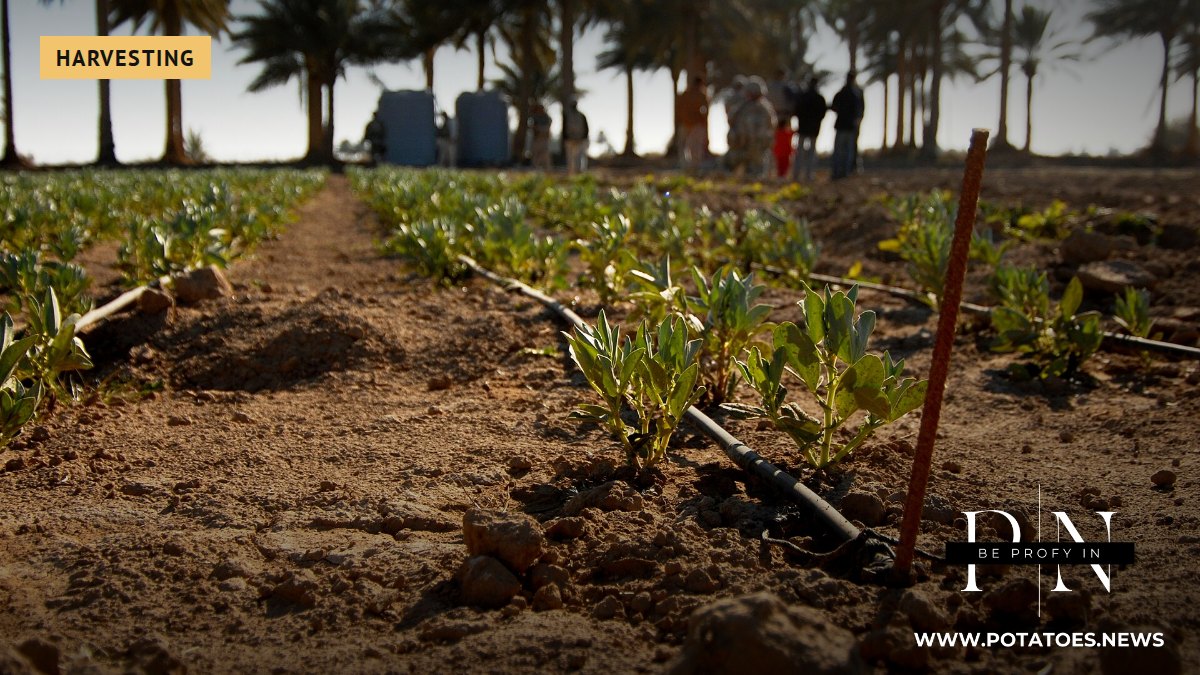
Photo: Field irrigation in Iraq (illustrative). Wendy Wyman, U.S. Navy / Wikimedia Commons, Public domain