Iran: Retail Potato Prices Reach 135,000 Toman per kg as Tehran Starts Regulated Sales at 69,000
Potatoes in Tehran shops now cost up to twice the wholesale price, while quality problems add to buyers' anger. The retailers' union has started market-regulation sales at about 69,000 toman per kilogram.

Potato prices in Tehran have risen sharply in recent days, and the city has started to sell regulated, cheaper potatoes to calm the market. This is reported by the Iranian news site Tabnak, citing the ISNA news agency, in the first days of the Iranian month of Mehr, which began on 23 September.
According to the report, potatoes sell for 68,000 to 85,000 toman per kilogram in Tehran’s municipal fruit and vegetable markets. In ordinary retail shops the price is 110,000 to 135,000 toman per kilogram. At the top of the range, shop prices are almost twice the lowest market price.
Tayyebeh Safari, head of the Tehran Fruit and Vegetable Retailers Union, said that distribution of market-regulation potatoes has begun. It is organised together with the agriculture ministry (Jihad-e Keshavarzi), inspection bodies and the guild chamber. These potatoes are supplied to shopkeepers at about 60,000 toman per kilogram and are to be sold to consumers at about 69,000 toman per kilogram.
Weekdays. Unsubscribe in one click.
Shortage and quality problems
The report links the price jump to a shortage of supply in recent days. Buyers also complain about quality. Many potatoes on sale have spots, bruises, changes in colour and signs of decay. Some shoppers say that after washing and peeling they cannot use all of the potatoes they bought. The union head accepted that some damaged product is part of the supply chain problem.
The report does not give the volume of regulated supply or say how long the sales will last. It also does not say which provinces the regulated potatoes come from.
Iran is a large potato producer. FAOSTAT puts the country’s 2024 output at 2.92 million tonnes, as POTATOES NEWS reported earlier, and the main growing provinces include Hamadan and Ardabil. Prices in the capital therefore depend on how fast new-crop potatoes move from these regions and on how much old-crop stock is left.
Why it matters
The gap between market and shop prices shows that the problem in Tehran is not only the farm price. Distribution, storage and retail margins add a large share of the final cost. Poor quality in the shops also suggests that some old or badly stored potatoes are reaching consumers.
For growers and traders in the main producing provinces, strong prices in Tehran are a signal to move new-crop potatoes quickly and to grade them well. For neighbouring exporters, a tight Iranian market may mean fewer Iranian potatoes on regional markets in the coming weeks. Whether the regulated sales at 69,000 toman bring shop prices down will be the next test.
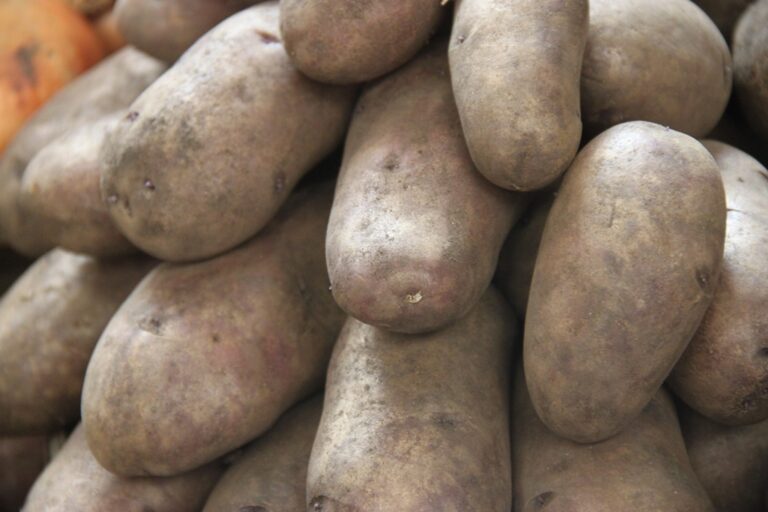
Photo: Tehran Bazaar, Iran (illustrative). Arash87b / Wikimedia Commons, CC BY-SA 4.0