Indonesia: Java Grows Two Thirds of a 1.27 Million Tonne Potato Crop as Output Stalls
Potato output in Indonesia grew twentyfold after 1961 but has hardly moved in the last decade. Highland farms on Java still dominate, while processed imports supply the fast-food and snack market.
Indonesia produced 1.27 million tonnes of potatoes in 2024, according to FAOSTAT data published by Our World in Data. In 1961 the country grew only 60,000 tonnes. Output reached 977,000 tonnes in 2000 and 1.22 million tonnes in 2015. Since then, the volume has stayed close to 1.3 million tonnes.
Yields improved slowly. FAOSTAT shows 6.0 tonnes per hectare in 1961, 13.4 tonnes in 2000 and 18.8 tonnes in 2024. This is less than half the level in major European producing countries.
A crop of the Java highlands
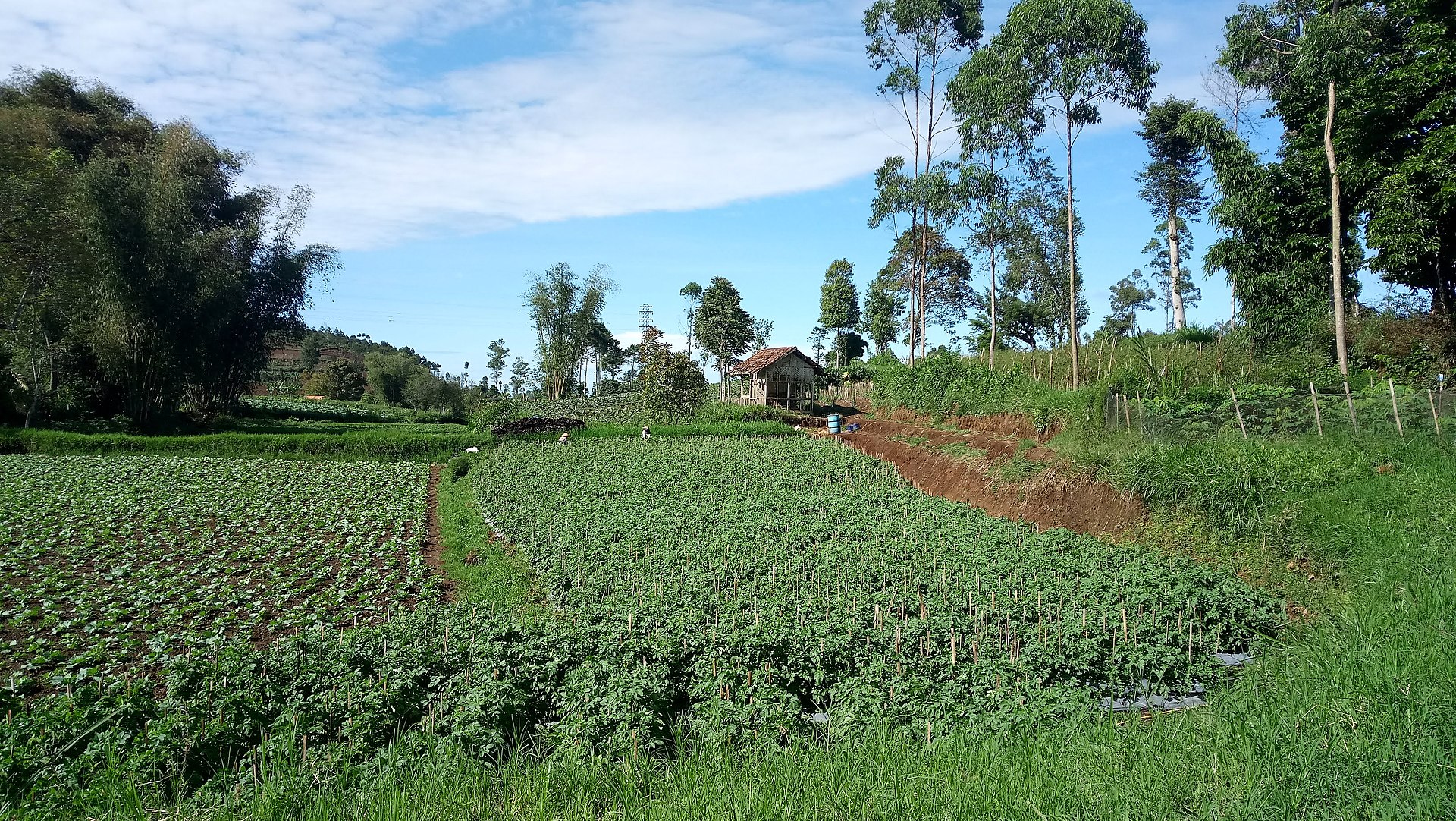
Potatoes in Indonesia grow mainly in cool highland areas. The largest producers in 2024 were East Java with 301,870 tonnes, Central Java with 295,880 tonnes and West Java with 249,650 tonnes. These figures come from the agriculture ministry, as reported by the data portal Databoks in August 2026.
Weekdays. Unsubscribe in one click.
Together, the three Java provinces produced almost 850,000 tonnes. This is about two thirds of the national crop. Outside Java, the main producers were Jambi with 137,980 tonnes and North Sumatra with 136,610 tonnes. South Sulawesi and North Sulawesi each produced between 50,000 and 61,000 tonnes.
The ministry described the same concentration in an earlier trade analysis. In 2021 East Java had 23.8% of national output, Central Java 20.4% and West Java 17.7%. National production was 1.36 million tonnes that year, from 71,786 hectares of harvested area.
Imports of processed potatoes
Domestic production covers most fresh demand, but processed products come from abroad. According to the ministry analysis, 81.7% of the value of potato imports in 2021 was processed potatoes, worth US$95.6 million. Fresh potatoes accounted for US$21.4 million.
The main suppliers were the Netherlands, the United States, Germany, Belgium and Canada. The ministry put the self-sufficiency ratio at 89.6% in 2021. Exports were small, at 5,872 tonnes.
Why it matters
Indonesia is a large and young consumer market, but its potato base is small and stagnant. Farms depend on a narrow belt of cool highland land. Yield growth, not new land, is the realistic way to raise output.
For European and North American fry exporters, Indonesia remains a steady import market. For seed companies and research institutes, the yield gap on Java is the main opportunity.
Photo: A potato field in the highlands of Garut, West Java, Indonesia (illustrative). Dzikra Imron / Wikimedia Commons, CC BY-SA 4.0