
India Approves Four New Potato Varieties to Boost Processing Industry and Yields
Key takeaways
- 4 ICAR-CPRI potato varieties cleared for wider planting
- Kufri Chipbharat-1 yields 35-38 t/ha in about 100 days
- 21% dry matter, low sugars fit Chipbharat-1 for chip lines
- 2 table varieties, Kufri Ratan and Tejas, raise farm yields
Why it matters
- For farmers
- Growers can seek out Kufri Ratan and Kufri Tejas for higher yields and better climate resilience, and Chipbharat-1/2 if selling into processing contracts.
- For processors
- Chip processors can start sourcing Kufri Chipbharat-1/2 (21% dry matter, low sugars) to cut reliance on imported raw material once seed licensing begins.
- For suppliers
- Seed producers can apply for licences to multiply the four ICAR-CPRI varieties, starting with the processing-focused Chipbharat-1 and Chipbharat-2.
60-second summary
India's Ministry of Agriculture and Farmers' Welfare has approved four new potato varieties bred by ICAR-CPRI (Central Potato Research Institute, Shimla) for nationwide cultivation and seed production, on the recommendation of the Central Seed Committee. Two are aimed squarely at the processing industry to cut reliance on imported raw material: Kufri Chipbharat-1, maturing in about 100 days with yields of 35-38 tonnes per hectare, about 21% dry matter and low reducing sugars suited to chip colour, plus round tubers with creamy-white flesh; and Kufri Chipbharat-2, also developed for stable processing supply. Two table varieties were approved alongside them, Kufri Ratan and Kufri Tejas, both high-yielding and bred for greater climatic resilience. The new varieties will be licensed to seed producers and processors to build a more predictable domestic raw-material chain. The article gives no acreage, pricing or rollout timeline for the licensing process.
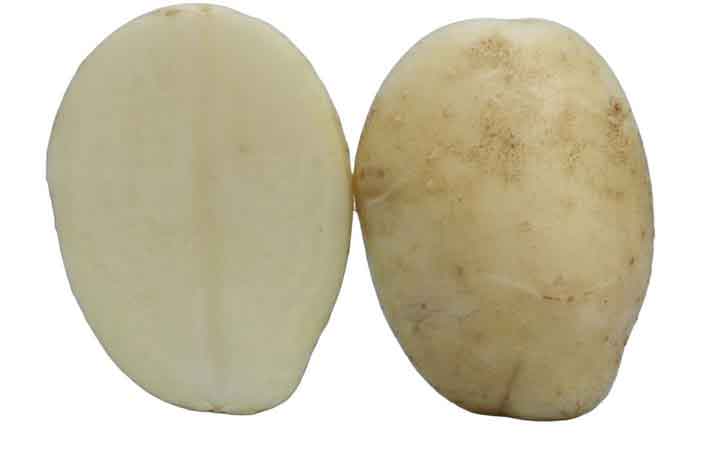
India’s Ministry of Agriculture and Farmers’ Welfare, acting on the recommendations of the Central Seed Committee, has officially approved four new potato varieties developed by ICAR-CPRI (Central Potato Research Institute, Shimla) for nationwide cultivation and seed production. A particular emphasis has been placed on varieties tailored for the processing industry, a move designed to reduce the country’s dependence on imported raw materials. The standout among these is Kufri Chipbharat-1, a medium-maturing variety that reaches maturity in roughly 100 days and delivers high yields of 35–38 tonnes per hectare. Its key characteristics make it ideally suited for chip production: dry matter content of around 21% and low levels of reducing sugars, which ensure an acceptable colour in the finished product. The variety produces round tubers with creamy-white flesh and shallow eyes. A second variety in the series, Kufri Chipbharat-2, is likewise intended for processing and is geared toward ensuring stable supplies of raw material for the food industry.
These varieties will be licensed to seed producers and processors in order to provide the industry with high-quality, predictable raw material. In addition to the processing-focused varieties, two table varieties were approved: Kufri Ratan and Kufri Tejas. Both are high-yielding table potatoes aimed at raising overall productivity and improving resilience to climatic stress. The approval of this diverse set of varieties reflects a dual strategy — strengthening the processing sector’s domestic supply chain while simultaneously enhancing the productivity and climate resilience of India’s potato farming sector as a whole.
Global Potato Brief
Top five stories, prices, disease alerts and events. Weekday mornings, no advertising.
What next
Licensing of the new varieties to seed producers and processors is expected to follow; no timeline is given in the source.
Sources
- India's Ministry of Agriculture and Farmers' Welfare, acting on Central Seed Committee recommendations; varieties bred by ICAR-CPRI (Central Potato Research Institute, Shimla).
Linked in this material
- Country
- India
- Sections
- Growing seedsNewsSeeds