Iceland: Potato Harvest Rebounds 51% to 8,300 Tonnes After the Smallest Crop Since 1993
Iceland harvested 8,300 tonnes of potatoes in 2025, Eurostat data show, after only 5,514 tonnes in 2024, the smallest crop since 1993 according to Hagstofa. About 70% of potatoes grow in Þykkvabær.
Iceland harvested 8,300 tonnes of potatoes in 2025, according to Eurostat. The crop grew on about 410 hectares, and the average yield was 20.24 tonnes per hectare. This was about 51% more than in 2024.
The 2024 season was very poor. Statistics Iceland (Hagstofa) said the 2024 potato harvest was 5,514 tonnes, the smallest since 1993, when it was 3,913 tonnes. Eurostat shows a yield of only 13.35 tonnes per hectare that year on the same area.
Weather decides the crop
In Iceland, the potato season is short and cool, so the size of the harvest changes a lot from year to year. A grower in Þykkvabær told Heimildin in March 2025 that the 2024 summer was “wet and cold”. He also recalled 2009, when two nights of frost in July destroyed almost all potato plants in South Iceland.
Weekdays. Unsubscribe in one click.
Eurostat figures show how unstable the crop is. Since 2011, the harvest has ranged from 5,510 tonnes in 2024 to 10,000 tonnes in 2016. In most years it was between 6,000 and 9,700 tonnes. The area is small and fairly stable, at about 400–500 hectares.
One main growing area
Production is concentrated in the south. According to the farm newspaper Bændablaðið, about 70% of Icelandic potatoes grown in Þykkvabær, in the south, where around 10 growers remain. A large part of their harvest goes to the local processing plant in Þykkvabær, and some goes to food companies. Growers there also worry about frost and late blight, including new blight strains that could arrive with imported seed.
The data sources used for this article do not give import volumes.
Why it matters
Iceland is one of the smallest and most weather-exposed potato markets in Europe. One cold summer can cut the harvest by about a quarter, as in 2024, when output fell from 7,300 tonnes in 2023. The 2025 recovery shows that the same area can produce much more in a normal season.
For suppliers of seed and storage technology, the key needs are varieties that tolerate cold and disease protection that fits a short season. For importers, Icelandic demand for foreign potatoes rises sharply after a poor local harvest.
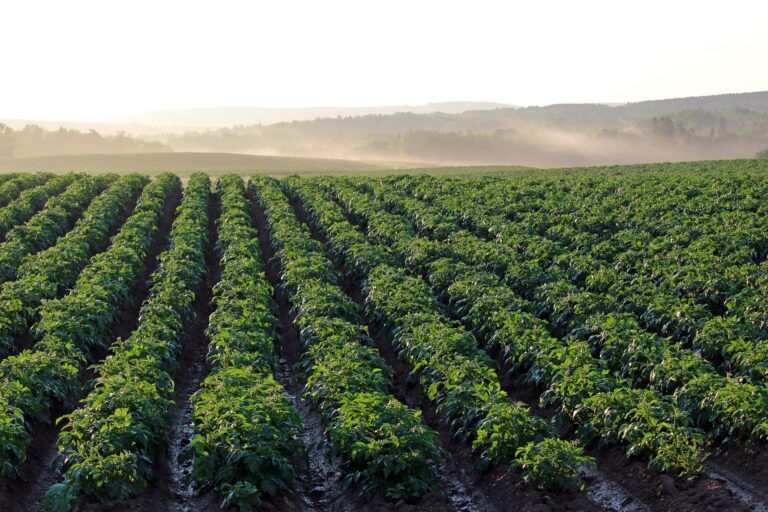
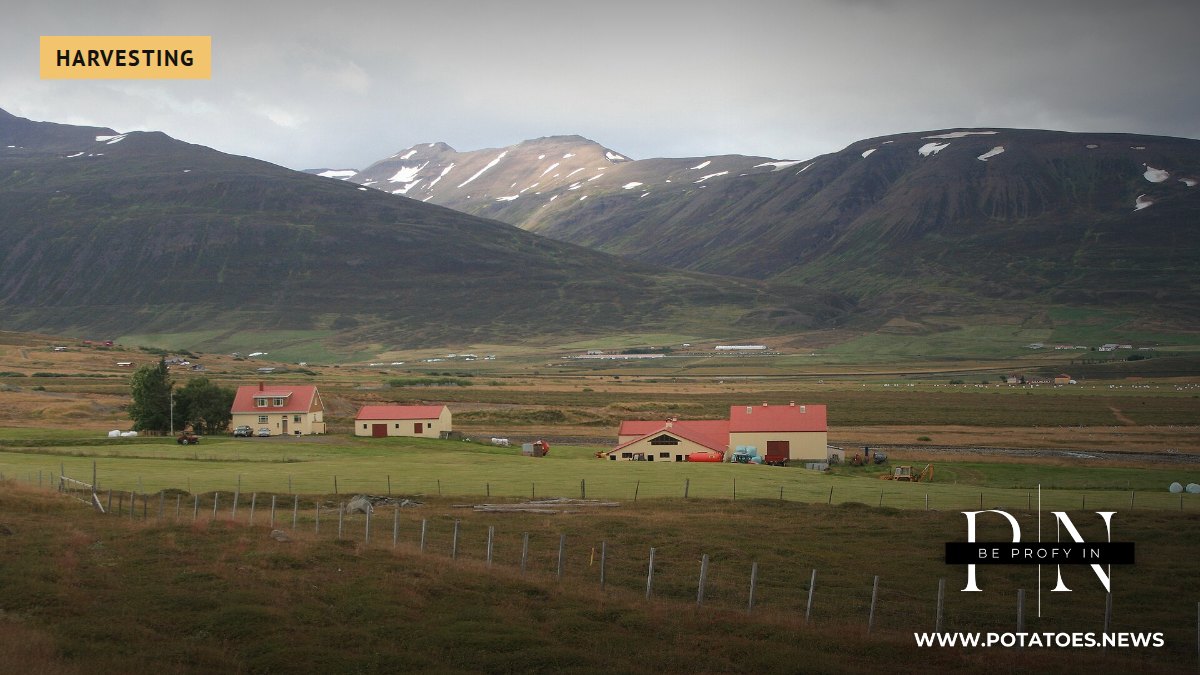
Photo: Farmland in north-east Iceland (illustrative). Michal Gorski / Wikimedia Commons, CC BY-SA 3.0