• About Us
  • RSS Feed
  • Advertise
  • Contact
Saturday, October 10, 2026
  • Login
No Result
View All Result
AVGUST — General PartnerGeneral
partner
Potatoes.News
  • News
  • Agrotechnology
    • Agronomy
    • Growing seeds
    • Fertilizers and pesticides
    • Equipment in the field
  • Harvesting
  • Processing
  • Equipment
    • Equipment in the field
    • Equipment for storage
    • Equipment for packing
  • Diseases
  • Regions
    • Europe
    • America
    • Asia
    • Africa
    • Australia and Oceania
  • Events
  • IPT
  • Nutrition
  • News
  • Agrotechnology
    • Agronomy
    • Growing seeds
    • Fertilizers and pesticides
    • Equipment in the field
  • Harvesting
  • Processing
  • Equipment
    • Equipment in the field
    • Equipment for storage
    • Equipment for packing
  • Diseases
  • Regions
    • Europe
    • America
    • Asia
    • Africa
    • Australia and Oceania
  • Events
  • IPT
  • Nutrition
No Result
View All Result
Potatoes.News
No Result
View All Result

How to manage Pink Rot in potatoes

by Viktor Kovalev
03.02.2021
in AGROTECHNOLOGY
0
Pink Rot in Potato
0
SHARES
0
VIEWS
Share on Facebook
Share on Twitter

Pink rot is an important storage disease of potatoes. Caused by a soil-borne pathogen, Phytopthora erythroseptica, it’s found in potato-growing regions throughout the world.

This pathogen thrives in saturated soils, so the disease is often associated with low spots in the field or in areas of poor drainage. Disease incidence is greatest at temperatures between 70°F and 85°F.
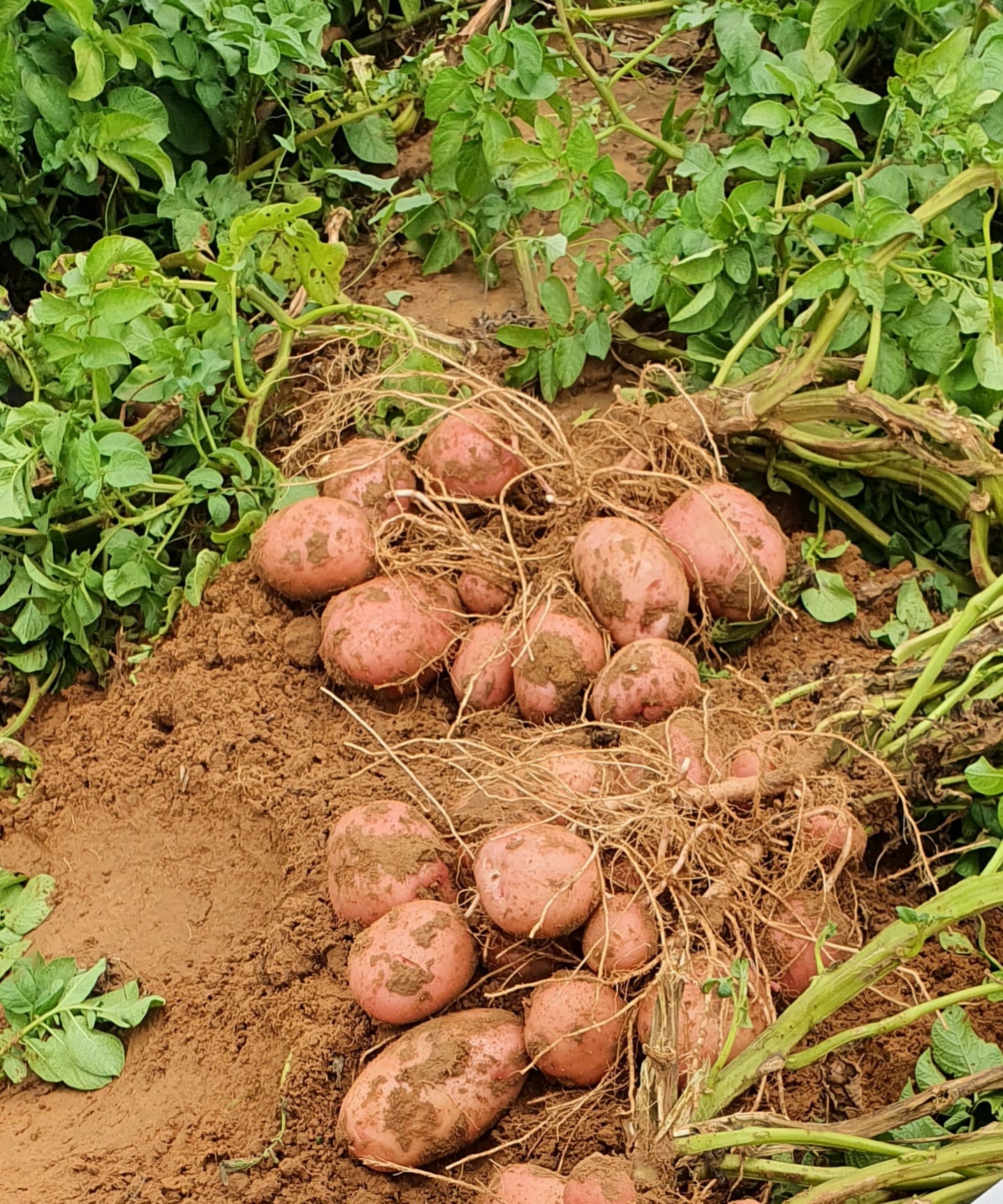
3224 1600
Pink Rot in potato

You may not notice pink rot until harvest or when the tubers are in storage, but it starts in the field. Infections often originate at the stolon attachment but also may occur at the eyes or through wounds. Pink rot also can spread from tuber to tuber in storage.

Morning industry digest The day’s essentials in one email.

Weekdays. Unsubscribe in one click.

Symptoms to Watch For

There are several tell-tale indicators of pink rot:

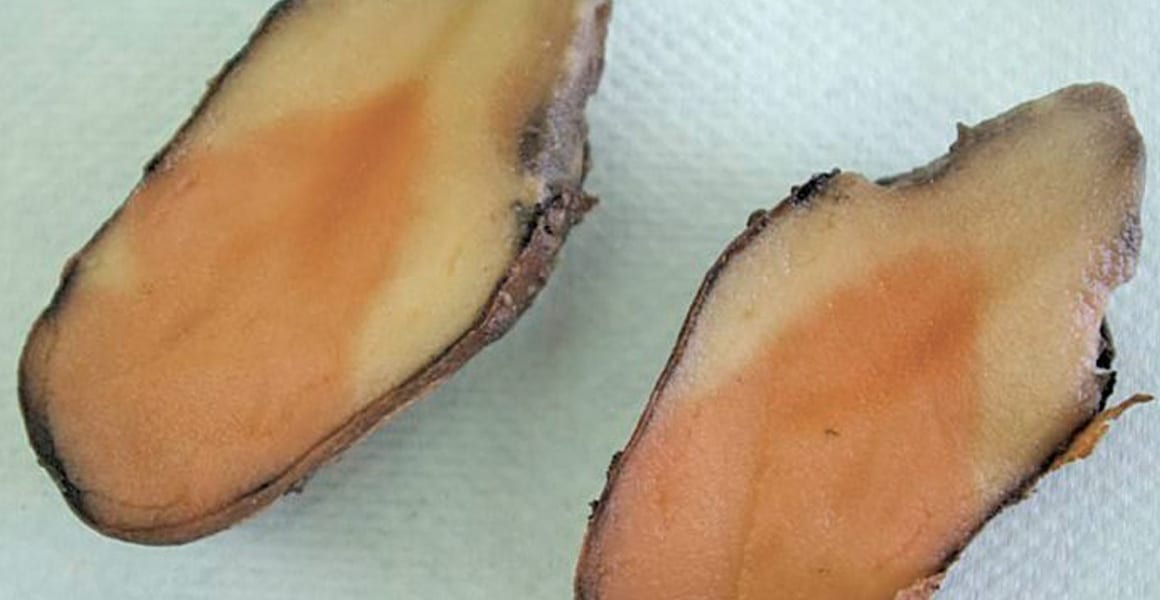
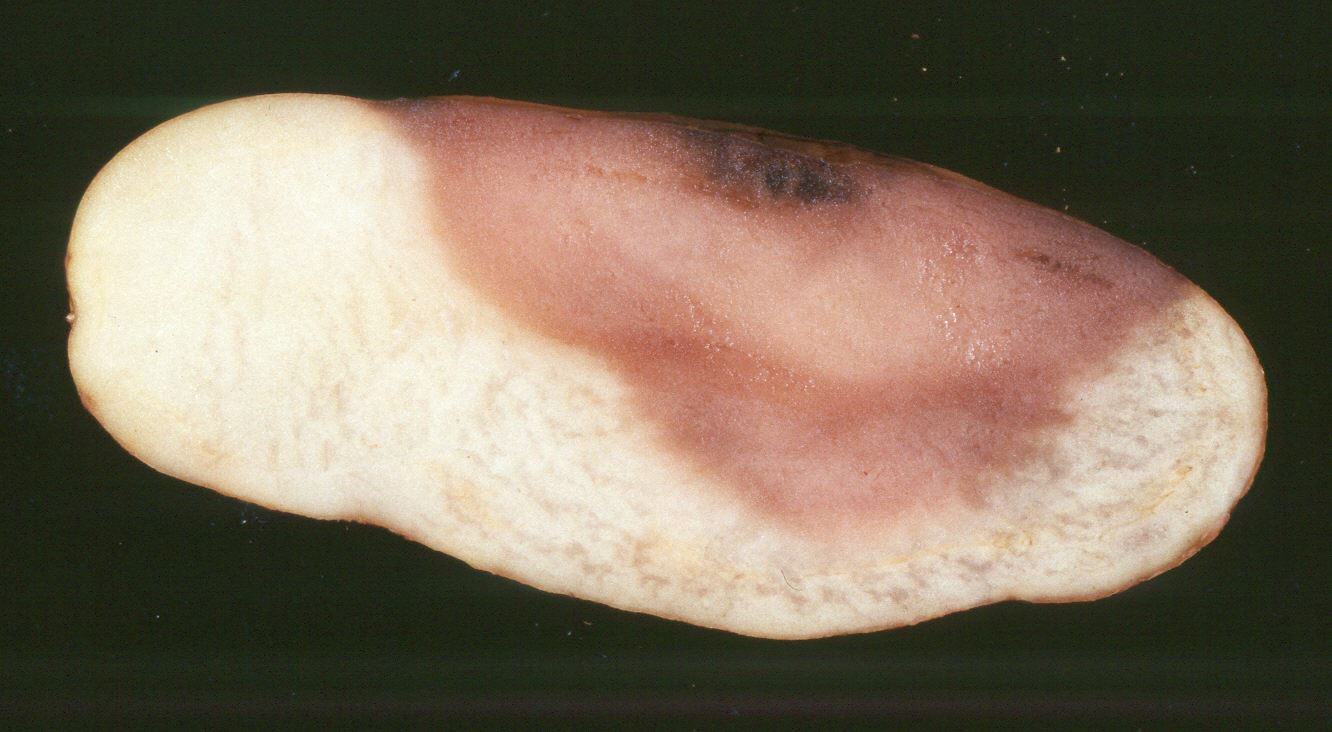
  1. On the outside of the tuber, you may notice a dark line delineating the margin of decay.
  2. When the tuber is cut and exposed to air, infected tissues change from cream-colored to salmon-pink and then black.
  3. Tubers with pink rot have a rubbery texture and give off an ammonia odor.
  4. Secondary infection with soft rot bacteria can make the tuber tissue soft and mushy and have a very unpleasant odor.
How to Control Pink Rot

Like the causal agents of late blight (Phytopthora infestans) and leak (Pythium ultimum), the pink rot pathogen is a fungus-like, oomycete rather than a “true” fungus.

Why should we care? Because the chemical controls that target fungal pathogens do not usually work for oomycetes. This limits chemical control options.

The most frequently used oomycete fungicides for managing pink rot are mefenoxam (e.g., Syngenta’s Ridomil Gold, Nufarm’s Ultra Flourish) and metalaxyl (e.g., LG Life Sciences’ MetaStar). Mefenoxam is also known as metalaxyl-M and is chemically similar to metalaxyl.

These products can be applied:

  1. As an in-furrow treatment at planting.
  2. In a series of foliar applications beginning when tubers are dime-sized.
  3. In a combination of in-furrow and foliar applications.

potato blight spraying
foliar application

The labels for phosphorus acid suggest various application times and methods. In the Pacific Northwest, we recommend three or four foliar applications, beginning when tubers are dime-sized.

Phosphorus acid also can be applied as a postharvest treatment to tubers going into storage. Other fungicides used to control pink rot are cyazofamid (e.g., Summit Agro’s Ranman), oxathiapiprolin (e.g., Syngenta’s Orondis), and fluopicolide (e.g., Valent U.S.A.’s Presidio).

Read the product labels carefully and consult local experts about the best rates and timing for your region.

Resistance issues to monitor

Unfortunately, some populations of P. erythroseptica have developed resistance to metalaxyl. Resistance has been confirmed in potato-growing regions across the U.S. and Canada. This means some growers may need to consider alternative approaches for managing pink rot, such as applying phosphorus acid.

How do you know if you have metalaxyl-resistant isolates of pink rot on your farm? Submit a tuber sample to a plant diagnostic laboratory and ask them to do a metalaxyl sensitivity test – the tubers should be showing symptoms of pink rot.

Several regions have conducted surveys to determine the prevalence of resistant pink rot. We are conducting a survey in Washington, Oregon, and Idaho this year.

We are asking growers in the Pacific Northwest to look for symptoms of pink rot as they are harvesting or inspecting storages and to send us tuber samples if they find it. There is no fee for this service because the costs for testing are being paid out of a grant from the Northwest Potato Research Consortium.

Recommended cultural controls

There are several things you can do to minimize pink rot:

  1. Select fields that have no history of pink rot.
  2. Rotate crops to limit the buildup of pathogen populations.
  3. Avoid excessive soil moisture.
  4. Avoid conditions that favor disease development and spread during harvest. Don’t harvest when tuber pulp temperatures are above 65°F. Avoid bruising or wounding tubers during harvest.
  5. Remove pink rot tubers while loading potatoes into storage.
  6. Reduce tuber pulp temperatures to 50°F as soon as possible, especially if you know there is some pink rot in the pile. This may mean operating the fans while you are loading the storage.
  7. Avoid water condensation in the pile by using adequate ventilation. Do not expose cold tubers to warm air, because that can cause a layer of water to condense on the tubers.

GP logo green
Pink Rot in Potatoes

agronomic-archive/

News, analysis and the industry community

POTATOES NEWS brings you independent editorial news and analysis. PotatoWay is our connected professional network for people and companies in the potato industry.

Explore the PotatoWay community →
Tags: crop rotationdisease managementPink Rot in PotatoesPotato Storage

Viktor Kovalev

POTATOES NEWS

Next Post
potato tuber yields

Predicting tuber yields

Popular News

world cup

Ukrainian drones set another Russian oil refinery ablaze as Putin admits fuel shortages

07.08.2026
earthquake

One week in, what exactly are America and Iran getting from their agreement?

08.08.2026
supercomputer

NASA races to save Swift telescope from falling back to Earth with daring rescue mission

09.08.2026
Lebanons deal

British Police Warn Drug Users Of “Extra Strong, IKEA Branded” Ecstasy Pills

10.08.2026
  • About Us
  • Work With Us
  • Privacy Policy
  • RSS feeds by language
  • Video
  • Potato Market Prices
  • Partners

Category

  • Africa
  • AGRONOMIC ARCHIVE
  • Agronomy
  • AGROTECHNOLOGY
  • America
  • Asia
  • Australia and Oceania
  • Climate
  • Company
  • Company history
  • Drone
  • Equipment for packing
  • Equipment for storage
  • Equipment in the field
  • Europe
  • Events and exhibitions
  • Exclusive Interview
  • Fertilizers and pesticides
  • FUTURE
  • Growing seeds
  • Harvesting
  • History of potato cultivation
  • IPT
  • IRRIGATION
  • Irrigation equipment
  • Irrigation technology
  • Keeping the harvest
  • Meteo
  • New potato variety
  • News
  • Packing
  • Podcast
  • Poll
  • POTATO 2.0
  • Potato diseases
  • Potato recipes
  • Processing
  • PROCESSING COMPANY
  • Products of processing of potatoes
  • Readers' calendar
  • Regions
  • rotation potato crops
  • Seeds
  • Smart
  • Soil
  • StartUp
  • Storages
  • The technology of processing potatoes
  • Unions and associations
  • World Potato Day
  • Сrop protection

Site Links

  • Log in
  • Entries feed
  • Comments feed
  • WordPress.org
  • About Us
  • Work With Us
  • Privacy Policy
  • RSS feeds by language
  • Video
  • Potato Market Prices
  • Partners

© 2026 JNews - Premium WordPress news & magazine theme by Jegtheme.

Welcome Back!

Login to your account below

Forgotten Password?

Retrieve your password

Please enter your username or email address to reset your password.

Log In
  • About Us
  • Work With Us
  • Privacy Policy
  • RSS feeds by language
  • Video
  • Potato Market Prices
  • Partners
📰 My digest — pick topics and read offline
No Result
View All Result
  • News
  • Agrotechnology
    • Agronomy
    • Growing seeds
    • Fertilizers and pesticides
    • Equipment in the field
  • Harvesting
  • Processing
  • Equipment
    • Equipment in the field
    • Equipment for storage
    • Equipment for packing
  • Diseases
  • Regions
    • Europe
    • America
    • Asia
    • Africa
    • Australia and Oceania
  • Events
  • IPT
  • Nutrition

© 2026 JNews - Premium WordPress news & magazine theme by Jegtheme.

POTATOES NEWS — news and analysis · PotatoWay — professional community
IP Geolocation by DB-IP