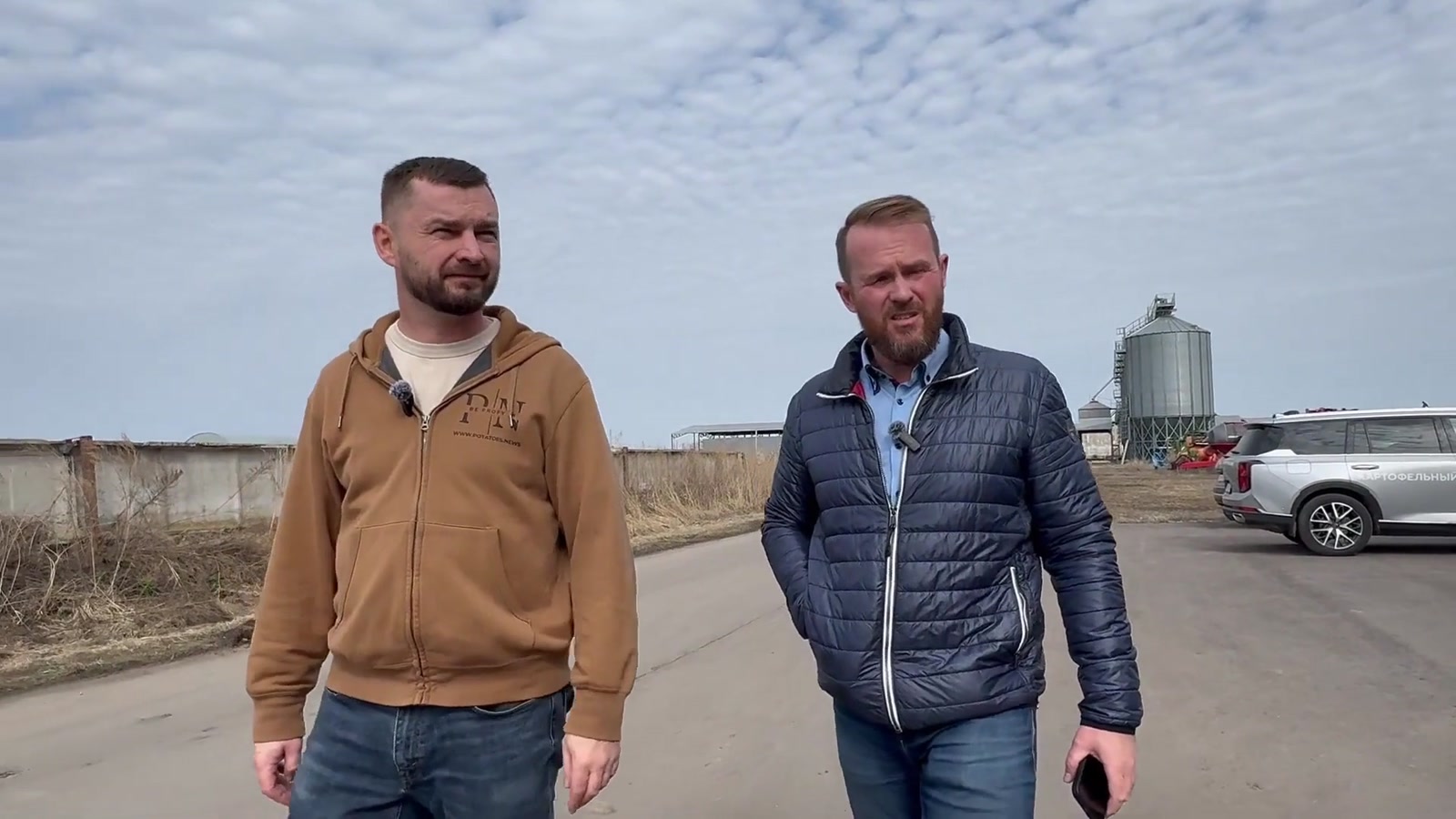
In this International Potato Tour interview, Samara–Solana director Maxim Kislyakov shows Viktor Kovalev the farm’s storage and packing facilities in Russia’s Samara Region. The visit, first reported in 2025, links decisions about storing and selling potatoes with the practical challenge of finding and keeping skilled workers.
A separate store for seed and small lots
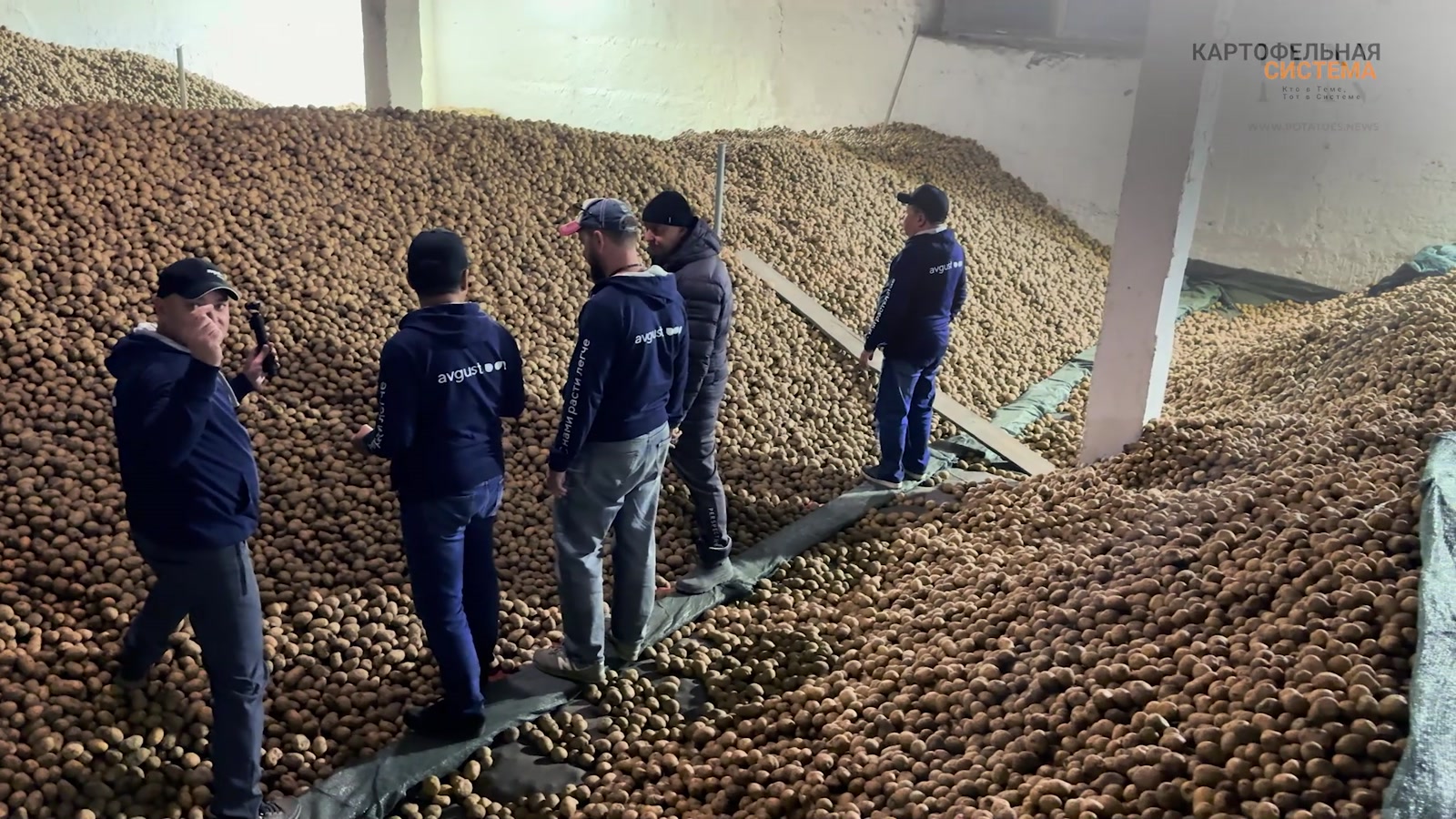
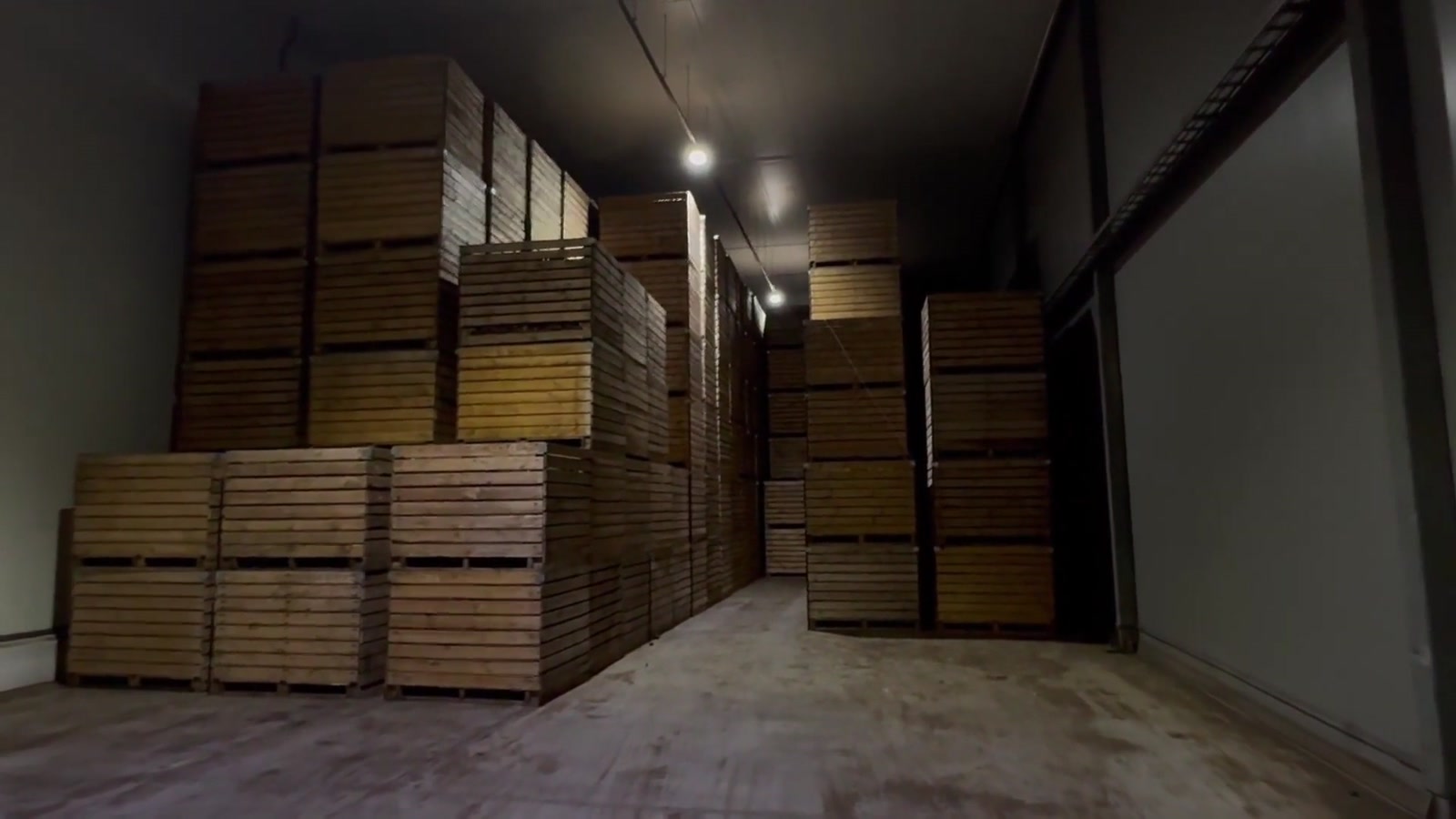
Kislyakov describes a 3,600-tonne container store with four sections, used for the farm’s seed and varieties held in smaller quantities. Most of the remaining potatoes were stored in bulk. At the time of the visit he put overall storage capacity at 12,000 tonnes. He also describes leaving filled containers under cover for about a day before moving them into the store, so air can circulate around them.
Training and working conditions
Kislyakov says the farm employed 53 people at the time. He describes sending mechanics and other specialists for training each year, using newer equipment and control systems, and rewarding experience through the pay and bonus system. At the store, he points out changing and dining areas and describes how the farm provides meals where people are working.
Weekdays. Unsubscribe in one click.
Dust around tipping and sorting was still a problem. Kislyakov describes the farm’s existing cleaning and distinguishes it from methods seen elsewhere, including fine mist at dusty points and filtered cabins kept under slight positive pressure. He discusses those methods while explaining the improvements the farm was considering.
Why the farm wanted a packing line
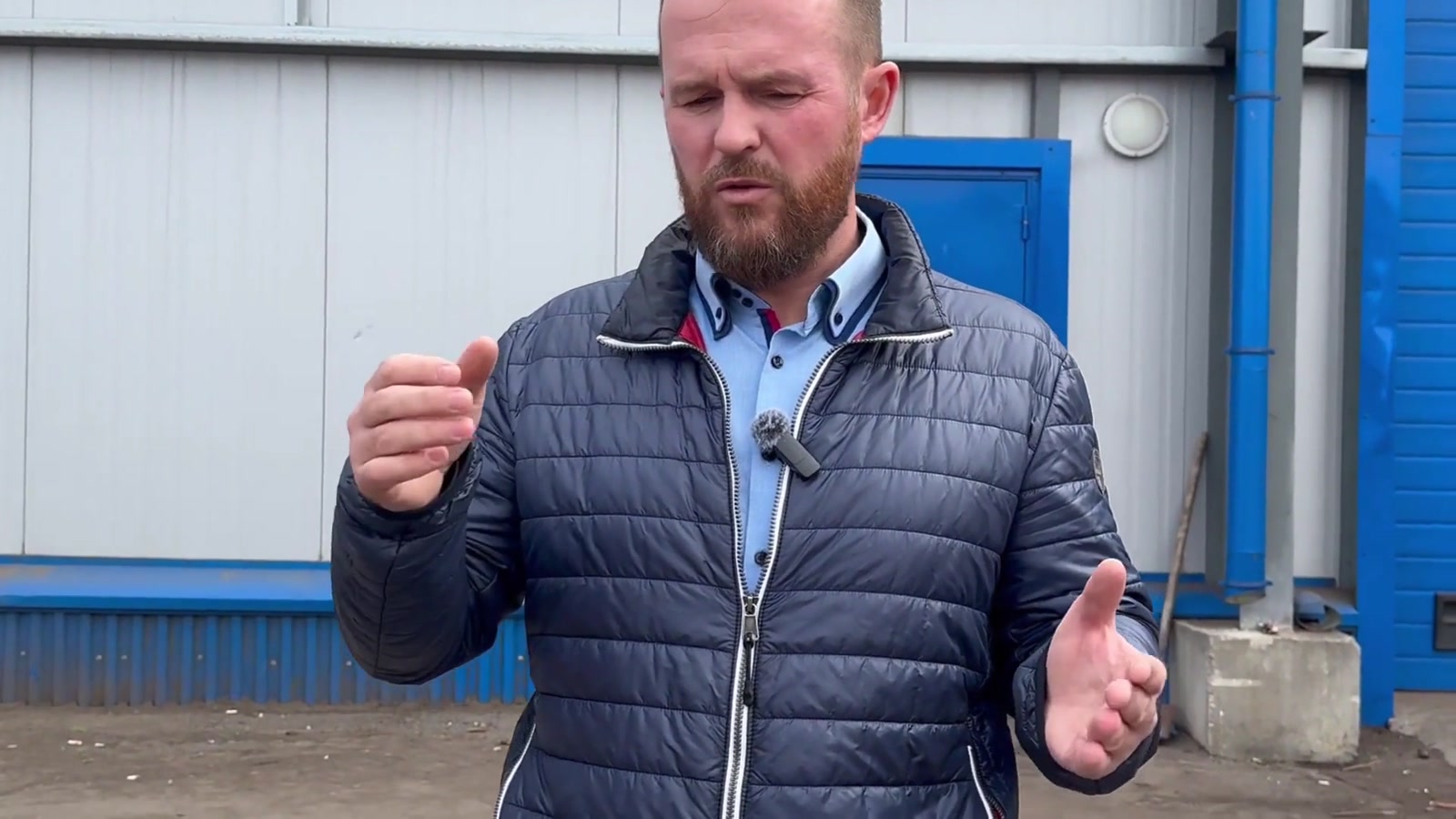
Kislyakov recalls shipping about 400 tonnes of seed potatoes to Mongolia in the previous season. The order required labelled 25-kilogram mesh bags. He says the farm worked with neighbours to get the potatoes packed. During the visit, he shows the space intended for the farm’s own line for checking and packing potatoes before sale.
Water and weighing at the time of the visit
Kislyakov reports cultivating about 3,000 hectares, with roughly 1,500 hectares under irrigation and water applied according to crop needs. He describes a 60-tonne main truck scale and plans for another rated at 70 tonnes to weigh outgoing loads at the loading area.
Watch the full interview
Watch the interview on YouTube
Chapters in the archive recording
These times follow the longer archive recording of the visit.
- 00:41 The container store and small seed lots
- 03:08 Leaving containers under cover before storage
- 03:24 Introducing the Samara–Solana visit
- 06:06 Land, irrigation and storage capacity
- 06:51 Team size and staffing
- 09:14 Training for mechanics and other specialists
- 13:58 Washing, disinfecting and inspecting containers
- 15:45 The planned packing line
- 16:07 The shipment to Mongolia and the bag requirement
- 18:52 Changing and dining areas
- 20:20 Dust in the sorting area
- 24:15 Proposed additional truck scale
Sources
This article first appeared on 30 September 2025. This update adds scenes and notes from the tour archive.