
High-Tech Potato Sorter Triples Processing Capacity at Goseong Agricultural Cooperative
Key takeaways
- Carrier-type sorter replaces an old cup-type machine
- Daily capacity up from 6-7 t to 20-23 t
- Less tuber damage during sorting
- Two-shift day-and-night operation adopted
- Annual procurement expected around 230 t
Why it matters
- For farmers
- Sorting capacity sets how much a cooperative can buy — the guaranteed 1,400 KRW price follows the machine.
- For traders
- Less mechanical damage at sorting means more of the crop reaches the premium grade it was grown for.
60-second summary
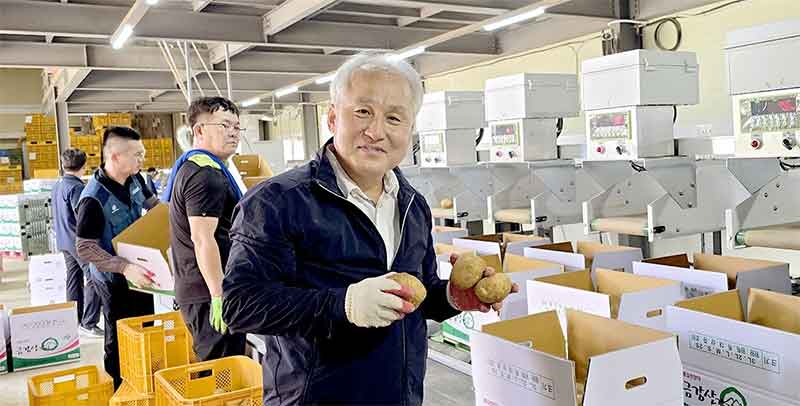
Geojin Agricultural Cooperative in Goseong, Gangwon Province, has replaced an outdated cup-type sorter with a carrier-type machine, funded in collaboration with local government. Daily processing capacity has tripled from 6-7 tonnes to 20-23 tonnes while damage to potatoes during sorting has fallen. To use the new line fully the cooperative has moved to day-and-night two-shift operation and deployed public-sector seasonal workers in teams of six for sorting and shipping, which should lift annual potato procurement to around 230 tonnes this year. For growers the effect is steadier market supply and firmer farmgate prices: premium-sized potatoes, large grade and above, are bought at 1,400 KRW per kilogram, which matters for farmers who had struggled to find a reliable cash crop. Chairman Kim Kyung-soo said the modernisation improves the marketability and distribution competitiveness of Goseong potatoes.
Geojin Agricultural Cooperative in Goseong, Gangwon Province, has significantly enhanced its potato sorting capabilities by introducing a state-of-the-art carrier-type sorting machine, replacing the outdated cup-type model. The upgrade, funded through collaboration with local government, has tripled daily processing capacity from 6–7 tons to 20–23 tons while reducing damage to potatoes during sorting. To maximize the new system’s efficiency, the cooperative has adopted a day-and-night two-shift operation and deployed public-sector seasonal workers in teams of six to support sorting and shipping tasks. This infrastructure boost is expected to raise the cooperative’s annual potato procurement volume to approximately 230 tons this year.
Impact on Farmers and Local Economy:
The improved sorting infrastructure directly benefits local growers by ensuring stable market supply and higher farmgate prices. Premium-sized potatoes (large grade and above) are purchased at 1,400 KRW per kilogram, helping to stabilize farm incomes—a crucial support for farmers who previously struggled to find reliable cash crops. Cooperative Chairman Kim Kyung-soo emphasized that the modernization effort, made possible through close cooperation with municipal authorities, enhances the marketability and distribution competitiveness of Goseong potatoes. He reaffirmed the cooperative’s commitment to further increasing farm household income through continued investments in quality and logistics infrastructure.
Global Potato Brief
Top five stories, prices, disease alerts and events. Weekday mornings, no advertising.
Sources
- Cooperative chairman Kim Kyung-soo — quoted in the article
Linked in this material
- Country
- South Korea
- Companies
- Geojin Agricultural Cooperative
- Technologies
- Carrier-type potato sorting machine
- Sections
- Equipment for packingPacking