
26 Sep 2026 Global Potato Industry General partnerAVGUST
The Global Potato Industry
Global·Agronomy·Harvesting

Global: Tubers Bruise Far More Easily When Pulp Temperature Falls Below 7 °C

2 min read
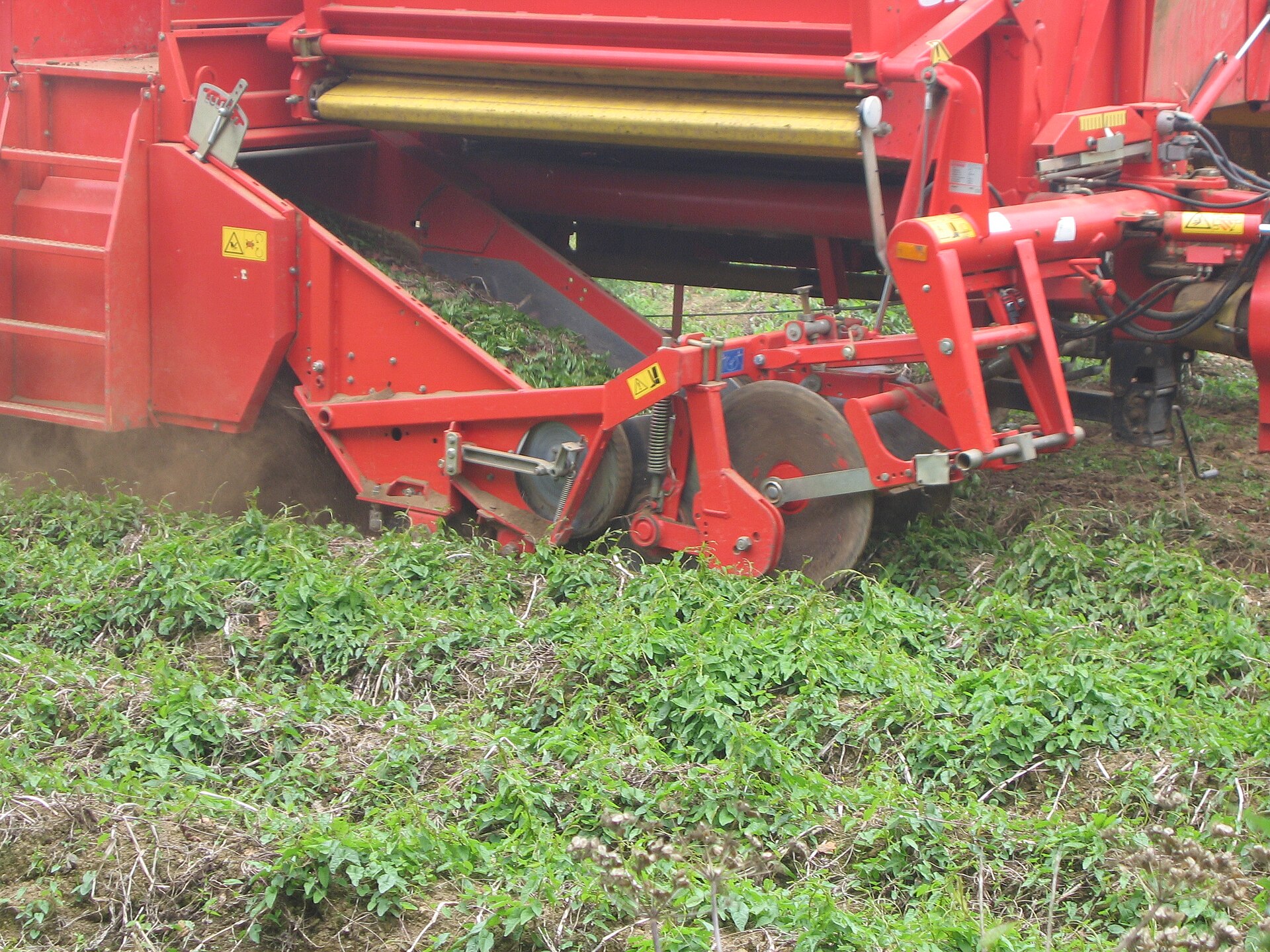
Mechanised potato harvest in Brittany, France
Photo: Mechanised potato harvest in Brittany, France (illustrative). Thesupermat / Wikimedia Commons, CC BY-SA 2.5
Key takeaways

  • 7 °C pulp temperature is where bruise sensitivity soars
  • 10-16 °C is the ideal pulp temperature window at harvest
  • 14 days after vine death is advised before storage harvest
  • 15 cm is the maximum recommended drop height on harvesters

Why it matters

For farmers
Check pulp temperature every morning and pause lifting below about 7 °C; start again once tubers warm into the 10–16 °C range.
For processors
Include pulp temperature at harvest in supplier records, and inspect high-dry-matter lots for delayed blackspot.
For suppliers
Harvester dealers can audit lines with impact recorders and cut drops to 15 cm or less before the season.

60-second summary

Much of the bruise that processors find after peeling is created at harvest by cold tubers, weak skins and hard knocks. Specialists writing in the Canadian magazine Spud Smart in 2024 and 2026 agree on a pulp window of about 10 to 16 degrees and warn that below roughly 7 degrees tubers become very sensitive to blackspot and shatter damage. Some varieties need more, such as Atlantic, which is prone to white knot bruise under 12 degrees. Nutrition adds to the risk, with low potassium, boron and calcium named by a Yara specialist, while skins need about 14 days after vine death to set. Drops should stay within about 15 centimetres. Growers, harvest contractors and processing buyers are the groups affected. The caveat is that the advice comes mainly from Canadian experience and trade press rather than controlled trials, and exact thresholds vary with variety, dry matter and the handling line used.

18 °C (65 °F)Rising soft rot and Pythium leak risk
12 °CBelow this, Atlantic prone to white knot bruise
14 daysMinimum after vine death for storage crops
60–65%Optimal available soil moisture at harvest
15 cm (6 in)Maximum recommended drop height
<10%Potassium in first tissue sample needing action
General partnerCrop protection for the potato industry

Bruising is one of the costliest quality defects in potatoes. Much of it is decided on the day of harvest. Tuber temperature, crop nutrition and handling all play a part.

Temperature sets the risk

Potato specialist Eugenia Banks set out the key thresholds in Spud Smart on 3 September 2024. Tubers are very sensitive to bruising when pulp temperature is below 45 °F, or about 7 °C. The optimal range for harvest is 50 to 60 °F, or about 10 to 16 °C. Above 65 °F, or about 18 °C, the risk of soft rot and Pythium leak rises.

Ryan Barrett of the PEI Potato Board gave the same window of 10 to 16 °C in Spud Smart on 17 September 2026. He wrote that cold potatoes are much more susceptible to blackspot bruise, shatter bruise and cracking.

Morning industry digest The day’s essentials in one email.

Weekdays. Unsubscribe in one click.

Varieties differ. Mark VanOostrum of WD Potato in Ontario told Spud Smart in 2019 that Atlantic is prone to white knot bruise below 12 °C. He advised harvesting Lamoka at 12 to 13 °C, three to four weeks after vine kill.

Nutrition and skin

Crop nutrition also matters. Emmerson McMillan of Yara Canada told Spud Smart in 2019 that low potassium, boron and calcium all contribute to bruising. He said potassium below 10% in the first tissue sample needs immediate action. Calcium uptake varies by variety.

Skin set protects tubers too. Banks advised waiting at least 14 days after vine death before harvesting potatoes for long storage. She named 60 to 65% available soil moisture as optimal at harvest. Dry soil produces more clods and more impacts.

Handling

Drop height is the third factor. Scott Graham wrote in Spud Smart in 2022 that all drops should be six inches, about 15 cm, or less, including the loading boom. Electronic impact recorders can find the worst points on a harvester or grading line. High specific gravity crops bruise more easily, so dense processing potatoes need extra care.

Why it matters

Blackspot often shows only weeks later, after peeling or cutting. Processors and packers then reject or discount the lot. A cold snap during harvest can therefore cost growers more than a short delay. Monitoring pulp temperature each morning is a simple and cheap safeguard.

Photo: Mechanised potato harvest in Brittany, France (illustrative). Thesupermat / Wikimedia Commons, CC BY-SA 2.5
Global Potato Brief

Top five stories, prices, disease alerts and events. Weekday mornings, no advertising.

Choose topics and language
What to send

Sources

  1. Spud Smart (E. Banks), Ten Tips for a Tip-Top Harvest, 03.09.2024 — https://spudsmart.com/ten-tips-for-a-tip-top-harvest/
  2. Spud Smart (R. Barrett, PEI Potato Board), Prioritizing Tuber Quality Amid a Hectic Harvest, 17.09.2026 — https://spudsmart.com/prioritizing-tuber-quality-amid-a-hectic-harvest/
  3. Spud Smart (M. Epp), Preventing Bruise in Potatoes, 18.09.2019 — https://spudsmart.com/preventing-bruise-in-potatoes/
  4. Spud Smart (S. Graham), Blackspot Doesn't Have to be Inevitable, 06.09.2022 — https://spudsmart.com/blackspot-doesnt-have-to-be-inevitable/
  5. По данным компании; ОДИН ИСТОЧНИК

Linked in this material

Country
Global
Project partners Become a partner →