Potato cyst nematodes (PCN, Globodera spp.) are one of the hardest soil pests in potato rotations. Growers who want to reduce nematicide use are testing two plant-based tools: trap crops and biofumigant cover crops. Recent studies give figures for both.
Trap crops
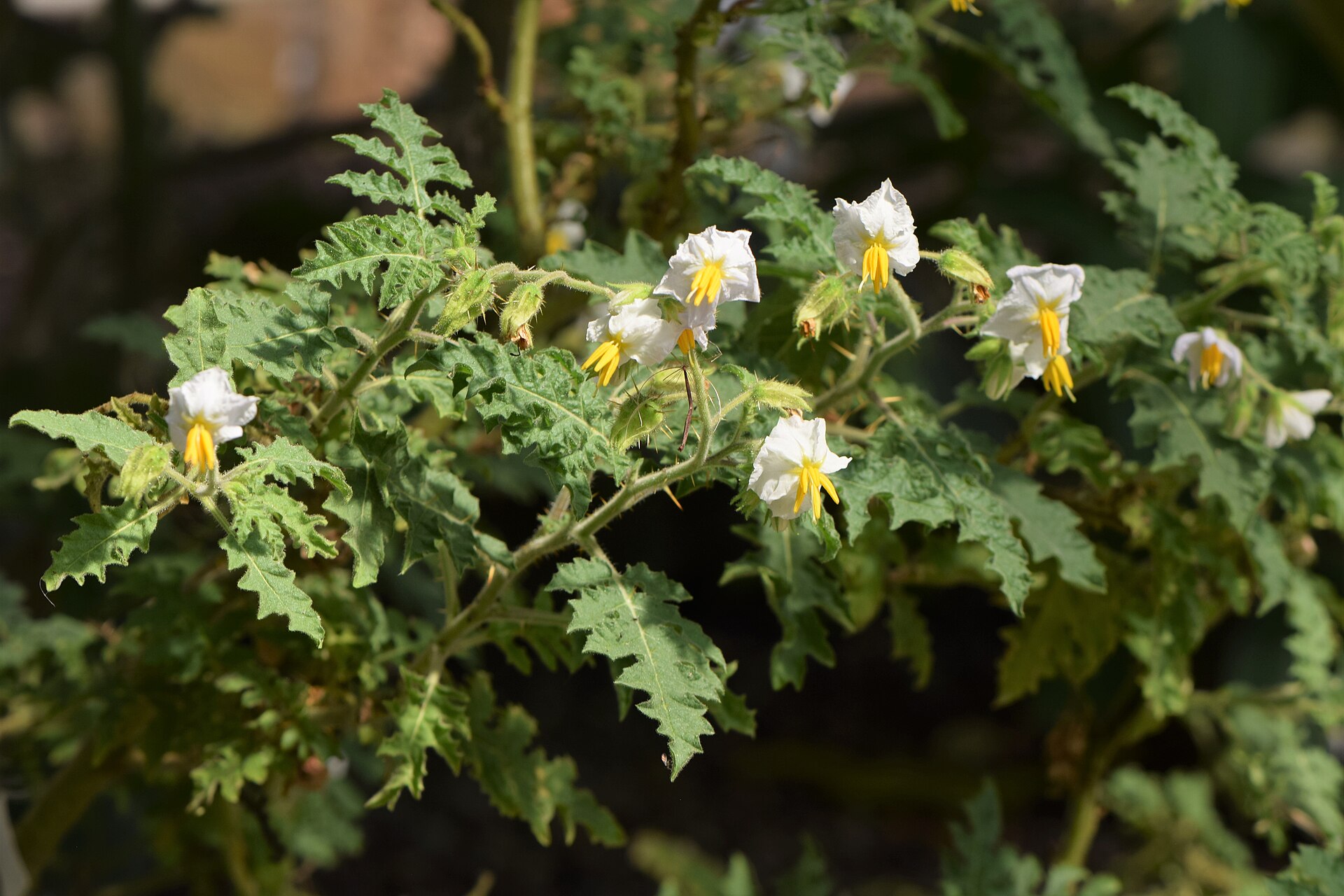
A trap crop makes nematode eggs hatch, but the young nematodes cannot feed and reproduce on it. The main species is Solanum sisymbriifolium, sometimes called sticky nightshade.
A 2024 field study in Crop Protection by Gómez-Armesto and co-authors tested the crop on acid sandy soils (pH 4.3–5.5) in Europe’s southern Atlantic area. The best results came with sowing in July and August, irrigation and soil compaction after sowing. Under these conditions PCN fell by 77–89% where the soil started with 93–160 cysts per 100 g. Some subplots with 15–52 cysts per 100 g showed a 100% reduction.
AHDB in the UK says the same species has the potential to reduce PCN numbers by 75–80%. But it notes that the crop has been difficult to establish in Great Britain. On-farm trials in Shropshire in 2020–2021 tested sowing in July and August after cereals and looked at weed control.
Biofumigation
Biofumigation uses brassica crops, such as brown mustard or oilseed radish, which release toxic compounds when they are chopped and worked into the soil. According to a Harper Adams University project summary, a 2011 study found a 95% fall in the viability of G. pallida eggs when Indian mustard was incorporated and covered with plastic. In glasshouse work, growing oilseed radish without full incorporation cut G. pallida eggs by 30–35%. Field studies also recorded lower numbers of viable eggs, in some cases even before the crop was worked in.
An AHDB-supported research project with the Universities of Leeds and York and the James Hutton Institute (2014–2019) found that the best time to incorporate a biofumigant crop is at flowering. PCN viability fell significantly during and after brown mustard, but results varied with soil type. The same work found no effect on Rhizoctonia in potatoes.
Why it matters
These tools can cut PCN numbers between potato crops, but they are not a simple replacement for nematicides. Results depend on establishment, sowing date, soil type and starting nematode numbers. A soil test before and after the cover crop shows whether it worked.
They fit best with longer rotations and resistant varieties.
Photo: Solanum sisymbriifolium, a trap crop for potato cyst nematodes (illustrative). Krzysztof Ziarnek, Kenraiz / Wikimedia Commons, CC BY-SA 4.0