Global: Silver Scurf Often Appears After 3–4 Months in Store When Humidity Stays Above 90%
Silver scurf damages skin finish rather than yield, but it can ruin packing and washing grades. Extension advice links the disease to early lifting, fast cooling and control of condensation.
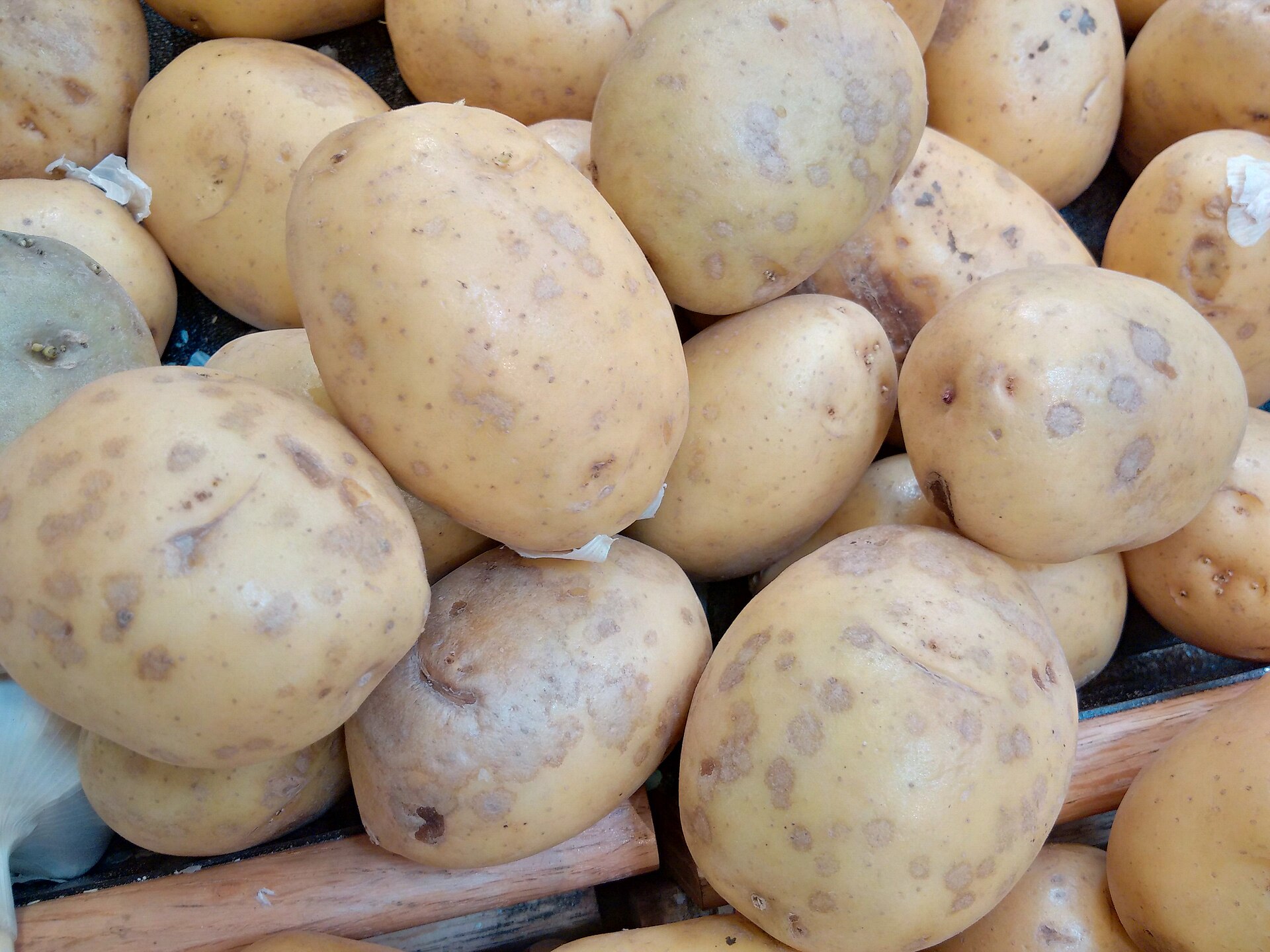
Silver scurf is a skin disease of potato caused by the fungus Helminthosporium solani. It leaves silvery, shiny patches on the tuber skin. The damage is cosmetic, but washed and packed potatoes can lose their market grade.
Symptoms often develop in store. The Pacific Northwest Plant Disease Management Handbook says symptoms begin 3 to 4 months after storage. University of Maine Cooperative Extension says symptoms can appear after about four months of storage. Both sources say that high humidity above 90% favours the disease.
Temperature and humidity in store
The Maine bulletin names temperatures greater than 38°F, or 3.3°C, as favourable for silver scurf. The Pacific Northwest handbook says storage below 40°F, or 4.4°C, slows disease development. Cooler temperatures, lower humidity and good ventilation all retard the disease, according to Maine.
Weekdays. Unsubscribe in one click.
This creates a conflict for store managers. Potatoes need high humidity to limit weight loss. Silver scurf prefers the same conditions. Condensation is the biggest problem, according to the levy board AHDB in the United Kingdom. It forms when warm air meets cooler tubers.
AHDB suggests rapid temperature pull-down of 0.5°C per day to hold back the disease. It also advises routine annual store cleaning.
In the field
The longer tubers stay in the soil, the more likely silver scurf becomes a problem, AHDB said. Early lifting can reduce incidence. The University of Wisconsin potato pathology team made a similar point in September 2025. It advised harvesting promptly after vine desiccation to limit both silver scurf and black dot.
Infected seed is a key source of the disease. The Pacific Northwest handbook recommends rotating out of potatoes for at least three years. The Maine bulletin says the pathogen can survive in soil for up to two years without potatoes. Seed treatments and treatments at harvest into store are available, but registrations differ by country.
Why it matters
Packers are strict on skin finish. A crop that looks clean at loading can fail inspection in January or February. That is when many stored lots are washed for retail.
The practical steps are simple. Lift promptly after haulm death, cool quickly, avoid condensation and clean the store every year. Seed buyers should check silver scurf levels before planting.
Photo: Silver scurf (Helminthosporium solani) on a potato tuber (illustrative). Scot Nelson / Wikimedia Commons, CC0