Global: Russet Burbank Takes 20–25 Days to Emerge at 50°F Soil but Over 40 Days at 45°F
Extension specialists say potato seed should go into soil of at least 45°F (about 7°C) and rising. In colder soil, emergence slows sharply and seed decay and Rhizoctonia risks grow.
Soil temperature at planting has a direct effect on how fast potatoes emerge and how healthy the stand will be. Mike Thornton and Nora Olsen of the University of Idaho give clear figures. The seed piece needs a soil temperature of at least 45°F (about 7°C) for wound healing. Soil should be above this level and still climbing before planting.
- At 50°F (10°C), Russet Burbank takes 20 to 25 days to emerge.
- At 45°F, it takes more than 40 days.
- Shepody emerges slightly faster than Russet Burbank at 50°F but slower at 45°F.
- The seed piece feeds the plant until it is about 10 to 12 inches (25 to 30 cm) tall.
The Idaho specialists warn: “The longer a seed piece sits in the cold soil, the more likely that it will decay before producing a healthy plant.” Early planting in cold soil also raises the risk of Rhizoctonia stem canker, frost injury and delayed emergence. Soil below 55°F for 5 to 7 days during early tuber development is linked to brown center and hollow heart.
Utah State University Extension gives a similar picture. It advises soils of 50 to 60°F (10 to 16°C), which encourage wound healing of cut seed and rapid sprouting. Seed piece decay is more common in cool, wet soils below 45°F. USU advises storing seed at 38 to 40°F and 95% relative humidity, then warming the tubers to 50 to 55°F for two weeks before cutting or planting.
Weekdays. Unsubscribe in one click.
At the top end, NDSU potato extension agronomist Andy Robinson notes that stems grow faster as soil warms from 45 to 75°F. Above 75°F (about 24°C), stem growth can slow down.
Why it matters
Many growers want to plant early to extend the season or reach early markets. The data show the cost of planting into cold soil. At 45°F, the seed piece may spend six weeks or more underground, living on its own reserves and exposed to rot and Rhizoctonia. A delay of a few days until the soil warms to 50°F can halve the time to emergence.
A soil thermometer at planting depth is a cheap tool. Matching seed temperature to soil temperature, and warming cold-stored seed before cutting, helps the seed piece heal and sprout quickly.
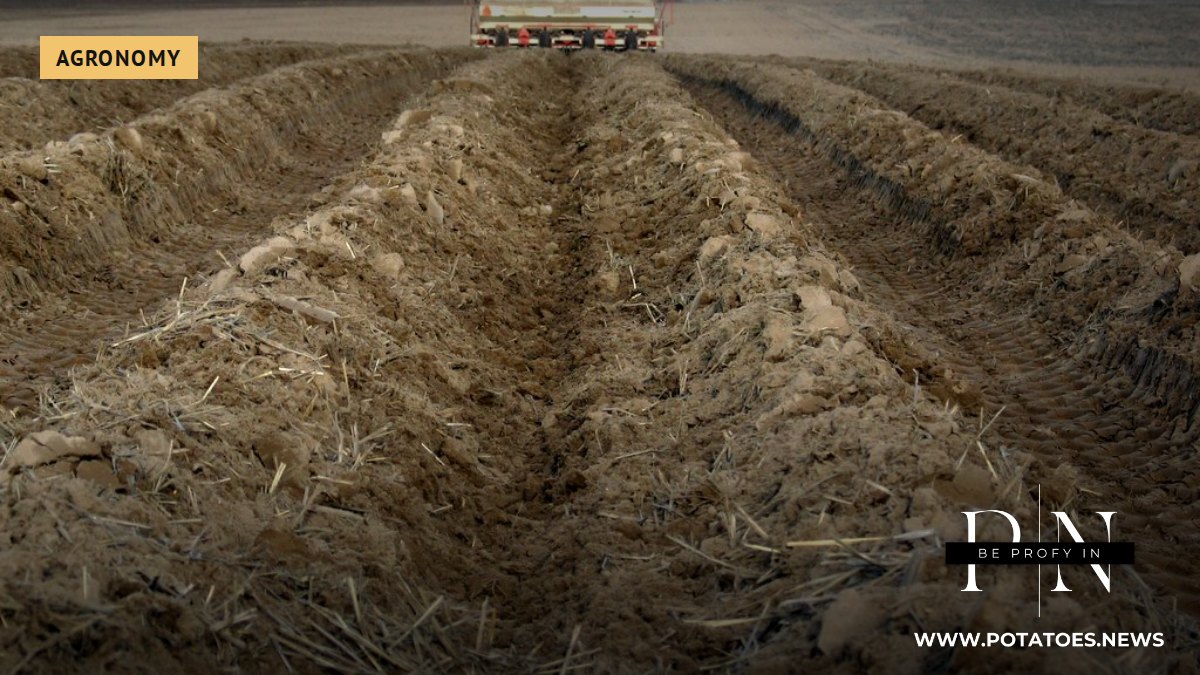
Photo: A potato planting machine (illustrative). Cwoll / Wikimedia Commons, Public domain