Global: Resistant Varieties Keep Late Blight Below 2% in Trials Where Susceptible Crops Reach 78–93%
Trials in Kenya and Bangladesh show resistant varieties such as Kenya Mpya, Alouette and Sarpo Mira can hold late blight to very low levels without fungicide, while European growers still spray eight to 10 times a season.
Late blight, caused by Phytophthora infestans, is the main reason potato growers spray fungicides many times each season. Field trials in Kenya and Bangladesh show that resistant varieties can hold the disease at very low levels, even without protection. In Northwest Europe, however, such varieties are still rarely grown on a large scale.
In Kenya, a study by J. M. Kilonzi and colleagues, published in the European Journal of Plant Pathology in 2024, compared varieties with and without fungicides. On unprotected plots, the resistant variety Kenya Mpya had less than 1% disease severity. The moderately susceptible Shangi reached 60%, and the susceptible Dutch Robijn reached 78%. With protection, Kenya Mpya gave the top yield of 28.56 t/ha, and Dutch Robijn the lowest, 20.70 t/ha. The best cost-benefit ratio, 2.12, came from Kenya Mpya with no fungicide at all. Yet 78% of surveyed farmers chose varieties by market demand, not by disease resistance.
In Bangladesh, the Bangladesh Agricultural Research Institute (BARI) tested Sarpo Mira, Alouette and Carolus in the north of the country in 2017–2019. The results, published in Gesunde Pflanzen in 2023, rated Alouette (BARI Alu-90) and Carolus (BARI Alu-91) as highly resistant and Sarpo Mira (BARI Alu-77) as moderately resistant. The authors concluded that Alouette can be grown in northern Bangladesh without chemical protection. An earlier PotatoPro report said that in a BARI regional trial Sarpo Mira had 1.99% infestation against 93.30% for Diamant, and that fungicide costs were about one-fourth of those for other varieties, according to the seed programme.
Weekdays. Unsubscribe in one click.
Europe sprays much more. A review in Potato Research (2011) reported that growers in Sweden normally used eight to 10 sprays, and in Denmark eight to nine sprays in 2007–2009. The review found that partial resistance allows lower doses or longer intervals. But it noted that in Northwest Europe, growers see the savings as too small to cover the higher perceived risk of blight. In the Netherlands, almost 40% of growers used decision support systems to time sprays.
Sarpo Mira itself was bred in Hungary and launched in 2002, according to its breeder’s website, and is sold mainly for organic and low-input growing in the UK and Ireland.
Why it matters
Each fungicide pass costs product, fuel and labour, and pressure to cut chemical use is growing. The trials show that resistance can remove most sprays in some regions. But varieties must also meet market needs, and new blight strains can overcome single resistance genes.
The practical route is a mix: a resistant variety, a decision support system, and fewer, better-timed sprays, tested under local blight pressure.
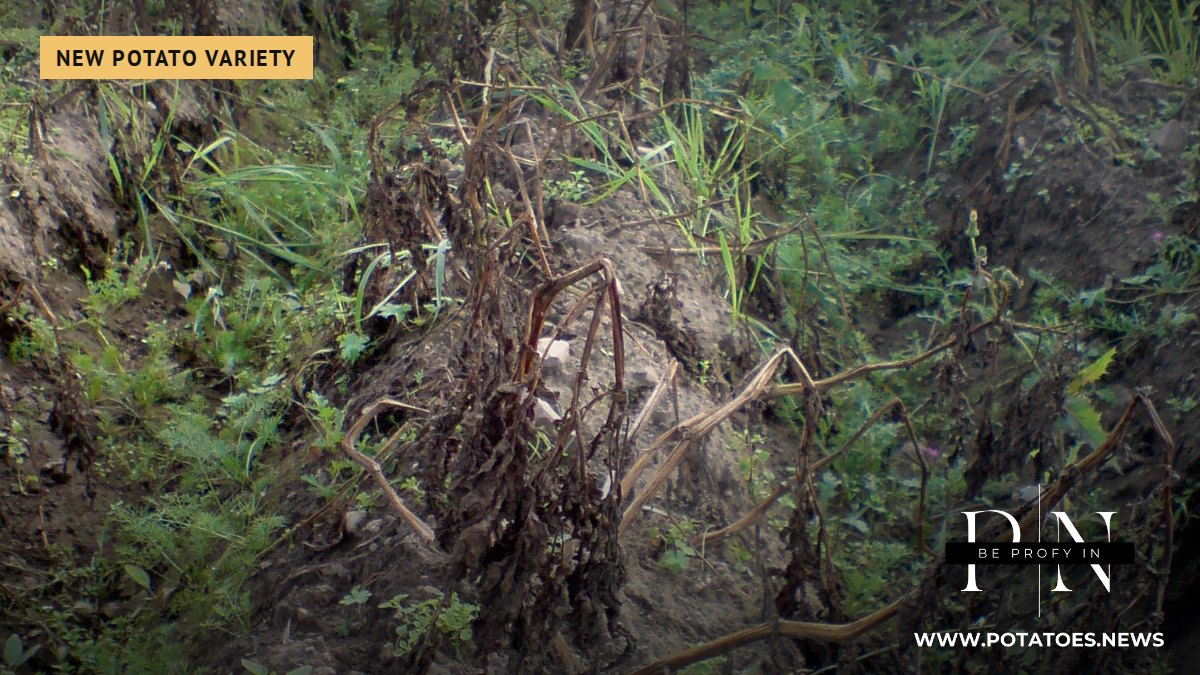
Photo: Potato field heavily infected by late blight (illustrative). Björn Andersson (SLU) / Wikimedia Commons, CC BY-SA 4.0