Global: Potato Stores Should Keep CO2 Within 1,200–5,000 ppm to Protect Fry Colour
Closed stores often hold ten times more carbon dioxide than outside air. Extension data show that CO2 alone may be tolerated, but together with traces of ethylene it darkens fry colour.
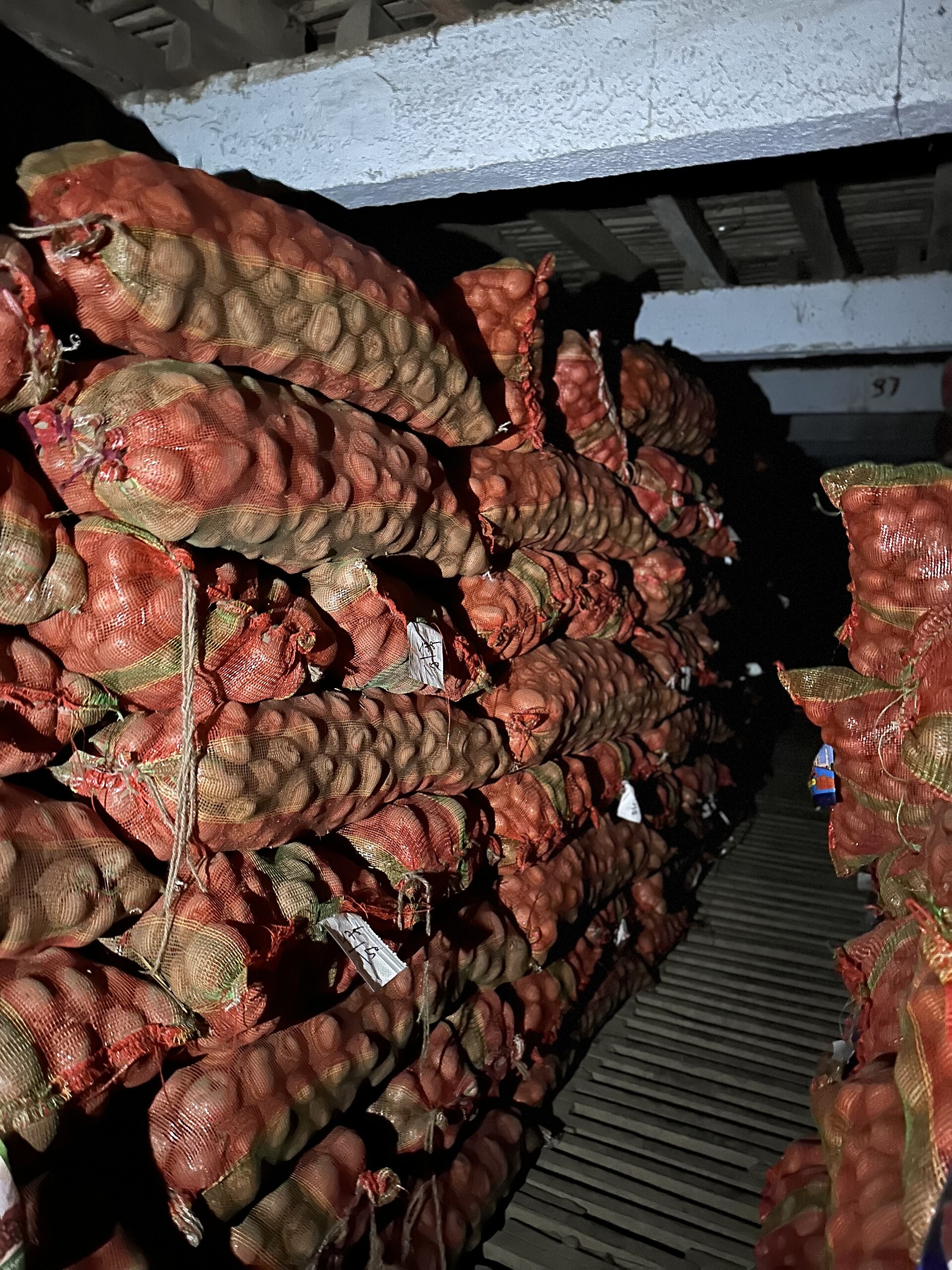
Carbon dioxide builds up quickly in closed potato stores after harvest. Outside air contains about 0.04% CO2, or 400 ppm, according to a University of Idaho storage glossary published in November 2025. Stores usually run at 0.3–0.5% CO2, which is 3,000–5,000 ppm, according to the levy board AHDB in the United Kingdom. That is roughly ten times the level in normal air.
CO2 can reach as high as 3% when tubers respire strongly, AHDB said. A University of Idaho bulletin from January 2024 states that the maximum CO2 level can vary from 1,200 to 5,000 ppm. The bulletin links elevated CO2 to higher reducing sugars, darker fry colour and off-flavours.
Ethylene changes the picture
An AHDB-funded trial compared two store closure regimes. One kept CO2 at 3,000 ppm with 48-hour closure. The other reached 10,000 ppm with 72-hour closure. After 35 weeks, fry colour did not differ significantly between the two regimes when ethylene was absent.
Weekdays. Unsubscribe in one click.
The result changed when ethylene was present at 0.25 ppm. Then higher CO2 gave darker fry colour, according to AHDB. The Idaho bulletin also warns that ethylene as low as 0.25 ppm can increase reducing sugars. This matters for stores that use ethylene against sprouting. It also matters for stores with sprouting or rotting tubers, which release ethylene.
Respiration, heat and airflow
Respiration produces both CO2 and heat. Each gram of CO2 released generates 2.55 kcal, according to the Idaho bulletin. Respiration at 42°F (5.6°C) is about 1.5 mg CO2 per kg per hour. At 48°F (8.9°C) it rises to about 1.7 mg. In one Idaho measurement, tubers of this variety respired 3.5 times faster at 77°F (25°C) than at 50°F (10°C): Clearwater Russet.
Fresh air is the only practical way to remove CO2. The ventilation rate for bulk storage in the United States ranges from 10 to 35 cubic feet per minute, the Idaho bulletin said. The right rate depends on the region.
Why it matters
Processors pay for fry colour, and colour defects are hard to reverse once sugars rise. Store managers should log CO2 alongside temperature and humidity. Short fresh-air purges are cheap compared with a rejected load.
The key risk is the combination of gases. A store that looks safe on CO2 alone may still darken fries if ethylene is present. Crops under ethylene sprout control need the closest CO2 watch.
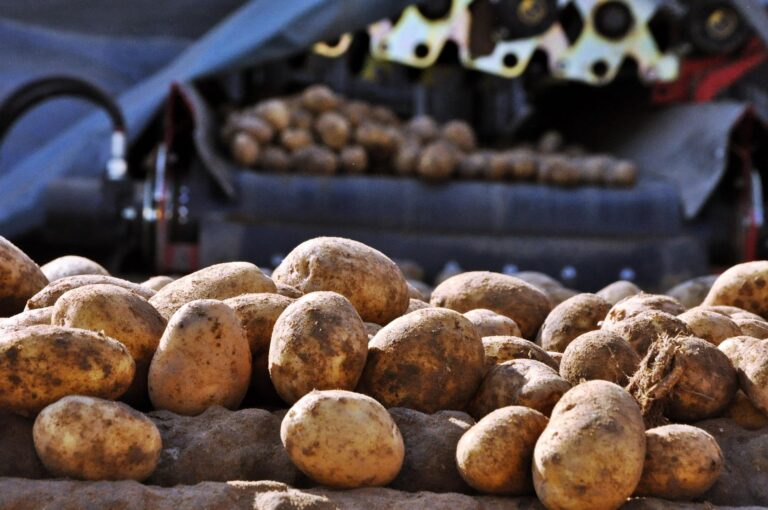
Photo: Potatoes in cold storage at Harduaganj, India (illustrative). Whispyhistory / Wikimedia Commons, CC BY-SA 4.0