Global: Potato Psyllid Develops Best at About 27°C and Can Pass Zebra Chip Within Hours
Zebra chip has no resistant commercial variety, so control depends on the psyllid that carries it. Extension data show how temperature, feeding time and spray rotation shape the risk.
Zebra chip is a bacterial disease of potato. It is caused by Candidatus Liberibacter solanacearum, which the potato psyllid carries from plant to plant. Chips and fries from infected tubers show dark stripes that become more visible with frying. Such tubers are commercially unacceptable, according to a 2015 review in the American Journal of Potato Research.
The review reported the disease in the United States, Mexico, Central America and New Zealand. All commercial potato cultivars are susceptible. So control of the psyllid is the only effective way to manage the disease, the author wrote.
Temperature drives the vector
The psyllid develops best at 27°C, according to a University of Florida extension fact sheet. Temperatures above 35°C reduce egg laying, hatching and survival. Temperatures at or below 17°C may slow infection in potato. A Pacific Northwest extension bulletin gives a similar picture. The insect can complete a generation in less than a month at 75–80°F, or about 24–27°C.
Weekdays. Unsubscribe in one click.
Fast transmission, slow symptoms
Infection can be very fast. One adult psyllid can infect a healthy plant within six hours, Utah State University Extension said. Twenty adults can do it within an hour. Symptoms appear much later. Zebra chip usually needs about three weeks after inoculation to show symptoms, according to the Pacific Northwest bulletin.
Losses can be severe. The Florida fact sheet cites yield losses of more than 85%. The Utah fact sheet says losses can reach 100%.
Monitoring and sprays
The Pacific Northwest bulletin recommends unbaited yellow sticky cards of 8 by 13 cm for monitoring. It also cites 100 sweeps around the field edge as a sampling method. Products with the same mode of action should not be used more than two times per season, it says.
The disease was first documented near Saltillo, Mexico, in 1994. It reached Idaho and the Columbia Basin late in the 2011 season, the bulletin said.
Why it matters
Management still relies heavily on insecticides, a 2024 review in the Annual Review of Entomology noted. The authors said this is not sustainable, because of resistance, harm to natural enemies and possible regulatory limits.
Warm weather speeds up the psyllid, as the temperature data show. Growers in affected areas should trap early and rotate modes of action. They should also remember the three-week delay: clean-looking tubers at a field check may still develop symptoms.
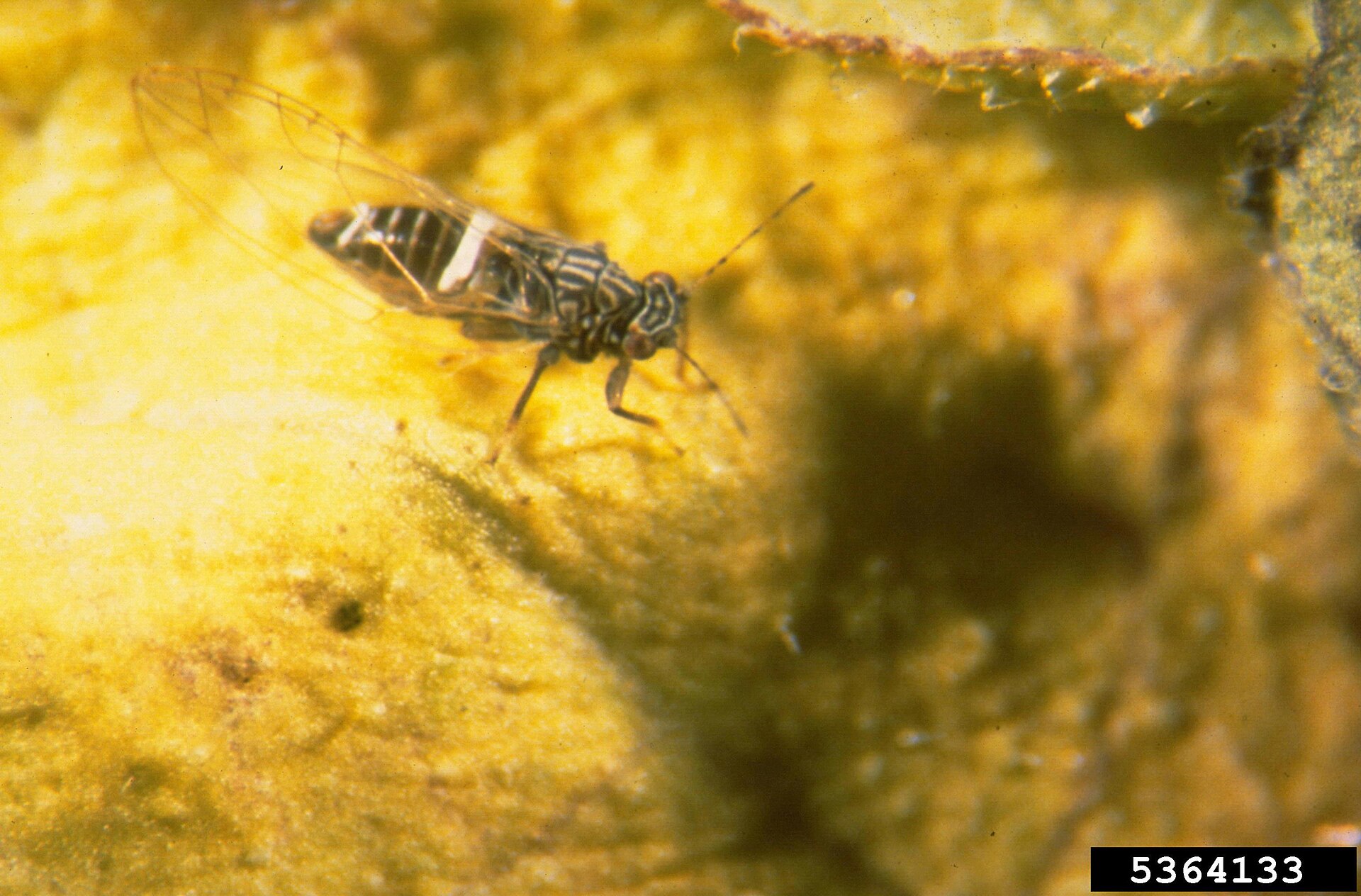
Photo: Potato psyllid (Bactericera cockerelli) on a potato leaf (illustrative). Whitney Cranshaw, Colorado State University, Bugwood.org / Wikimedia Commons, CC BY 3.0 us