
Global: Potato Irrigation Should Start Before 30–50% of Available Soil Water Is Used
Potatoes lose yield when more than 30–50% of available soil water is used. Guides from FAO, UC IPM and Oregon State give thresholds and sensor readings for irrigation timing.
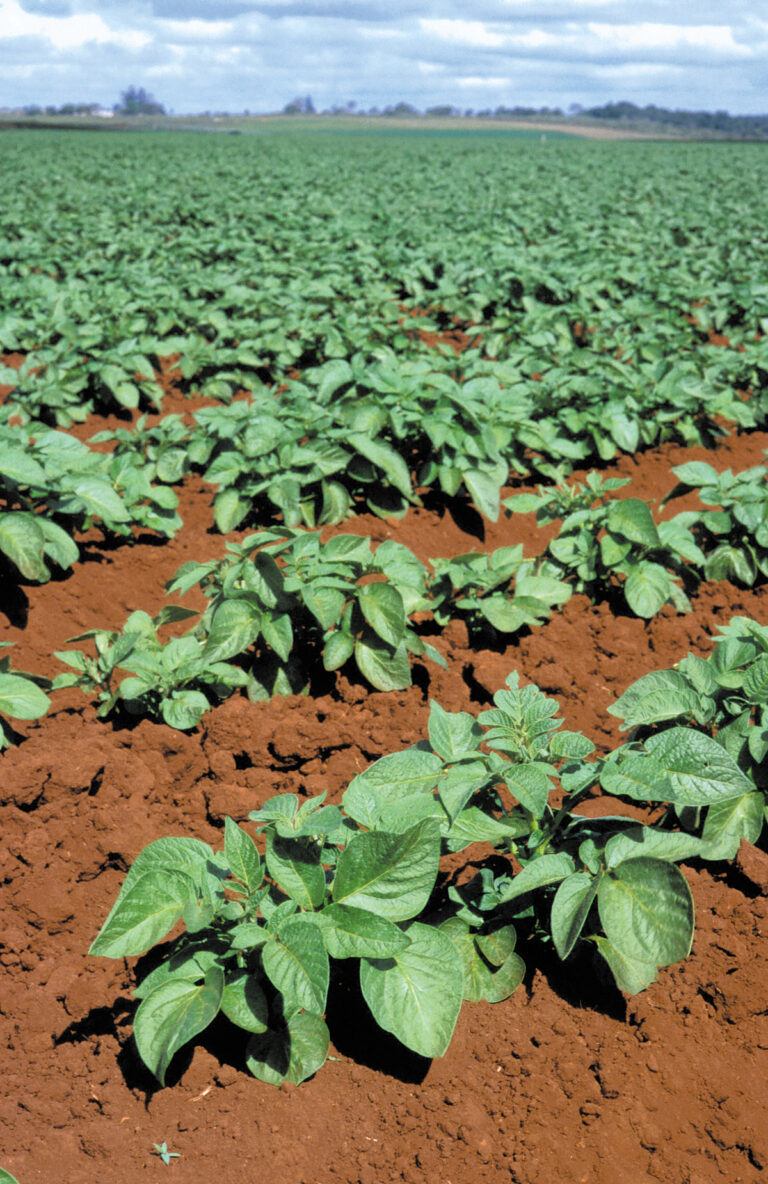
Potatoes are a shallow-rooted crop. They react fast to dry soil. Irrigation should keep depletion of available soil water within 30–50%, according to the Food and Agriculture Organization (FAO). Depletion above 50% reduces yields.
The University of California IPM guidelines are stricter. They advise using no more than 30–40% of available water. During tuber initiation, depletion should not exceed 20%. This protects tubers against common scab.
How much water the crop needs
A potato crop needs 500–700 mm of water over a season of 120–150 days, according to FAO. Roots reach 0.4–0.6 m. The UC guidelines say 90% of roots grow in the top 12–18 inches (30–46 cm) of soil.
Weekdays. Unsubscribe in one click.
Each irrigation should wet the top 18 inches to field capacity, the UC guidelines say. Water should not go deeper than 24 inches. At planting, soil should hold 60–80% of field capacity. At vine kill, about 60% is the target.
Well-watered crops use water efficiently. FAO puts water use efficiency at 4–7 kg of tubers per cubic metre.
Sensor thresholds
Oregon State University gives soil water tension criteria for silt loam. Sprinkler-irrigated fields should be watered at 50–60 centibars. Furrow-irrigated fields should be watered at 60 centibars. Drip-irrigated fields should be watered at 30 centibars.
Sensors should sit 8 inches (20 cm) deep in the row, between two healthy plants. The guide recommends six or more sensors per field. They should cover representative areas.
A single dry spell can cost grade. In Oregon trials, one episode reaching 75 centibars or more caused a loss of USDA No. 1 tubers. Water stress also triggers sugar ends in susceptible varieties such as Russet Burbank.
What stress does to tubers
Too little water causes tuber malformations, the UC guidelines say. It also increases common scab and Verticillium wilt. Stress during tuber initiation and growth can cause translucent ends. Soil moisture below 50% at vine kill can lead to stem-end browning.
Why it matters
Irrigation timing affects both yield and quality. A crop can reach full tonnage but lose value through sugar ends, scab or misshapen tubers. The most sensitive period is tuber initiation, when the stricter 20% limit applies.
Sensors turn these limits into daily decisions. Growers who irrigate by soil readings rather than the calendar are more likely to stay inside the safe range in a dry season.
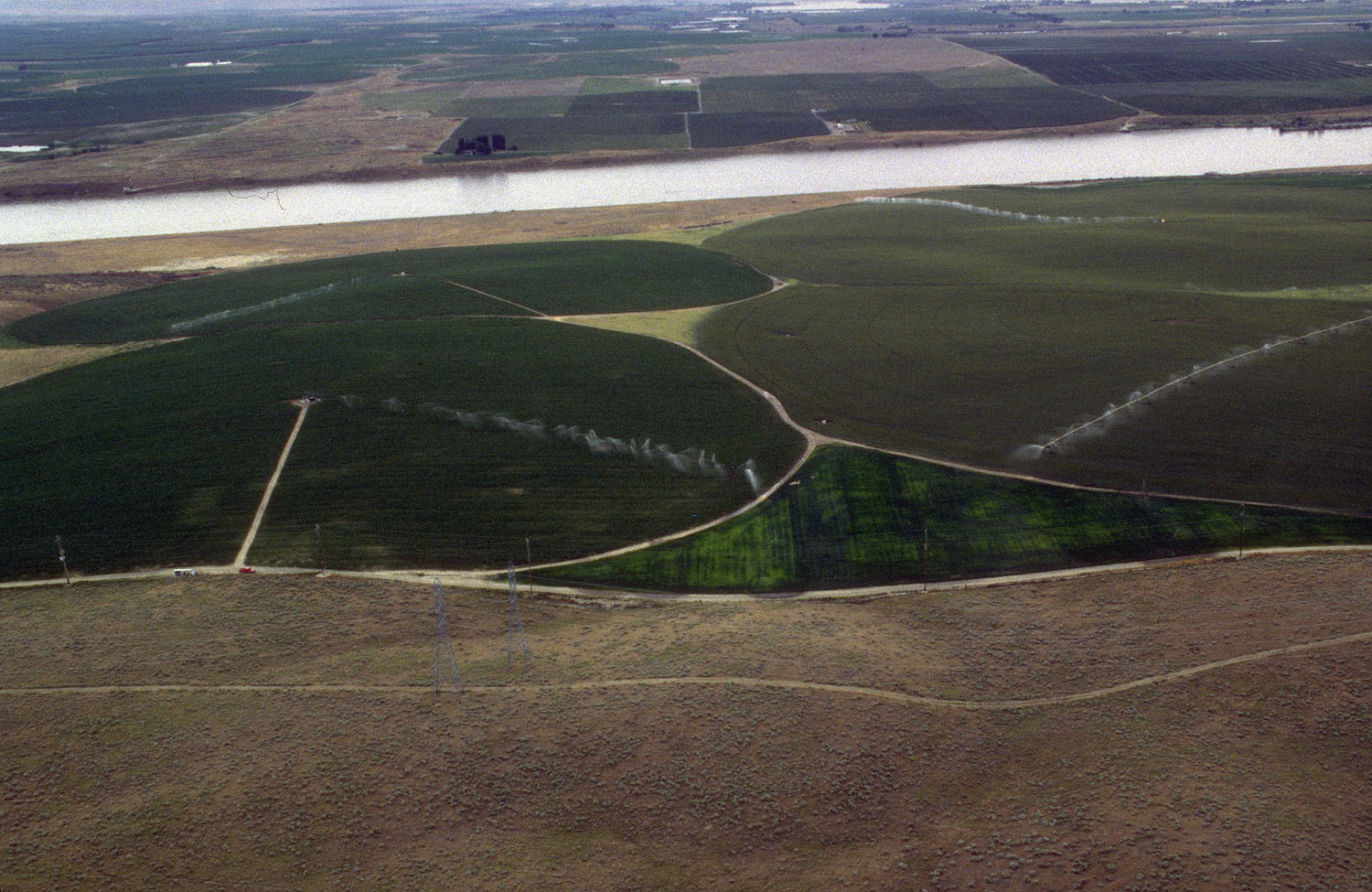
Photo: Centre-pivot irrigation in Idaho, United States (illustrative). Bob Heims, U.S. Army Corps of Engineers / Wikimedia Commons, public domain