Global: Hyperspectral Cameras Detect Late Blight With Up to 98% Accuracy, but Only 79% Before Symptoms
Research on drone and field cameras shows high accuracy for visible late blight. Early detection before spots appear is harder, and models trained in the lab lose accuracy in the field.
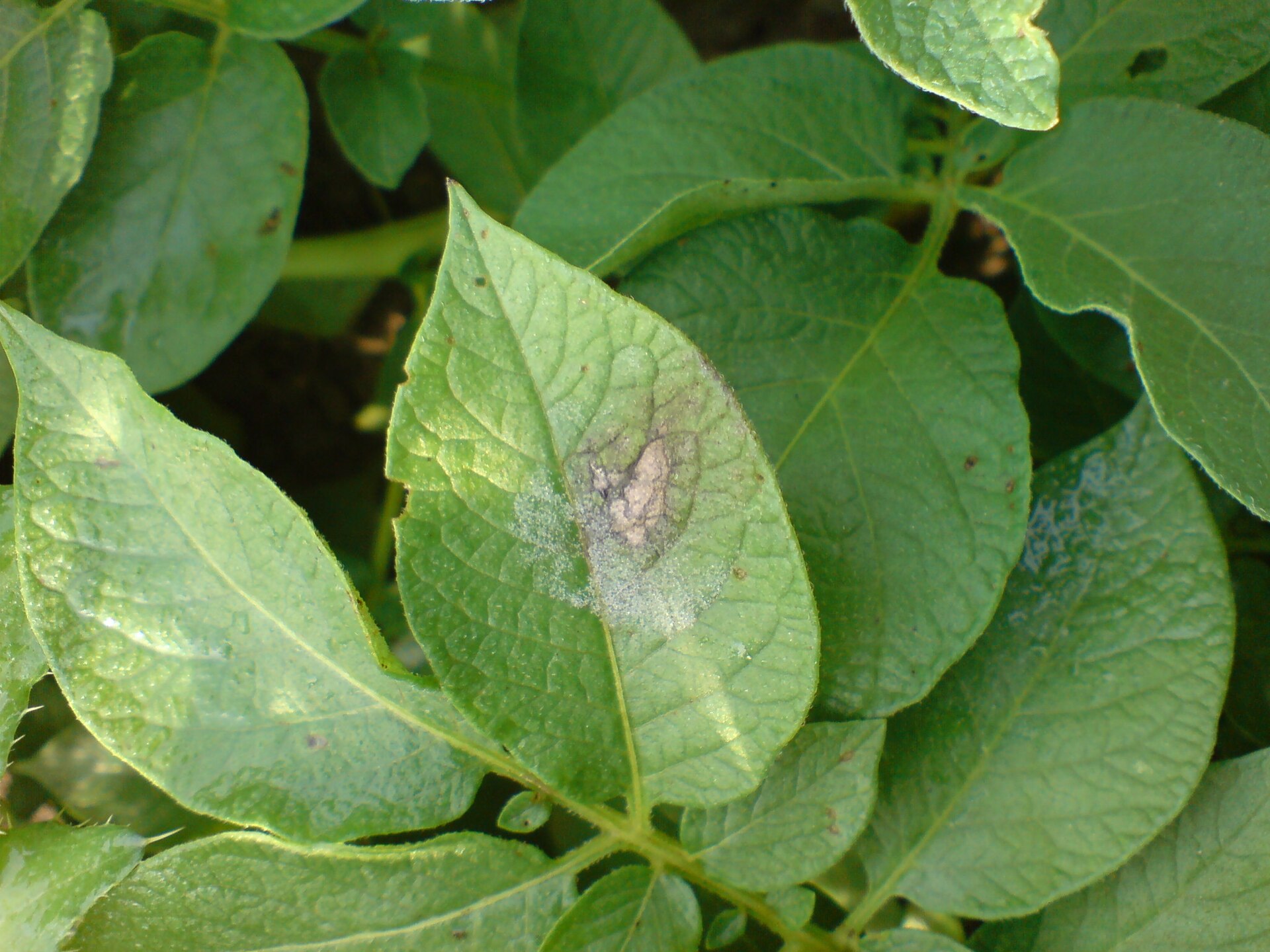
Late blight, caused by Phytophthora infestans, is the most costly potato disease in many regions. Growers still find it mainly by walking the fields. Researchers are testing cameras that measure hundreds of narrow light bands, known as hyperspectral imaging, to find the disease faster. Published studies show what the technology can and cannot do today.
Drone images of visible disease
A team from Manchester Metropolitan University in the UK, the Chinese Academy of Sciences and Hebei Agricultural University built a deep learning model for hyperspectral images taken by drones. In a 2022 paper in Remote Sensing, the model reached an average accuracy of 98.09% on the test data and 95.75% on an independent data set. It performed better than the standard machine learning and deep learning methods that the team compared it with.
Before symptoms appear
Early detection is harder. Researchers from the University of Lincoln, Nanjing Agricultural University, the Swedish University of Agricultural Sciences and the University of Copenhagen tested a camera close to the plants in a field trial in Denmark in July 2020, according to their paper on arXiv. The field had more than 20 potato genotypes. Images taken 3, 7 and 9 days after inoculation, when no spots were visible, were classed as very early stage. The data set had 15,360 small images cut from 240 field images. Accuracy on 2,000 test images was 73.9% with all bands and 79.0% with six selected bands between 492 and 765 nm.
Weekdays. Unsubscribe in one click.
From the lab to the field
A 2021 study in Precision Agriculture by S. Appeltans, J. G. Pieters and A. M. Mouazen built a library of 8,585 spectra from detached leaves, labelled as healthy or at five stages of disease. The first model reached 94.1% accuracy on lab data but failed in the field. After the team changed the data processing, lab accuracy fell to 80.8%, but the model then detected symptoms in the field. Its field predictions matched visual scoring with R² = 0.985.
Simpler multispectral cameras on drones are also being tested. A 2021 study in Computers and Electronics in Agriculture compared five machine learning methods and found that linear support vector and random forest classifiers worked best to map late blight zones with little human work.
Why it matters
The research shows that cameras can map visible late blight very accurately. For spray decisions, the more valuable goal is to find the disease before spots appear, and there accuracy is still near 74–79% in field studies.
For now, the technology can support scouting and help target field checks, but it does not yet replace disease forecasts and walking the crop.
Photo: Potato leaf infected by late blight (Phytophthora infestans) (illustrative). Björn Andersson (SLU) / Wikimedia Commons, CC BY-SA 4.0