
26 Sep 2026 Global Potato Industry General partnerAVGUST
The Global Potato Industry
Global·Agronomy·News

Global: Heat-Stressed Crops Raise Sugar-End Risk for Fry Processors

2 min read
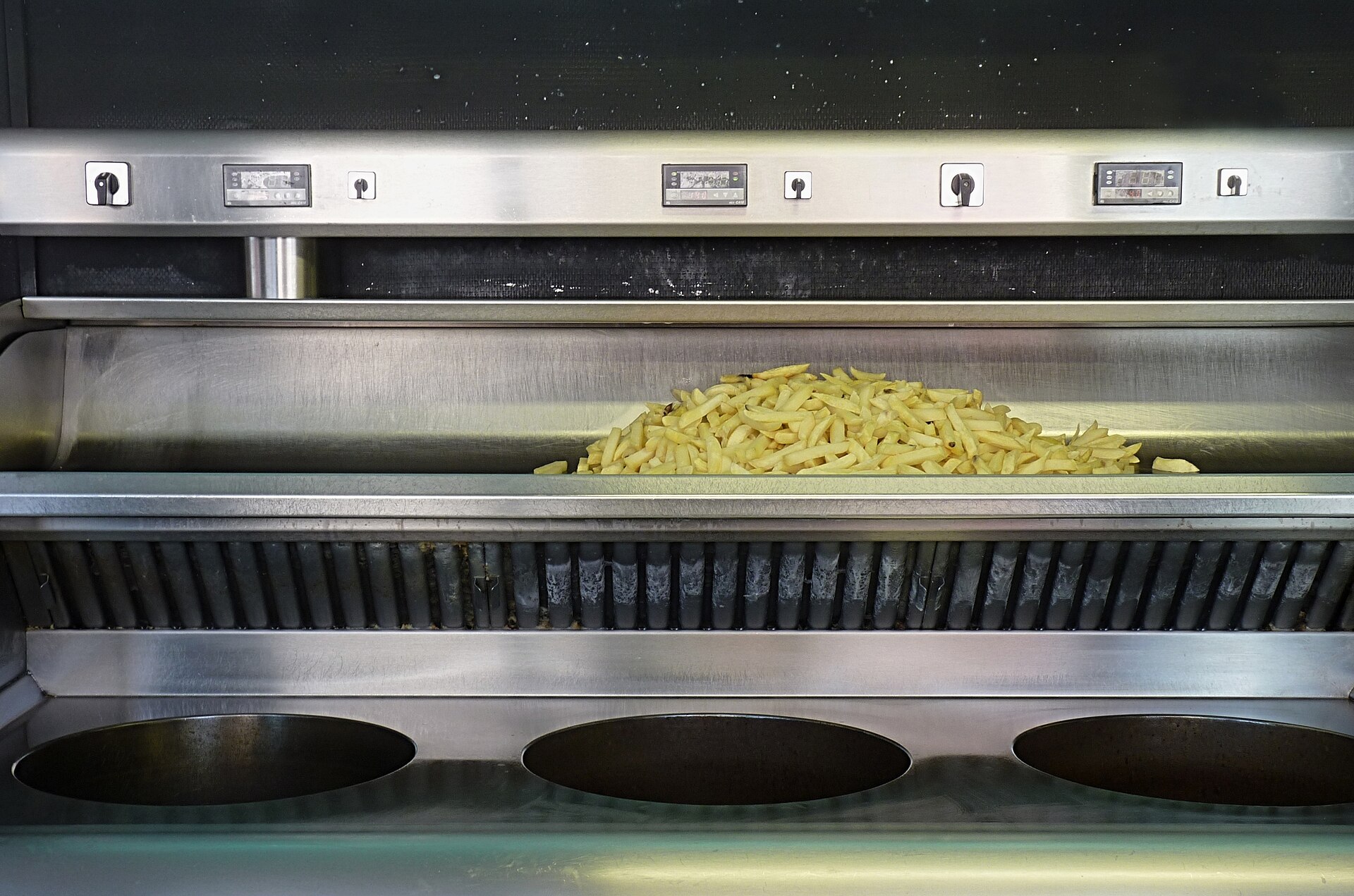
French fries in a deep fryer
Photo: French fries in a deep fryer (illustrative). Jamain / Wikimedia Commons, CC BY-SA 3.0

Key takeaways

  • 23 °C soil temperature marks a higher sugar-end risk level
  • 3 or darker on the USDA fry chart counts as a colour defect
  • 10-13 °C is the advised wound-healing range after harvest
  • 2008 review linked sugar ends to heat, water stress and N

Why it matters

For farmers
Record soil moisture and temperature during early bulking and share the data with buyers; keep irrigation light and frequent in heatwaves.
For processors
Test stem-end fry colour on incoming lots from hot fields before long-term storage, since sugar ends do not disappear in store.
For suppliers
Offer soil moisture probes and irrigation scheduling services aimed at the tuber initiation to early bulking window.

60-second summary

Sugar ends are a heat and drought legacy that shows up only after frying. The disorder leaves the stem end of a tuber low in starch and high in sugar, so fries darken at one tip. Research reviewed in 2008 tied it to hot soils, brief water shortages and unbalanced nitrogen, with the greatest sensitivity from tuber initiation to early bulking. University of Idaho advice puts the danger point near 23 degrees Celsius soil temperature, and repeated stress episodes add up. Once formed, the defect does not reverse in storage, and a score of 3 or darker on the USDA chart is rejected. Fry processors and contract growers after the hot 2026 European season are most exposed. Russet Burbank and Ranger Russet are prone, while Clearwater Russet resists. The caveat is that most research comes from North American russet systems, so thresholds may differ for European fry varieties.

~23 °CSoil temperature linked to higher sugar-end risk
No. 3USDA fry colour score treated as defect
10–13 °CWound-healing temperature after harvest
<10 °CCold exposure that reveals symptoms
2008Year of the review in American Journal of Potato Research
General partnerCrop protection for the potato industry

Hot, dry seasons leave a hidden defect in many processing crops. It is called sugar-end disorder. The basal, or stem, end of the tuber stores less starch and more sugar. When fried, that end turns dark brown.

A 2008 review in the American Journal of Potato Research described the problem. The authors were Thompson, Love, Sowokinos, Thornton and Shock. They linked sugar ends to high soil temperatures, short periods of water deficit and unbalanced nitrogen.

When the damage happens

The critical window is early. Tubers are most sensitive from tuber initiation to early bulking. Mike Thornton of the University of Idaho told Spud Smart in 2019 that the risk rises when soil reaches the mid-70s °F. That is about 23 °C or higher.

Morning industry digest The day’s essentials in one email.

Weekdays. Unsubscribe in one click.

Stress effects add up. Several short episodes of heat or drought cause more damage than one. The review explains the mechanism. Stress switches the tuber end from building starch to breaking it down. Sucrose then accumulates in the basal tissue.

Storage cannot fix it

Sugar ends are irreversible, according to the Spud Smart report. Warmer storage does not turn the sugars back into starch. Cold exposure below about 10 °C makes symptoms show more clearly.

Fry colour is graded on the USDA Munsell colour chart for frozen French fries. A score of No. 3 or darker counts as a defect.

Varieties differ. Russet Burbank and Ranger Russet are susceptible. Clearwater Russet is a newer variety with better resistance. The review notes that resistance is highly heritable, which helps breeders.

What growers can do

The Spud Smart report lists research-based steps: plant early enough to close the canopy before heat; keep soil moisture steady during early tuber growth; use light, frequent irrigation in heatwaves; avoid excess nitrogen. It also advises wound healing at 10–13 °C after harvest, then slow cooling.

Why it matters

The 2026 season brought heatwaves to many potato regions in Europe. Growers delivering to fry processors face a risk that is invisible at harvest. Sugar ends appear only after frying tests, often weeks later. Processors should test incoming lots by stem-end fry colour. Growers should document irrigation during early bulking, as this is the stage that decides fry quality.

Photo: French fries in a deep fryer (illustrative). Jamain / Wikimedia Commons, CC BY-SA 3.0
Global Potato Brief

Top five stories, prices, disease alerts and events. Weekday mornings, no advertising.

Choose topics and language
What to send

What next

Processors will see the effect of the 2026 heat in fry tests during autumn intake. Breeders continue to select sugar-end resistance, which the review describes as highly heritable.

Sources

  1. Thompson A.L. et al., Review of the Sugar End Disorder in Potato, American Journal of Potato Research 85 (2008) — https://link.springer.com/article/10.1007/s12230-008-9034-2
  2. Spud Smart, Stress Factors and Management Practices for Sugar End Disorder (16 July 2019) — https://spudsmart.com/stress-factors-and-management-practices-for-sugar-end-disorder-and-stem-end-chip-defect/

Linked in this material

Country
Global
Project partners Become a partner →