Global: Harvester Forward Speed and Drop Heights Determine Bruise Levels
Black spot bruise is created in seconds at harvest: chain speeds, drop heights and tuber pulp temperature matter more than any single machine setting.
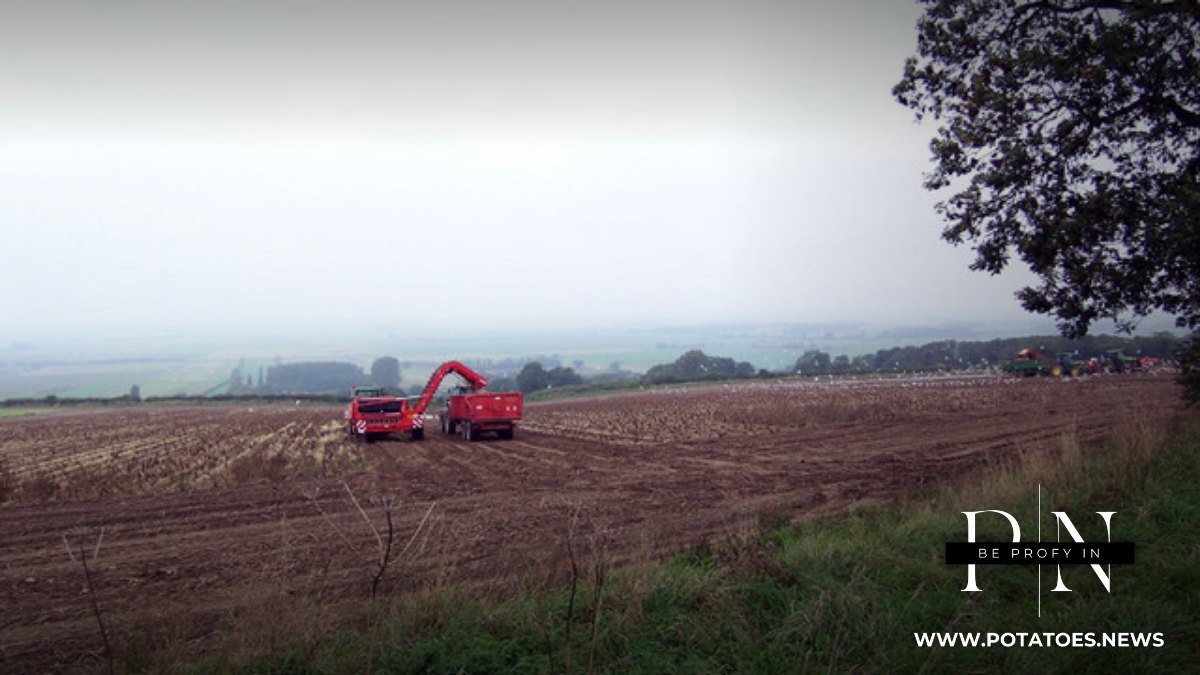
Bruise damage at harvest depends more on how the harvester is set up and operated than on the machine itself: drop heights, tuber temperature and the ratio of ground speed to conveyor speed are all under the operator’s control every day of the season.
Drops of more than about 15 cm (6 inches) onto hard surfaces sharply increase black spot, especially in susceptible varieties; padded transfer points, minimized fall distances and keeping chains full so tubers roll rather than tumble are the standard defenses.
Bruising increases rapidly when pulp temperature falls below about 8–10°C, which is why lifting is best delayed until soils warm late morning in autumn conditions, and why cold snaps justify stopping harvest altogether.
Weekdays. Unsubscribe in one click.
Forward speed trades capacity against damage: running web chains full reduces tumbling, but excessive speed starves separation capacity and sends soil and stones into the bin, shifting damage downstream.
Grading-line studies show the same physics apply in the shed: damage accumulates at every transition point, so padding the worst drops is one of the most effective investments.
Sources: Thornton & Bohl, University of Idaho BUL 725; PNW Plant Disease Management Handbook; Spud Smart