Fusarium dry rot is one of the most common storage diseases of potato. Yield losses of 6–25% have been reported in storage, according to University of Idaho Extension. The disease is caused by several Fusarium species. The main species in Idaho is Fusarium sambucinum.
The fungus cannot enter healthy skin. It needs a wound, such as a cut, a bruise or a crack made during harvest and handling. Optimal infection happens at 68–77°F, or 20–25°C, according to Idaho Extension. Lesions then expand slowly in store and form dry, shrunken, wrinkled areas.
Resistance to an old fungicide group
For decades, thiabendazole was the standard post-harvest treatment against dry rot. Resistance to thiabendazole and other benzimidazole fungicides, FRAC Group 1, was found in Europe in 1973. It was found in the United States in 1992, according to a Cornell University fact sheet updated in May 2021. Idaho Extension says resistance is now widespread in Fusarium sambucinum in its region.
The UC Statewide IPM Program in California lists newer options. These include a post-harvest mix of azoxystrobin, fludioxonil and difenoconazole. It also lists phosphite products and seed treatments with fludioxonil. Registrations differ by country.
Fast wound healing is the main defence
All three extension sources stress wound healing in the first weeks of storage. Idaho advises holding tubers at 50–55°F, or 10–13°C, with good aeration. Relative humidity should be at least 95% for two to three weeks. UC IPM gives the same temperature range and humidity level.
Harvest conditions matter too. Cornell advises harvesting after skins are set and when pulp temperature is above 50°F, or 10°C. Cold tubers bruise more easily and heal more slowly. Careful handling reduces the number of entry points.
For seed, the rules are similar. Warm seed to 50–55°F for one week before cutting, according to Idaho. Plant into soil at 45°F, or 7°C, or warmer. Cornell advises cutting only as much seed as can be planted within 24 hours.
Why it matters
Dry rot losses appear late, often when a store is opened for sale. By then the damage cannot be reversed. The decisive work happens in the first three weeks after loading.
Growers relying on thiabendazole should not assume it still works. A laboratory test of isolates from their own store can show which products remain useful.
Prevention & control · Editorial note
Fusarium dry rot (Fusarium spp.): what growers can do
- Prevention: Lift after skin set, handle gently and cure tubers at 10–13°C and 95% humidity for two to three weeks.
- Monitoring: Check tubers at loading and after curing; test store isolates for fungicide sensitivity.
- Chemical protection: Seed or post-harvest treatment with fludioxonil (FRAC 12), azoxystrobin (FRAC 11) or difenoconazole (FRAC 3). Check the national register of your country.
- Resistance management: Resistance to thiabendazole (FRAC 1) is widespread; rotate or mix groups.
This note is provided by the potatoes.news editorial team for information only. It is not a recommendation of any company and is not mandatory. Use only plant protection products authorised in your country and follow the label. Product names and registrations differ between countries; consult a local agronomist.
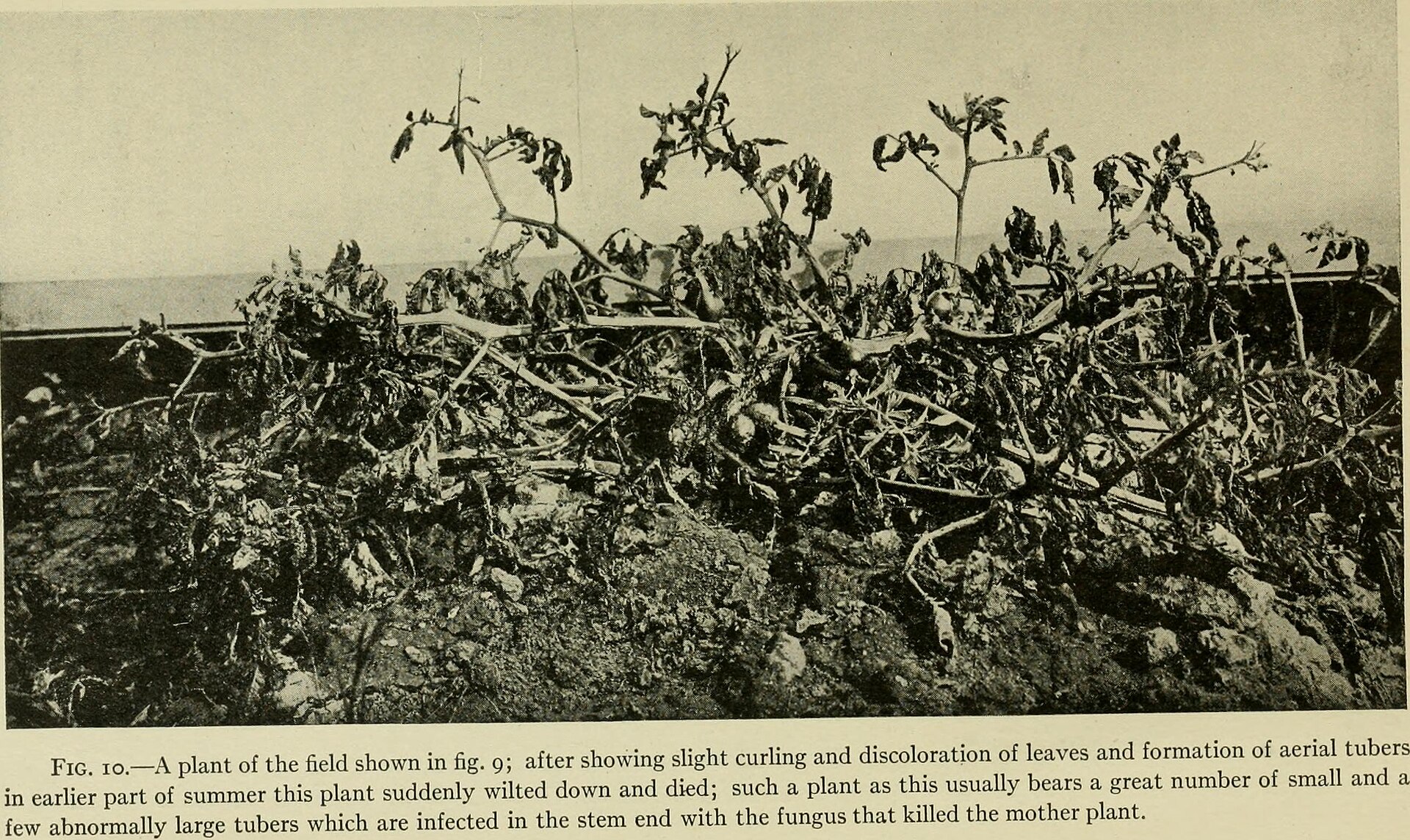
Photo: Fusarium tuber rot of potato, from a 1916 scientific study (illustrative). Internet Archive Book Images / Wikimedia Commons, No restrictions